This report describes a case of Goltz syndrome in a 12-year-old Saudi girl, highlighting the variability in symptoms and the importance of documenting such rare syndromes.
November 2024 in “Journal of Investigative Dermatology” Genetic defects in the Wnt/PCP pathway may cause congenital yellow nail syndrome.
9 citations
,
February 2012 in “Clinical Neurology and Neurosurgery” In this paper, three APS patients were followed over time, showing that the diagnosis and course of autoimmune polyglandular syndrome can evolve, highlighting the need for careful monitoring and potential re-evaluation.
44 citations
,
August 2004 in “Journal of Investigative Dermatology” A gene deletion in DSG4 causes sparse hair in some Pakistani families.
August 2021 in “Indian dermatology online journal” This study reported an unusual case of nail matrix involvement and trachyonychia in a child with juvenile pityriasis rubra pilaris, showing significant improvement with topical therapy and oral biotin.
 February 2021 in “Journal of the Korean Ophthalmological Society”
 This study examined a 7-year-old girl with trichomegaly of the eyelashes, showing no significant underlying or observable cause, suggesting a spontaneous occurrence.
4 citations
,
February 2001 in “PubMed” This case study reports a 6-year-old girl developing acquired progressive kinking hair syndrome, likely induced by sodium valproate, marking it as the first documented instance linked to this medication.
 4 citations
,
October 2008 in “International Journal of Dermatology”
4 citations
,
October 2008 in “International Journal of Dermatology” This case report highlights a rare presentation of hair-thread tourniquet syndrome in a two-year-old child, emphasizing that prompt identification and removal of the constricting fiber is crucial for successful treatment and prevention of tissue damage.
17 citations
,
May 2007 in “British Journal of Dermatology” This case report describes a child with Gomez–Lopez–Hernandez syndrome, highlighting developmental challenges and medical interventions, yet noting academic success and participation in mainstream activities.
 16 citations
,
March 2013 in “The Journal of Dermatology”
16 citations
,
March 2013 in “The Journal of Dermatology” This case report identifies a novel mutation in a patient with trichorhinophalangeal syndrome 1 and reduced TRPS 1 protein expression in hair follicle tissues compared to normal subjects.
April 2017 in “The journal of investigative dermatology/Journal of investigative dermatology” This case report identified a 6-month-old girl with congenital generalized hypertrichosis and gingival hyperplasia, where a de novo CNV on chromosome 17q24.2-24.3 was associated with reduced expression of ABCA5 and SOX9.
 April 2014 in “Jurnal Biomedik : JBM”
 This case report diagnosed an 8-year-old girl with trachyonychia and secondary onychomycosis, finding that spontaneous improvement is common, making specific therapy often unnecessary despite treatment challenges with associated fungal infections.
 17 citations
,
September 2010 in “Pediatric dermatology”
17 citations
,
September 2010 in “Pediatric dermatology” This report describes a case of widespread Porokeratotic eccrine and hair follicle nevus in a 15-year-old woman with keratitis-ichthyosis-deafness syndrome, involving both eccrine ostia and hair follicle infundibula.
6 citations
,
May 2012 in “Pediatric Dermatology” This article shares a case of Satoyoshi syndrome that was misdiagnosed as vitamin D-dependent rickets for several years.
 28 citations
,
February 2012 in “PLoS ONE”
28 citations
,
February 2012 in “PLoS ONE” In this study, researchers identified a novel congenital skin disorder in Chesapeake Bay retrievers, linked to a plakophilin-1 deficiency due to a genetic mutation, marking the first known occurrence in an animal species.
372 citations
,
December 2004 in “Nature Genetics”  4 citations
,
January 2018 in “International Journal of Trichology”
4 citations
,
January 2018 in “International Journal of Trichology” This case report describes a 4-year-old girl with hypotrichosis and juvenile macular dystrophy, linked to mutations in the cadherin 3 gene affecting P-cadherin expression.
 60 citations
,
August 2008 in “Human molecular genetics online/Human molecular genetics”
60 citations
,
August 2008 in “Human molecular genetics online/Human molecular genetics” This study suggests that a position effect disrupting TRPS1 expression may be linked to hypertrichosis in both Ambras syndrome in humans and a similar phenotype in Koa mice.
January 1998 in “The Nishinihon Journal of Dermatology” A 7-year-old girl was diagnosed with Netherton's Syndrome, shown by skin and hair symptoms.
175 citations
,
September 1998 in “British Journal of Dermatology” This study found that mutations in the K17 gene underlie both pachyonychia congenita type 2 and steatocystoma multiplex phenotypes, regardless of the specific mutation involved.
 1 citations
,
January 2019 in “Open Journal of Internal Medicine”
1 citations
,
January 2019 in “Open Journal of Internal Medicine” This case report describes a 19-year-old patient with systemic lupus and a composite heterozygosis SC with thalassemic component, highlighting the diagnostic challenge when symptoms of both conditions occur simultaneously.
March 2003 in “中華皮膚科醫學雜誌” This report describes a patient with trichothiodystrophy exhibiting both specific hair abnormalities and developmental delay, contributing to the understanding of this rare disorder's clinical presentation.
 January 2022 in “Revista Dermatológica Centro Uraga”
 This article reviews two cases of monilethrix in siblings, detailing their clinical and dermatoscopic characteristics, but reports no new findings.
January 2023 in “Indian Dermatology Online Journal” This case report describes a novel association between uncombable hair syndrome and Zellweger syndrome due to a homozygous mutation in the PEX12 gene.
March 2021 in “AACE clinical case reports” This case study reports a rare combination of primary hyperparathyroidism with Klinefelter syndrome in a 44-year-old male, highlighting an unusual KS mosaicism with a mild phenotype.
20 citations
,
January 1997 in “Dermatology” This case report describes a 16-year-old with ectrodactyly-ED-clefting syndrome, where scarring alopecia with follicular involvement appeared during puberty, possibly due to anatomic hair abnormalities.
 August 2023 in “Rheumatology”
 In this case report, researchers describe a 17-year-old African male with an overlapping condition of juvenile dermatomyositis and systemic scleroderma, highlighting the importance of thorough history-taking and physical examination for accurate diagnosis and suggesting early referral to a pediatric rheumatologist to prevent severe outcomes.
 May 2024 in “Animal genetics”
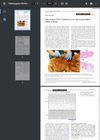
 The researchers investigated a Maine Coon cat with suspected classical Ehlers-Danlos Syndrome and discovered a heterozygous deletion in the COL5A1 gene, underscoring the value of whole-genome sequencing for precise veterinary diagnostics.
 December 2013 in “International Journal of Dermatology”
 The clinical signs of Adams-Oliver syndrome can vary greatly, even among family members.
January 2024 in “Skin Appendage Disorders”