7 citations
,
February 2002 in “Veterinary Dermatology” This study found that intracorneal vacuoles were common in various parakeratotic skin diseases in dogs, but large vacuoles were exclusively observed in congenital follicular parakeratosis.
2 citations
,
January 2001 in “Humana Press eBooks” This review explores pseudo-Cushing's states that mimic Cushing's syndrome but do not involve elevated cortisol, and it presents no new research findings.
101 citations
,
June 2003 in “The EMBO Journal” Phospholipase Cδ1 is crucial for normal skin and hair development.
24 citations
,
July 2014 in “Journal of Investigative Dermatology” This study reports that a widespread founder SERPINB7 mutation underlies Nagashima-type palmoplantar keratosis, which is a common form of palmoplantar keratosis in Asian populations.
34 citations
,
June 1992 in “Journal of Cutaneous Pathology” In this case study, electron microscopy revealed that harlequin ichthyosis involves giant mitochondria in keratinocytes and abnormal lamellar granule development, which may contribute to pathogenesis through altered lipid metabolism.
 13 citations
,
August 2012 in “Journal of the American Academy of Dermatology”
13 citations
,
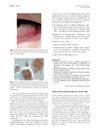
August 2012 in “Journal of the American Academy of Dermatology” This letter details 11 cases of scalp pseudocyst treated primarily with intralesional triamcinolone, resulting in complete hair regrowth in eight patients and self-resolution in some instances.
 April 2018 in “Journal of Investigative Dermatology”
 In this study, researchers identified CENPV as a new CYLD interacting partner that localizes to primary cilia and regulates acetylated tubulin levels, offering insights into the pathogenesis of skin appendage tumors.
27 citations
,
December 1999 in “American Journal of Dermatopathology” This case report presents a patient with necrobiosis lipoidica exhibiting transepithelial elimination of cholesterol crystals through hair follicles, a finding previously associated with necrobiotic xanthogranuloma.
This study suggests that pseudopelade may be an autonomous disease based on its distinctive clinical and histopathological features not present in other scarring alopecias.
18 citations
,
January 2021 in “Theranostics” This study found that actively targeted AN2728-loaded nanocarriers reduced inflammation and improved skin condition in a mouse model of psoriasiform inflammation compared to free drug and non-targeted nanoparticles.
19 citations
,
October 1996 in “International Journal of Dermatology” This study concluded that pseudopelade is an autosomal dominant condition, distinct from other forms of alopecia, characterized by atrophic hair follicle loss and notable familial association.
 22 citations
,
December 2003 in “Veterinary clinical pathology”
22 citations
,
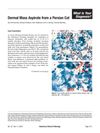
December 2003 in “Veterinary clinical pathology” This case study reported a diagnosis of dermatophytic pseudomycetoma in a Persian cat with dermal nodules, highlighting potential heritable predisposition and suggesting systemic antifungal therapy for fair prognosis.
 3 citations
,
September 2005 in “Experimental dermatology”
3 citations
,
September 2005 in “Experimental dermatology” This review discusses the formation and structure of the cornified cell envelope in the epidermis, highlighting biochemical pathways and genetic factors, but presents no new experimental results.
 April 2023 in “Journal of Investigative Dermatology”
 This study found that MPZL3 plays a crucial role in controlling sebaceous gland size and sebocyte proliferation in mice and humans, implicating its potential involvement in skin disorders like acne and psoriasis.
 2 citations
,
April 2010 in “The Open Dermatology Journal”
2 citations
,
April 2010 in “The Open Dermatology Journal” This review discusses the development and role of corneodesmosin in skin and hair follicle integrity, highlighting findings from mouse models and its connection to genetic diseases, with no new experimental results included.
83 citations
,
May 2011 in “European Journal of Dermatology” This review discusses the role of corneodesmosin in skin and hair follicle integrity, with mentions of its link to hypotrichosis simplex and peeling skin disease, and reports no new results.
 August 2024 in “Veterinary Dermatology”
 This study reported that topical ω‐0‐acylceramide improved skin barrier function in Jack Russell Terriers with TGM1-deficient autosomal recessive congenital ichthyosis, normalizing skin pH and reducing transepidermal water loss.
36 citations
,
January 1994 in “Cell and Tissue Research”  5 citations
,
October 2015 in “The American journal of pathology”
5 citations
,
October 2015 in “The American journal of pathology” This study found that a spontaneous deletion in the Dsg3 gene of mice leads to hypomorphic desmoglein 3 expression, resulting in severe immunodeficiency, cyclic hair loss, and wasting disease, without causing the blistering typical of pemphigus vulgaris.
 13 citations
,
January 2019 in “Colloids and Surfaces B: Biointerfaces”
13 citations
,
January 2019 in “Colloids and Surfaces B: Biointerfaces” This study found that incorporating a block copolymer significantly alters the size and morphology of niosome drug delivery systems made of non-ionic surfactants and cholesterol, affecting their stability.
158 citations
,
June 2014 in “Journal of Lipid Research” This review summarizes recent discoveries of GPCRs for lysophosphatidylserine and lysophosphatidylinositol, detailing their roles as lipid mediators, but reports no new experimental results.
April 2017 in “Journal of dermatological science” This study found that while epidermal PLCγ1 is not necessary for keratinocyte differentiation in interfollicular epidermis, it is crucial for normal hair and sebaceous gland formation in mice.
 7 citations
,
May 2016 in “European Polymer Journal”
7 citations
,
May 2016 in “European Polymer Journal” This study found that biodegradable hyperbranched polyesters improved the solubility and loading capacity of hydrophobic drugs, with complete pyrene release achieved in 16 days under enzymatic conditions.
7 citations
,
August 2024 in “Marine Drugs” This study found that ultrasonically depolymerized ι-carrageenan from Solieria chordalis yields low-molecular-weight fractions that maintain fibroblast viability and show no cytotoxicity, suggesting potential for safe use in human medicine.
25 citations
,
November 2015 in “Journal of Dermatological Science” In this study, researchers identified the antimicrobial peptide dermcidin in sebocyte lipid droplets, challenging the previous understanding of dermcidin as exclusively sweat-specific.
 April 2023 in “The journal of investigative dermatology/Journal of investigative dermatology”
 This study suggests that tissue transglutaminase (TG2) may play a role in sebum production by regulating autophagy in sebaceous glands, offering potential targets for dermatological interventions.

In this case report, researchers observed that a malnourished male patient developed pseudoglucagonoma syndrome, characterized by necrolytic migratory erythema and diffuse hair loss, following Frey's surgery, which rapidly improved with enhanced nutrition.
1 citations
,
November 2022 in “Diagnostics” This case report identifies a 32-year-old woman with undiagnosed PHPT-1a who exhibited complete pseudo-anodontia and persistent patchy alopecia areata, suggesting these may be new nonclassical features of a GNAS pathogenic variant.
 June 2023 in “Journal of biological chemistry/The Journal of biological chemistry”
 This study on Sdr16c5/Sdr16c6-null mice found that inactivating these genes significantly increased Meibomian gland secretions and altered lipid profiles but had a subtle impact on sebogenesis, suggesting the genes control a bifurcation point in meibogenesis pathways.
24 citations
,
May 2000 in “Journal of the American Academy of Dermatology” This case report describes a patient with pseudopelade affecting both the scalp and beard area, highlighting the unusual presentation of a rare hair disorder.