 3 citations
,
August 2020 in “Case Reports in Dermatology”
3 citations
,
August 2020 in “Case Reports in Dermatology” This case report suggests that JAK inhibitors like tofacitinib may effectively treat alopecia in patients with complex cases involving both rheumatological and dermatological conditions.
 54 citations
,
September 2019 in “Journal of the European Academy of Dermatology and Venereology”
54 citations
,
September 2019 in “Journal of the European Academy of Dermatology and Venereology” This study found that tofacitinib shows reasonable effectiveness for treating alopecia areata with mild adverse effects, although more large-scale randomized trials are needed to fully assess its safety and efficacy.
 17 citations
,
January 2019 in “Dermatologic Therapy”
17 citations
,
January 2019 in “Dermatologic Therapy” The article in Dermatologic Therapy discusses clinical experiences with using tofacitinib to treat alopecia areata in 63 patients, but no specific results are reported in the abstract.
April 2026 in “Regenerative Medicine” This source does not report specific results but compiles information on recent advancements in Advanced Therapy Medicinal Products and regenerative medicine from non-academic sources as of March 2026.
 2 citations
,
January 2023 in “Eastern Journal Of Medicine”
2 citations
,
January 2023 in “Eastern Journal Of Medicine” This review discusses the use, efficiency, and preparation methods of autologous platelet concentrates in wound healing and periodontal regeneration, but it reports no new clinical findings.
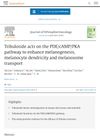 December 2023 in “Journal of ethnopharmacology”
 This study found that tribuloside, a flavonoid from Tribulus terrestris L., enhances melanin production in human melanocytes, zebrafish, and human skin samples without causing toxicity, potentially through inhibiting PDE to increase cAMP levels and promote the melanin biosynthesis pathway.
 1 citations
,
April 2023 in “International Journal of Molecular Sciences”
1 citations
,
April 2023 in “International Journal of Molecular Sciences” This review discusses advances in CRISPR/Cas9 variants and nanoformulations for cancer treatment, noting challenges and prospects for clinical application, but reports no new research results.
 31 citations
,
January 1981 in “Pharmacology & Therapeutics”
31 citations
,
January 1981 in “Pharmacology & Therapeutics” In this study, 13-cis-5S*,8S*-epidioxy-5,8-dihydroretinoic acid was found to be significantly more cytotoxic to cancer cell lines than other retinoic acid analogs evaluated.
11 citations
,
April 2023 in “Frontiers in Pharmacology” This study reported that the Computational Analysis of Novel Drug Opportunities platform effectively uses integrated biological data, including side effects and pathways, to generate potential drug candidates for colon cancer and migraine disorders.
 August 2013 in “Nature Reviews Drug Discovery”
 New cancer treatments show promise in reducing tumor growth and improving skin regeneration in mice.
 August 2026 in “International Journal of Developmental Neuroscience”
 In this report, researchers describe a 13-month-old with neurodevelopmental disorder NEDESBA, confirming a TRAPPC4 gene mutation as the cause after excluding biotinidase deficiency, highlighting the importance of molecular testing for accurate diagnosis in overlapping metabolic and genetic conditions.
 2 citations
,
April 2023 in “Expert Review of Clinical Immunology”
2 citations
,
April 2023 in “Expert Review of Clinical Immunology” This review details how baricitinib successfully demonstrated significant hair regrowth in clinical trials for severe alopecia areata, now leading to its approval as the first systemic therapy for the condition, while also highlighting the importance of assessing individual risk factors for adverse events.
22 citations
,
January 2012 in “Mediators of inflammation” This review discusses the potential benefits of nonantibiotic macrolides for treating inflammatory skin disorders and reports no new clinical results.
52 citations
,
July 1998 in “Urology” This study found that liarozole is more effective than cyproterone acetate for improving PSA response and survival in metastatic prostate cancer after first-line endocrine therapy, while maintaining quality of life.
 December 2023 in “Journal of Ayub Medical College Abbottabad”
 In this study, Ritlecitinib was reported as a newly approved treatment for alopecia areata that can be used in patients aged 12 and older; after 24 weeks, it resulted in 80% or more scalp hair coverage in treated patients compared to a placebo.
 December 2024 in “Journal of General-Procedural Dermatology & Venereology Indonesia”
 In this study, a topical hair growth serum containing ingredients like procapil and redensyl was found to be safe and effective for subjects with androgenic alopecia, significantly improving hair density, thickness, and Anagen:Telogen ratio after 120 days, with no observed adverse effects.
4 citations
,
November 2023 in “SKIN The Journal of Cutaneous Medicine” In this study, ritlecitinib, an oral JAK3/TEC inhibitor, was evaluated for safety in patients aged 12 and older with alopecia areata across four clinical trials up to 36 months, showing a safety profile with reported adverse events and lab abnormalities summarized per dosing groups.
 January 2025 in “Bioengineering”
 This study evaluated the long-term effects of combining autologous platelet-rich stroma injection with transanal advancement flap repair for cryptoglandular transsphincteric fistulas and found that it resulted in primary clinical closure and radiological healing in a high percentage of patients, with low recurrence rates.
June 2025 in “British Journal of Dermatology” This study found that both tofacitinib and methotrexate effectively reduced hair loss and psychological distress in patients with moderate-to-severe alopecia areata, but tofacitinib showed much greater efficacy. Both treatments had similar safety profiles, with no serious adverse effects reported.
 60 citations
,
May 2015 in “Archives of dermatological research”
60 citations
,
May 2015 in “Archives of dermatological research” This review discusses the role of peroxisome proliferator-activated receptors and their agonists in dermatology but reports no new clinical results.
 August 2025 in “MedScien”
 This study explores the design of responsive drug carriers based on the tumor microenvironment to improve targeting and reduce side effects in cancer treatment, using a model of delivering curcumin with a responsive polymer carrier and evaluating potential errors due to cancer cell heterogeneity.
January 2024 in “Defence life science journal” This review explores the potential of non-invasive photobiomodulation therapy for managing combat and traumatic soft tissue injuries, emphasizing its benefits, efficacy, and underlying mechanisms, but reports no new clinical results.
November 2025 in “Advanced Healthcare Materials” This study found that incorporating CTA2-BADG, a modified hair-rebonding compound, into damaged hair significantly improved surface morphology and tensile strength by using charge-conversion chemistry to enhance penetration into the hair shaft.
May 2025 in “JEADV Clinical Practice” This study found that using calcipotriene and betamethasone dipropionate cream in a real-world setting significantly improved clinical outcomes and patient quality of life for adults with mild-to-moderate scalp psoriasis, especially among those with higher adherence, demonstrating high treatment satisfaction.
This study concluded that the combination of all-trans-retinoic acid and tocopherol-α is not recommended for treating del(5q) myelodysplastic syndromes due to low efficacy and high incidence of adverse effects.
38 citations
,
January 2017 in “PPAR Research” This review discusses the role of PPAR-γ in the pathogenesis of primary cicatricial alopecia, including its involvement in lichen planopilaris and treatment trials using PPAR-agonists, and reports no new clinical results.
 5 citations
,
February 2019 in “bioRxiv (Cold Spring Harbor Laboratory)”
5 citations
,
February 2019 in “bioRxiv (Cold Spring Harbor Laboratory)” This study found that in a mouse model of Leigh syndrome, rapamycin alters brain proteome and may extend survival by targeting protein kinase C.
6 citations
,
September 2024 in “Current Oncology” This review summarizes evidence and adverse event management recommendations for Sacituzumab Govitecan in metastatic triple-negative breast cancer and hormone receptor-positive breast cancer, emphasizing favorable survival data from clinical trials.
 November 2022 in “Journal of Investigative Dermatology”
 This study found that short-term treatment with ROCKi significantly increased keratinocyte stem cell proliferation without affecting their stemness, suggesting a potential safe approach for improving in vitro keratinocyte cultures for clinical applications.