 20 citations
,
January 2017 in “Actas Dermo-Sifiliográficas”
20 citations
,
January 2017 in “Actas Dermo-Sifiliográficas” This review discusses recent therapeutic advances in treating various types of hair loss, including androgenetic alopecia, alopecia areata, frontal fibrosing alopecia, and hair transplant technologies, but reports no new clinical results.
 16 citations
,
January 2019 in “Skin appendage disorders”
16 citations
,
January 2019 in “Skin appendage disorders” This study used a network meta-analysis to compare alopecia areata treatments, finding that intralesional corticosteroids are most effective for mild cases, while diphenylcyclopropenone ranks highest for moderate to severe cases; further research on oral tofacitinib is needed.
 15 citations
,
November 2009 in “Clinical and Experimental Dermatology”
15 citations
,
November 2009 in “Clinical and Experimental Dermatology” This case study describes a 16-year-old girl with alopecia areata affecting her eyelashes and eyebrows, who showed very limited response to treatment with topical mometasone furoate and subsequent partial hair loss upon stopping the treatment.
14 citations
,
September 2015 in “PubMed” This review discusses treatment strategies for alopecia areata and emphasizes the importance of primary care physicians recognizing and managing the condition, with referrals to dermatologists for more severe cases.
 14 citations
,
August 2013 in “Facial Plastic Surgery Clinics of North America”
14 citations
,
August 2013 in “Facial Plastic Surgery Clinics of North America” This review discusses current and emerging medical therapies for androgenetic alopecia but reports no new clinical findings, emphasizing the importance of stabilizing the condition as a complement to surgical hair restoration.
12 citations
,
January 2020 in “Indian Dermatology Online Journal” This article discusses the causes, diagnosis, and treatment options for female pattern hair loss, emphasizing the role of topical minoxidil as a primary treatment, but provides no new clinical results.
 11 citations
,
July 2017 in “Expert Opinion on Investigational Drugs”
11 citations
,
July 2017 in “Expert Opinion on Investigational Drugs” This review discusses current and emerging therapeutic strategies for androgenetic alopecia, noting limited evidence but suggesting areas such as prostaglandin analogs, PRP, and progenitor cell therapies as promising future directions.
 11 citations
,
January 2013 in “Ocular Surface”
11 citations
,
January 2013 in “Ocular Surface” This review summarizes the ophthalmic complications of common periocular aesthetic treatments but reports no new clinical findings, emphasizing the importance of recognizing potential side effects.
 9 citations
,
December 2017 in “The Journal of Allergy and Clinical Immunology”
9 citations
,
December 2017 in “The Journal of Allergy and Clinical Immunology” This review discusses the evolution of alopecia areata treatments towards more targeted therapies and reports no new clinical results, emphasizing cooperation between clinicians and scientists in understanding the disease's pathophysiology.
8 citations
,
March 2005 in “JDDG Journal der Deutschen Dermatologischen Gesellschaft” This case report describes a patient with glaucoma who developed reversible hyperpigmentation and hypertrichosis after using bimatoprost eye drops, aiming to explore prostaglandin analogues' potential roles in hair and depigmentation therapies.
 5 citations
,
January 2019 in “Clinical Drug Investigation”
5 citations
,
January 2019 in “Clinical Drug Investigation” This study found that certain off-label topical therapies, including prostaglandin analogs and polyphenols, improved hair restoration in men with androgenetic alopecia over placebo in the short term, though long-term effects are unknown.
 5 citations
,
July 2014 in “Actas dermo-sifiliográficas/Actas dermo-sifiliográficas”
5 citations
,
July 2014 in “Actas dermo-sifiliográficas/Actas dermo-sifiliográficas” Latanoprost eye drops caused excessive hair growth and eyelash whitening in a woman.
5 citations
,
July 2011 in “PubMed” This case report of female-pattern androgenetic alopecia found that injected bimatoprost solution did not successfully treat the condition, prompting considerations for future prostaglandin analog therapies.
5 citations
,
July 2010 in “Archives of Internal Medicine” This study observed that topical prostaglandin treatments may protect against hair follicle injury during chemotherapy, as indicated by preserved eyelashes in patients using these treatments.
 4 citations
,
August 2013 in “Expert Review of Dermatology”
4 citations
,
August 2013 in “Expert Review of Dermatology” This review discusses recent advances in the diagnosis and management of female pattern hair loss but reports no new clinical results.
3 citations
,
August 2013 in “DOAJ (DOAJ: Directory of Open Access Journals)” This review discusses various therapeutic options for female pattern hair loss but reports no new clinical results, focusing on the challenges and limitations of current treatments like minoxidil and finasteride.
2 citations
,
July 2014 in “Journal of pharmacology and pharmacotherapeutics” This case report describes a 62-year-old woman who developed chin and upper lip hair growth after using bimatoprost for glaucoma, highlighting hirsutism as a possible side effect of prostaglandin analogues.
 1 citations
,
January 2015 in “Actas dermo-sifiliográficas/Actas dermo-sifiliográficas”
1 citations
,
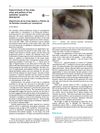
January 2015 in “Actas dermo-sifiliográficas/Actas dermo-sifiliográficas” Latanoprost eye drops caused excessive cheek hair growth and eyelash whitening in a woman.
 1 citations
,
May 2021 in “Revista Eletrônica Acervo Científico”
1 citations
,
May 2021 in “Revista Eletrônica Acervo Científico” This review discusses various treatment options for androgenic alopecia, noting finasteride's greater efficacy in men and identifies ongoing research needs, particularly for therapies like laser and stem cells.
1 citations
,
November 2016 in “Saengmyeong gwahag hoeji/Saengmyeong gwahak hoeji” This review discusses new insights into the pathogenesis of alopecia areata related to perifollicular immune and endocrine factors and potential new treatments, but it reports no clinical results.
 July 2026 in “International Journal of Molecular Sciences”
 This review highlights that a comprehensive approach combining pharmacological, immunomodulatory, and regenerative interventions, including phototherapy enhanced with topical treatments and JAK inhibitors, appears effective and promising in the management of vitiligo by addressing its autoimmune and melanocyte-loss aspects.
 July 2025 in “Current Treatment Options in Oncology”
 This opinion piece discusses strategies for managing cancer-related alopecia, emphasizing personalized approaches including scalp cooling and topical minoxidil, but it reports no new clinical results.
 February 2024 in “Sohag Medical Journal”
 This review discusses the challenges in treating alopecia areata and the potential psychological impact, noting that spontaneous hair regrowth often occurs and highlighting the consideration of psychotherapy alongside treatment options; it reports no new experimental results.
 July 2026 in “IntechOpen eBooks”
 This review highlights the challenges and management strategies associated with persistent chemotherapy-induced alopecia, detailing the psychosocial impacts, follicular pathobiology, and available treatments such as scalp cooling and minoxidil, ultimately proposing a clinical algorithm to transform it into a preventable and manageable condition.
This study reviews current pharmacological treatments for alopecia, highlighting minoxidil, 5α-reductase inhibitors, JAK inhibitors, and other agents, and notes ongoing research aimed at improving their effectiveness and safety profiles.
 August 2025 in “Drug Design Development and Therapy”
 This review article examines current drugs for androgenetic alopecia, focusing on their mechanisms and clinical efficacy, noting that while finasteride and minoxidil are commonly approved treatments, new drugs targeting different pathogenic pathways have emerged, offering a broader understanding and reference for AGA treatment options.
 March 2025 in “Expert Opinion on Drug Discovery”
 This article discusses the pursuit of more effective treatments for androgenetic alopecia due to its widespread psychological and social impact, but reports no new clinical findings.
 April 2024 in “Vestnik oftalʹmologii”
 In this case report, a 31-year-old male using topical minoxidil for androgenic alopecia developed diplopia and increased intraocular pressure, which improved after stopping minoxidil and using prostaglandin analogues, although a carbonic anhydrase inhibitor caused IOP to rise again during follow-up.
 October 2021 in “Cosmoderma”
 This review summarizes existing knowledge on diffuse and patterned alopecia, emphasizing recent advancements in treatment beyond FDA-approved options, but it reports no new clinical findings.
March 2020 in “Revista Eletrônica da Faculdade de Ceres” This review discusses the role of latanoprost in hair growth but reports no clinical results; the authors suggest further research to determine its efficacy and optimal treatment regimen.