90 citations
,
August 2006 in “British Journal of Dermatology” This paper describes the PRIDE syndrome associated with epidermal growth factor receptor inhibitors but reports no new clinical results.
3 citations
,
January 2019 in “Indian Journal of Drugs in Dermatology” This study reports two cases of PRIDE complex in nonsmall cell lung cancer patients treated with erlotinib and gefitinib, highlighting cutaneous reactions like papulopustules and paronychia.
 1 citations
,
January 2023 in “Przegląd Dermatologiczny”
1 citations
,
January 2023 in “Przegląd Dermatologiczny” This case report describes a 64-year-old man with advanced colorectal cancer developing cutaneous side effects from panitumumab, highlighting the importance of early diagnosis and treatment to improve quality of life and therapy continuation.
 August 2025 in “JEADV Clinical Practice”
 This case report describes the management of PRIDE complex, a skin and hair condition associated with EGFR inhibitor treatment like cetuximab, emphasizing that it does not require stopping the medication.

This case study documents a 55-year-old male with advanced NSCLC who experienced toe-predominant paronychia and a papulopustular rash following dacomitinib treatment, with the causality tools indicating a "probable" link, yet the therapy continued successfully without dosage alteration.
August 2024 in “Postgraduate Medical Journal” A rare skin reaction from cancer treatment was successfully managed with topical treatments and antihistamines.
 January 2022 in “Dermatology Review”
 This case report details an occurrence of PRIDE syndrome accompanied by lumbosacral hypertrichosis.
 October 2021 in “Revista Medicina Cutánea Ibero-Latino-Americana”
 This case report describes a patient who developed PRIDE syndrome-associated skin issues, including a pruritic papulopustular rash and alopecia, after starting treatment with the EGFR inhibitor erlotinib.
43 citations
,
January 2014 in “Indian Journal of Dermatology” This study reported that EGFR inhibitor therapy in lung and head/neck cancer patients was associated with acneiform eruptions and severe skin dryness, which rarely necessitate discontinuation of treatment and can be managed symptomatically.
 October 2023 in “Journal of the European Academy of Dermatology and Venereology”
 In this study, a Delphi survey among 441 European dermatology patients identified psychological impacts as the most significant issues affecting their lives, underscoring the need for psychological support in managing dermatological diseases.
 2 citations
,
February 2024 in “Journal of the European Academy of Dermatology and Venereology”
2 citations
,
February 2024 in “Journal of the European Academy of Dermatology and Venereology” This study resulted in a draft version of the Patient‐Reported Impact of Dermatological Diseases measure, PRIDD, which includes 27 items refined from patient consensus and is now undergoing psychometric testing.
 88 citations
,
July 2014 in “Journal of the American Academy of Dermatology”
88 citations
,
July 2014 in “Journal of the American Academy of Dermatology” This review discusses common cutaneous reactions to targeted cancer drugs such as tyrosine kinase inhibitors and reports no new clinical results.
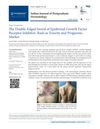 June 2026 in “Indian Journal of Postgraduate Dermatology”
 In this reported case, a 50-year-old man developed an acneiform rash, a common skin side effect of EGFR inhibitor therapy, after starting lapatinib for breast cancer; treatment with doxycycline and hydrocortisone cream led to significant improvement within one week.
January 2008 in “Projeto: revista mensal de arquitetura” This article reviews the cutaneous reactions associated with targeted cancer therapies and highlights the importance of dermatologists recognizing these reactions to provide effective care but reports no clinical results.
 January 2011 in “Journal of Cutaneous and Aesthetic Surgery”
 The Editor-in-Chief is proud of the journal's growth and improvements during his term and optimistic about its future.
 1 citations
,
October 2017 in “Dermatologic Surgery”
1 citations
,
October 2017 in “Dermatologic Surgery” More men are getting cosmetic treatments to look young and stay competitive at work.
This conference report summarizes discussions from the first edition of COMEF 2023 in Formosa, focusing on medical ethics, education, and health, but provides no new research results.
January 2022 in “Zenodo (CERN European Organization for Nuclear Research)” This article discusses female hair transplant procedures in Pakistan, highlighting their growing popularity despite high costs and limited clinic availability, but reports no new clinical results.
 13 citations
,
June 1989 in “Pediatric clinics of North America/The Pediatric clinics of North America”
13 citations
,
June 1989 in “Pediatric clinics of North America/The Pediatric clinics of North America” This article reviews assessment and management strategies for adolescent females with excessive hair growth and highlights the importance of evaluating potential androgen sources.
 11 citations
,
April 2017 in “Journal of The European Academy of Dermatology and Venereology”
11 citations
,
April 2017 in “Journal of The European Academy of Dermatology and Venereology” This study found that long non-coding RNAs are differentially expressed in androgenetic alopecia, suggesting potential roles in its development and novel targets for prevention and treatment.
 December 2015 in “JAMA Dermatology”
 This abstract provides no study findings but is a webpage with institutional and subscription information for accessing JAMA Dermatology content.
 November 2014 in “Journal of Cell Biology”
 Valentina Greco's research shows that the environment around hair follicle stem cells is more crucial for regeneration than the stem cells themselves.
 6 citations
,
January 2014 in “The Journal of Advances in Parasitology”
6 citations
,
January 2014 in “The Journal of Advances in Parasitology” This study observed that dogs with sarcoptic mange exhibited symptoms like intense itching and restlessness, along with specific haematological and biochemical abnormalities compared to healthy dogs.
 1 citations
,
January 2010 in “Journal of Cutaneous and Aesthetic Surgery”
1 citations
,
January 2010 in “Journal of Cutaneous and Aesthetic Surgery” The Journal of Cutaneous and Aesthetic Surgery is now included in PubMed.
 1 citations
,
November 1976 in “Archives of Dermatology”
1 citations
,
November 1976 in “Archives of Dermatology” This article discusses the role of clinical observation and microscopic correlation in American dermatology training and reports no new clinical results.
 June 2026 in “Indian Journal of Veterinary Medicine”
 This study found that dogs with alopecia treated with platelet-rich plasma in addition to conventional therapy experienced faster hair regrowth, better coat quality, and higher recovery rates compared to conventional therapy alone.
 January 2025 in “International Journal of Veterinary Sciences and Animal Husbandry”
 In this case study, researchers found that treatment with sarolaner led to complete recovery from generalized demodicosis in six dogs within four weeks, resolving clinical signs without adverse reactions.
 August 2023 in “Acta Scientific Veterinary Sciences”
 This case report describes the successful treatment of Sarcoptes scabiei infestation in rabbits using Ivermectin, Vimeral syrup, and Benzyl Benzoate, resulting in the resolution of clinical signs and elimination of the parasite within four weeks.
 March 2022 in “International journal of biology, pharmacy and allied sciences”
 This case study describes the successful management of alopecia areata in an 18-year-old female patient using Shaman Aushadhi.

This review discusses the variety of skin changes and diseases that can occur during pregnancy, categorizing them into physiological changes, non-specific alterations, and pregnancy-specific dermatoses, and reports no clinical results.