 May 2025 in “The Journal of Rheumatology”
 In this case report, a 64-year-old woman diagnosed with both NMOSD and SLE showed mild improvement in vision and recovered from thrombocytopenia after treatment with glucocorticoids and Rituximab, highlighting the importance of accurate diagnosis and tailored treatment for overlapping autoimmune disorders.
 May 2025 in “The Journal of Rheumatology”
 This case report describes a 47-year-old woman with dilated cardiomyopathy as the first sign of primary antiphospholipid syndrome, highlighting the need for APS screening in similar patient presentations.
 May 2025 in “The Journal of Rheumatology”
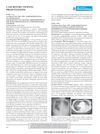
 This case report highlights a rare instance of diffuse alveolar hemorrhage in a patient with catastrophic antiphospholipid syndrome, emphasizing the importance of early recognition and multidisciplinary management.
 May 2025 in “The Journal of Rheumatology”
 This case report details a rare instance of primary adrenal insufficiency as a manifestation of antiphospholipid syndrome, with the patient successfully managed through glucocorticoids, warfarin, and hydroxychloroquine.
 May 2025 in “The Journal of Rheumatology”
 This case report describes a woman whose initial presentation of SLE was persistent watery diarrhea, diagnosed as lymphocytic enterocolitis, and shows that immunosuppressive therapy resulted in symptom relief.
 23 citations
,
December 2004 in “Seminars in oncology”
23 citations
,
December 2004 in “Seminars in oncology” This study found that DVd therapy is at least as effective as VAD/VAd for treating multiple myeloma and causes fewer side effects and reduced hospital visits.
 6 citations
,
March 2021 in “Cytotechnology”
6 citations
,
March 2021 in “Cytotechnology” This review examines recent findings on COVID-19 pneumonia treatment using mesenchymal stem cells and reports no new clinical results; the authors highlight MSCs' potential due to their immunomodulatory and tissue-regenerative properties.
 July 2016 in “American Journal of Dermatopathology”
 The meeting showcased rare skin disease cases, highlighting the need for accurate diagnosis and treatment.
 March 2014 in “Journal of The American Academy of Dermatology”
 The document lists various dermatology topics, treatments, and diagnostic methods.
 January 2025 in “Plastic Surgery and Reconstructive Medicine”
 In this study, plasmatherapy was found to improve immune status indicators in patients with vitiligo, particularly benefiting those with segmental vitiligo by normalizing immune markers and reducing IL-6 levels, suggesting its potential as an adjunct treatment to slow depigmentation progression.
10 citations
,
May 2011 in “American Journal of Hematology” This study found that vinblastine treatment rapidly increased platelet counts in childhood refractory immune thrombocytopenia, providing effective control of bleeding symptoms, although side effects like neuropathic pain were common and resolved with dose adjustments.
3 citations
,
October 2001 in “British Journal of Ophthalmology” This case report suggests that intralesional cidofovir successfully treated SCC without systemic toxicity, making it a potential alternative to consider alongside surgical excision.
 September 2024 in “World Journal of Biology Pharmacy and Health Sciences”
 This source outlines that plasma, when injected, can renew cells, stimulate collagen and protein production for skin vitality, and improve wound healing in various surgical fields, leveraging its antibiotics and platelet-rich properties.
November 2025 in “Journal of Investigative Dermatology” PCFCL may have unrecognized subtypes and needs more research.
1 citations
,
October 2024 in “Indian Dermatology Online Journal” This case report describes a 36-year-old man who developed generalized eruptive histiocytosis on the scalp after undergoing nine platelet-rich plasma treatments for hair loss, likely triggered by injection-related trauma and inflammation.
5 citations
,
February 2025 in “SSP Modern Pharmacy and Medicine” This paper explores the emerging field of plasma medicine and its demonstrated effectiveness in treating chronic wounds, infections, and cancer, while highlighting challenges and opportunities for integrating plasma technologies into healthcare practices globally.
 13 citations
,
November 2021 in “Biomedicines”
13 citations
,
November 2021 in “Biomedicines” This review discusses the potential of plasma-activated liquid (PAL) in medical applications and highlights recent studies to inform researchers of its usage possibilities, but reports no new clinical findings.
 November 2021 in “Authorea (Authorea)”
 This case report suggests that platelet-rich plasma and hair transplantation may trigger or worsen the progression of cutaneous pseudolymphoma to lymphoma, particularly in patients with a family history.
 January 2021 in “Research Square (Research Square)”
 This study found that repeated plateletpheresis had no significant effect on whole blood cells and plasma proteins in donors, maintaining levels within a normal range.
 April 2026 in “Preprints.org”
 This review discusses the potential of cold atmospheric plasma as a selective antitumor therapy for breast cancer but reports no clinical results, emphasizing its promise and the challenges to its use in precision oncology.
 1 citations
,
September 2013 in “The Journal of Dermatology”
1 citations
,
September 2013 in “The Journal of Dermatology” An 8-year-old girl developed a rare skin condition in a linear pattern on one side of her body after a lung infection, which improved with treatment.
 20 citations
,
May 2016 in “Journal of Cutaneous Pathology”
20 citations
,
May 2016 in “Journal of Cutaneous Pathology” This study suggests that the presence and arrangement of plasmacytoid dendritic cells can help distinguish chronic cutaneous lupus erythematosus from other types of scarring alopecia.
 4 citations
,
November 2016 in “Journal of Cutaneous Pathology”
4 citations
,
November 2016 in “Journal of Cutaneous Pathology” This letter discusses three plasmacytoid dendritic cell-related parameters that may help differentiate lupus alopecia from lichen planopilaris, but it reports no new study results.
9 citations
,
November 2024 in “Journal of Wound Management Official journal of the European Wound Management Association” Cold Plasma shows promise for healing wounds by killing bacteria and helping tissue grow.
May 2024 in “International journal of medicine and psychology.” This study examined monoclonal antibodies LT-1, LT-2, and LT-7, finding they can effectively detect certain antigens on T and B cells involved in various lymphoproliferative diseases, aiding in the diagnosis of both acute and chronic lymphoid neoplasias.
 1 citations
,
November 1983 in “The Lancet”
1 citations
,
November 1983 in “The Lancet” Acute leukemias with the Philadelphia chromosome may be biphenotypic, and identifying this is important for proper treatment.
1 citations
,
October 2023 in “European Journal of Dermatology” This study found that combining hair transplantation with platelet-rich plasma treatment significantly improved hair regeneration, reduced hair loss, and minimized skin lesion areas in patients with androgenic alopecia compared to hair transplantation alone, suggesting enhanced treatment efficacy.
 January 2016 in “대한피부과학회지”
 This case report describes two patients experiencing a bortezomib-induced skin eruption as multiple plaques on the trunk, with the lesions resolving spontaneously in about a week.
 May 2014 in “Transfusion and Apheresis Science”
 Multiple plasma donations do not change donors' biochemical parameters.
2 citations
,
July 2023 in “Vrach” In this review, researchers reported that plasma therapy, specifically PRP therapy, shows a high regenerative potential with low toxicity and beneficial effects like immunomodulation and soft tissue remodeling, suggesting its recommendation for broader clinical use based on most studies.