8 citations
,
January 2023 in “Skin Research and Technology” This study found that treatment with fractional 1064 nm picosecond Nd:YAG laser effectively reduced post-acne erythema in adult Chinese patients without causing scarring or pigmentation issues, though some experienced temporary erythema, oedema, pruritus, and acne eruptions.
19 citations
,
August 2018 in “Journal of the American Academy of Dermatology” In this study, the researchers found that the picosecond pulsed alexandrite laser (PSAL) may be as effective and safe as the Q-switched alexandrite laser (QSAL) for treating freckles in Chinese patients.
1 citations
,
March 2025 in “Journal of Cosmetic Dermatology” This case report describes promising results in treating poliosis circumscripta with exosomes and fractional picosecond laser, showing significant hair regrowth and repigmentation, though spontaneous repigmentation cannot be ruled out.
1 citations
,
July 2024 in “Journal of lasers in medical sciences” This case study reports that treating a female patient with facial partial unilateral lentiginosis using a 532-nm Nd:YAG fractional picosecond laser resulted in significant improvement in pigmentation without notable side effects, indicating it may be an effective and well-tolerated treatment option.
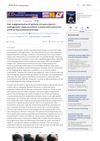 February 2024 in “Journal of Cosmetic Dermatology”
 White hair patch repigmented and hair regrew in a balding patient after treatment with exosomes and laser.
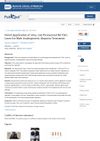
In this pilot study, researchers found that fractional picosecond laser therapy may promote hair regrowth in men with mild-to-moderate androgenetic alopecia, with significant improvements in expert assessments and patient satisfaction observed over a four-month period, though further research is needed to confirm these findings.
 April 2023 in “Journal of Investigative Dermatology”
 In this study, Nd:YAG picosecond lasers using fractional micro-lens array were found to have a comparable effect to ablative fractional Er:YAG lasers in treating atrophic acne scars, with better safety profiles but slightly less patient satisfaction.
 March 2019 in “Applied sciences”
 This case report suggests that 1064 nm picosecond Nd:YAG laser therapy may effectively improve alopecia totalis when used as an alternative adjuvant treatment, as demonstrated in a split-scalp study showing better results than steroid treatment alone.
 December 2020 in “Lasers in Surgery and Medicine”
 In this study, using a 1064 nm picosecond Nd:YAG laser effectively removed undesirable scalp micropigmentation in four patients within 1–3 treatment sessions, with no unexpected adverse events reported.
1 citations
,
April 2018 in “Dermatologic Surgery” This source outlines the scope and content of the Dermatologic Surgery journal, highlighting its focus on comprehensive peer-reviewed information related to various dermatologic surgeries, including cosmetic and reconstructive procedures and skin cancer treatment, as an essential resource for professionals in the field.
January 2019 in “Dermatologic Surgery” This overview of the Dermatologic Surgery journal describes its extensive coverage of peer-reviewed content across various skin surgery techniques but presents no new research findings.
This study suggests that a portable OCT system may be useful for the clinical diagnosis and evaluation of skin diseases and laser treatment outcomes.
 March 2026 in “Research Square”
 This study developed a novel regenerative platform using nanozyme-enabled materials combined with exosomes and laser stimulation to enhance wound healing in a mouse model, which more effectively regulated reactive oxygen species and improved early angiogenesis and collagen organization compared to conventional methods.
 206 citations
,
September 2010 in “PLoS ONE”
206 citations
,
September 2010 in “PLoS ONE” This study found that using a Picosecond IR Laser (PIRL) on mouse skin led to less tissue damage and scarring compared to conventional surgical lasers and tools.
 January 2017 in “Lasers in Surgery and Medicine”
 This article introduces a special issue of "Lasers in Surgery and Medicine" focused on dermatology and plastic surgery, but it presents no new research findings.
 January 2019 in “LASER THERAPY”
 Laser technologies improve medical treatments and outcomes.
2 citations
,
October 2024 in “PubMed” The authors reviewed nine studies on various dermatological procedures for treating Seborrheic Dermatitis, noting significant efficacy in small cohorts with high patient satisfaction, but highlighted the need for further research to address challenges like cost, variable effectiveness, and long-term safety.
September 2024 in “Journal of Drugs in Dermatology” This review found that various dermatological procedures for Seborrheic Dermatitis, such as phototherapy and laser treatments, showed significant efficacy in small cohorts with high patient satisfaction, but highlighted the need for further research to standardize protocols and evaluate long-term outcomes.
 1 citations
,
April 2018 in “Lasers in Surgery and Medicine”
1 citations
,
April 2018 in “Lasers in Surgery and Medicine” This review summarizes late-breaking abstracts from the American Society for Laser Medicine and Surgery, 2018, and reports no new clinical findings.
 1 citations
,
March 2019 in “Lasers in Surgery and Medicine”
1 citations
,
March 2019 in “Lasers in Surgery and Medicine” This article contains the late-breaking abstracts from the 39th Annual Conference of the American Society for Laser Medicine and Surgery and does not present new research results.
 April 2018 in “Journal of Cosmetic and Laser Therapy”
 The editorial introduces studies on various cosmetic and laser treatments, their effectiveness, and posttreatment care.
 1 citations
,
April 2025 in “JOJ Dermatology & Cosmetics”
1 citations
,
April 2025 in “JOJ Dermatology & Cosmetics” In this study, researchers evaluated the efficacy of a collagen booster used alongside CO2 fractional laser treatment for skin aging, finding that the combination treatment affected the vascularization and healing process of the skin on a healthy adult's forearm.
 January 2025 in “E3S Web of Conferences”
 This review highlights the various cosmetic and therapeutic applications of laser technologies in dermatology, discussing the mechanisms, safety, efficacy, and recent advancements to provide a comprehensive overview of their uses and potential future implications.

In this study involving 13 patients with vitiligo-associated leukotrichia, minimal hair repigmentation was observed following treatment with fractional CO₂ laser and topical betamethasone, though the method was well tolerated, highlighting the need for further research to optimize treatment parameters.
 33 citations
,
May 2019 in “Aesthetic Plastic Surgery”
33 citations
,
May 2019 in “Aesthetic Plastic Surgery” This review found that most studies support the effectiveness and safety of using hyaluronic acid fillers and laser treatments together for facial rejuvenation, but highlights that the evidence is limited to small, nonrandomized studies and additional research is necessary.
 January 2025 in “Advances in Clinical Medicine”
 This source highlights that fractional CO2 laser, as a minimally invasive technology, shows significant benefits in treating various skin and mucosal conditions by improving therapeutic outcomes, shortening recovery times, and enhancing precise personalized interventions through emerging technologies like AI and biomarker monitoring.
 4 citations
,
August 2022 in “Lasers in medical science”
4 citations
,
August 2022 in “Lasers in medical science” In this study, both 1565-nm non-ablative fractional laser and long-pulsed 1064-nm Nd:YAG laser effectively reduced enlarged facial pores, with no significant difference in efficacy and minimal side effects, though the Nd:YAG laser had less severe side effects.
 January 2025 in “Bright Sky Publications eBooks”
 This abstract does not report specific research findings but describes a book titled "Medical Physics and Laser Technology: Advancements and Applications in Modern Healthcare," authored by Zahraa Zuhair Ghafel Saeid and colleagues, which is available for purchase.
 33 citations
,
September 2016 in “Lasers in Surgery and Medicine”
33 citations
,
September 2016 in “Lasers in Surgery and Medicine” In this review, the authors report that fractional resurfacing can be a safe and effective technique for treating scars and promoting photorejuvenation in Asian skin, though it requires cautious use to minimize risks like post-inflammatory hyperpigmentation and rebound melasma.
27 citations
,
July 2013 in “The journal of investigative dermatology/Journal of investigative dermatology” This narrative review discusses the evolution and diverse medical applications of laser technologies, particularly in dermatology and skin biology, without reporting new research findings.