August 2004 in “Veterinary Dermatology” This case series described opportunistic skin conditions in three diabetic cats with additional immunosuppressive diseases, highlighting various treatments and outcomes, including a notable demodicosis recovery.
 4 citations
,
May 2013 in “Dermatologic Surgery”
4 citations
,
May 2013 in “Dermatologic Surgery” Three new techniques simplify and improve the preparation of tissue samples for skin cancer surgery.
6 citations
,
October 1998 in “PubMed” This case study reports a new variant of chronic dermatophytosis with giant cutaneous horns, suggesting a possible genetic link and highlighting successful treatment with antifungal medications.
 March 2025 in “Journal of Bio Innovation”
 This review examines the causes, symptoms, diagnosis, and treatment of dermatophytosis (ringworm) in dogs and cats, highlighting the role of Microsporum canis and the public health implications of zoophilic dermatophytes, affecting roughly 20-25% of the global population.
 January 2010 in “Actas Dermo-Sifiliográficas”
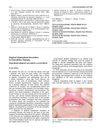
 A woman developed thick gums from everolimus treatment after a kidney transplant.
This chapter reviews various fungal zoonoses, including dermatophytoses and trichophytosis, and reports no new empirical findings.
2 citations
,
January 2002 in “PubMed” This article discusses dermatophytosis, focusing on the identification and clinical importance of various dermatophyte infections, but it reports no new results; the author emphasizes the value of direct examination for diagnosis.
 33 citations
,
April 2017 in “American journal of clinical dermatology”
33 citations
,
April 2017 in “American journal of clinical dermatology” This study suggests that deep dermatophytosis is a distinct condition occurring in immunocompromised patients, characterized by nodules, an indolent course, and absence of follicular invasion, which resolves completely with systemic antifungal treatment.
 3 citations
,
January 2022 in “Medical Mycology Journal”
3 citations
,
January 2022 in “Medical Mycology Journal” This study observed Malassezia hyphae in the keratotic plugs of healthy individuals, which contrasts with previous findings of these hyphae primarily in lesions of pityriasis versicolor patients.
 22 citations
,
April 2000 in “International Journal of Dermatology”
22 citations
,
April 2000 in “International Journal of Dermatology” This case report describes a 78-year-old farmer with idiopathic pulmonary fibrosis who developed cutaneous Alternaria alternata infections, which improved with reduced prednisolone and itraconazole treatment, with no recurrence after two years.
 9 citations
,
November 2014 in “Journal of feline medicine and surgery”
9 citations
,
November 2014 in “Journal of feline medicine and surgery” This case study suggests lymphocytic mural folliculitis in a cat might be an early sign of pancreatic carcinoma.
 9 citations
,
January 2008 in “Medical mycology”
9 citations
,
January 2008 in “Medical mycology” In this study, ketoconazole treatment successfully cured a dog with erythematous epilation caused by Chaetomium globosum, with new hair growth observed 9 weeks later.
 2 citations
,
January 2005 in “Elsevier eBooks”
2 citations
,
January 2005 in “Elsevier eBooks” The document describes skin diseases affecting the outer ear in dogs and cats, their spread to other body parts, and treatment options.
 1 citations
,
August 2012
1 citations
,
August 2012 The document discusses various diseases of the outer ear, categorized by symptoms like redness, crusts, bumps, pus-filled lesions, lumps, ulcers, and hair loss.

In this expert consensus, the authors aimed to address the challenges of diagnosing and treating uncommon dermatophytoses due to their distinct characteristics and lack of standardized protocols, by providing scientific guidance on their epidemiology, clinical features, diagnosis, and treatment.

This handbook of dermatology provides a comprehensive practical manual for dermatologists, but reports no new research findings.
 October 2018 in “Journal of the European Academy of Dermatology and Venereology”
 This abstract provides issue information for the Journal of the European Academy of Dermatology and Venereology without presenting any new research results.
 March 2014 in “Journal of The American Academy of Dermatology”
 The document lists various dermatology topics, treatments, and diagnostic methods.
 22 citations
,
December 2003 in “Veterinary clinical pathology”
22 citations
,
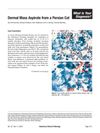
December 2003 in “Veterinary clinical pathology” This case study reported a diagnosis of dermatophytic pseudomycetoma in a Persian cat with dermal nodules, highlighting potential heritable predisposition and suggesting systemic antifungal therapy for fair prognosis.
 4 citations
,
January 2015 in “Türk Patoloji Dergisi”
4 citations
,
January 2015 in “Türk Patoloji Dergisi” This review discusses the skin manifestations of endocrine diseases and reports no new clinical findings, emphasizing the importance of recognizing these signs for early diagnosis.
1 citations
,
February 2005 in “The Journal of Laryngology & Otology” This case report describes a 19-year-old farmer who experienced difficulty breathing due to a fungal infection in the neck, successfully treated with antibiotics and antifungal medications.
January 2024 in “Editora In Vivo eBooks” This case report describes a dog suffering from dermatophytosis, a zoonotic fungal infection common in warm and humid climates, with alopecia noted in the neck region and the tip of the ear.
1 citations
,
January 1987 in “PubMed” This study reported that in a histopathologic analysis of five parenteral heroin users with candida folliculitis, candida and pseudohyphae were frequently found in association with hair follicles.
February 1988 in “Journal of the American Academy of Dermatology” January 2016 in “Elsevier eBooks” This article discusses dermatophycosis, a fungal infection affecting various animals, and outlines its transmission, diagnosis, treatment, and prevention methods, but reports no new research findings.
15 citations
,
March 1987 in “Phycologia” This study found that phosphorus limitation in Chaetophorales strains led to enhanced hair formation and increased phosphatase activity, suggesting a significant relationship between phosphorus status and morphology.
23 citations
,
January 2016 in “Clinical & Biomedical Research” This review covers the epidemiology, causes, prevention, treatment, and prognosis of dermatophytoses and reports no new clinical results.
27 citations
,
April 2012 in “Pediatrics in review” This article reviews approaches to diagnosing and treating dermatophytosis and pityriasis versicolor, noting a significant change in the epidemiology of tinea capitis and highlighting the limitations of certain diagnostic techniques.
1 citations
,
June 2024 in “Access Microbiology” This study found that certain non-dermatophytic moulds, specifically *Absidia* sp., *Cladosporium tenuissimum*, and *Aspergillus welwitschiae*, can cause skin symptoms such as discoloration and lesions in albino mice, suggesting potential virulence due to enzyme activity.
17 citations
,
October 2015 in “PubMed” This review discusses the diagnosis and characteristics of dermatophyte infections and offers no new research findings, emphasizing the importance of microscopy and culture for accurate identification before treatment.