 June 2023 in “Research Square (Research Square)”
 This study demonstrated that dietary cupric citrate improved growth performance and nutrient utilization in broilers, while also altering their intestinal microbiota and increasing the pH in the duodenum and jejunum.
 13 citations
,
May 2018 in “Urologic Oncology: Seminars and Original Investigations”
13 citations
,
May 2018 in “Urologic Oncology: Seminars and Original Investigations” In this study, researchers found no significant difference in bladder cancer incidence between men treated with finasteride and those given a placebo, suggesting that reduced dihydrotestosterone levels may not impact bladder cancer risk.
 11 citations
,
November 2015 in “Journal of Functional Foods”
11 citations
,
November 2015 in “Journal of Functional Foods” This study found that the ethyl acetate fraction of Hibiscus rosa sinensis petals significantly reduced serum glucose and glycated hemoglobin levels in diabetic rats, with effects comparable to metformin.
 May 2023 in “Acta Universitatis Agriculturae et Silviculturae Mendelianae Brunensis”
 This study found that royal jelly extract, popular for surgical wound healing, contains stable levels of flavonoids and phenols for up to 28 days.
 11 citations
,
September 2014 in “International Journal of Molecular Sciences”
11 citations
,
September 2014 in “International Journal of Molecular Sciences” This study found that mycophenolate may stabilize β-catenin and counteract interferon-γ-induced catagen changes in human dermal papilla cells, which could promote hair growth.
8 citations
,
August 2020 in “International Journal of Molecular Sciences” This study found that in Arabidopsis root hairs, oscillating cytoplasmic potassium dynamics precede growth oscillations, suggesting a complex interplay with calcium signaling and microfilament structure in regulating root hair growth.
57 citations
,
November 2024 in “Aggregate” This review article highlights recent advancements in smart hydrogels as promising solutions for diabetic wound management, emphasizing their ability to respond to wound environments and deliver targeted therapies, while addressing limitations of traditional dressings.
2 citations
,
October 2025 in “Antimicrobial Agents and Chemotherapy” This study found that cepharanthine may be a promising treatment for enterovirus infections, as it offered full protection to mice against lethal EV71 challenges and reduced viral titers and pathology.
 October 2023 in “Plant Archives/Plant archives”
 This study evaluated herbal formulations, including Neem and Hibiscus soaps and medicated oil, made from certain medicinal plants in India, finding them effective for antimicrobial purposes and beneficial for skin and hair, suggesting they are suitable for public use.
 September 2018 in “University of the Arts London Research Online (University of the Arts London)”
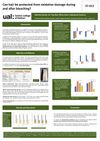
 This study assessed three materials—L-arginine, hydrolysed keratin, and cystine-silanol copolymer—ex vivo for their potential to reduce undesirable effects of hair bleaching, such as damage to hair proteins.
28 citations
,
December 2007 in “Proceedings of the National Academy of Sciences” This study observed that root hair growth in Arabidopsis occurs episodically, with each growth period associated with external alkalization and internal acidification, suggesting a role for proton influx in facilitating polar growth.
22 citations
,
November 2023 in “Molecules” This review focuses on recent advances in smart responsive polymer microneedles, which offer precise, on-demand drug delivery triggered by external or physiological stimuli, highlighting significant research implications for transdermal drug administration according to this source.
 19 citations
,
March 1961 in “Nature”
19 citations
,
March 1961 in “Nature” A fatty acid/protein complex in human hair helps protect it from damage.
 January 2025 in “International Journal of Pharmacognosy and Clinical Research”
 This study reported the development of a scalp serum containing Beta-Sitosterol and nutrient-rich oils, showing stable physicochemical properties, suggesting potential for promoting hair growth and scalp health, though further clinical testing in humans is needed to confirm effectiveness.
This study characterized the physical-chemical properties of Eclipta alba and identified compounds in the plant that could support its use in developing hair loss treatments.
2 citations
,
December 2017 in “Theriogenology” This study found that V-ATPase plays a role in the acidification of vas deferens fluid under the influence of testosterone in orchidectomized rats.
November 2025 in “Advanced Healthcare Materials” This study found that incorporating CTA2-BADG, a modified hair-rebonding compound, into damaged hair significantly improved surface morphology and tensile strength by using charge-conversion chemistry to enhance penetration into the hair shaft.
This study found that adding 1.5% lactic acid to mink diets during the hair growth period significantly improved production performance and maintained visceral health.
 10 citations
,
June 2014 in “Journal of Pharmacy and Pharmacology”
10 citations
,
June 2014 in “Journal of Pharmacy and Pharmacology” This study found that antiandrogenic compounds in Curcuma aeruginosa, including germacrone, degrade rapidly at high temperatures but are more stable when solubilized in PEG-40.
4 citations
,
November 2023 in “Journal of Cosmetic Dermatology” In this study, researchers found that negative pressure fractional microneedle radiofrequency significantly improved periorbital wrinkles, hydration, and dermal thickness in patients with periorbital aging, while also increasing orderly collagen and elastic fibers, with minimal adverse effects reported.
4 citations
,
March 2023 in “Molecules/Molecules online/Molecules annual” This study successfully extracted gallic acid and ferulic acid using a biocompatible aqueous two-phase system, suggesting a sustainable approach for producing antioxidants as food supplements for hair health.
3 citations
,
January 2023 in “Journal of Hunan University Natural Sciences” In this study, researchers developed a natural shampoo using traditional plant extracts and reported that its physicochemical properties and antioxidant activity were comparable to marketed shampoos. Further research is needed to confirm its performance and quality.
3 citations
,
January 2013 in “Journal of cosmetics, dermatological sciences and applications” This study found that the new HCC additive enhances the permeation of pigments and active ingredients into hair, suggesting potential use in developing functional cosmetic hair products.
2 citations
,
March 2010 in “Acta Biochimica Polonica” This study observed that conjugates of the anticancer drug raltitrexed with dextran and albumin were more cytotoxic than the free drug at high concentrations, altering cell cycle effects.
1 citations
,
June 1999 in “American Journal of Contact Dermatitis” This review discusses the choice and formulation of medicated and cosmetic shampoos for scalp disorders and hair aesthetics, providing guidelines based on hair types and patient age, and reports no new results.
August 2026 in “International Journal of Allied Medical Sciences and Clinical Research” This review highlights that herbal shampoos containing ingredients like custard apple leaves and aloe vera offer a natural and safe alternative to conventional chemical-based shampoos, effectively cleansing the scalp and supporting healthy hair without harsh chemicals, according to this source.
 June 2026 in “Zenodo (CERN European Organization for Nuclear Research)”
 This study evaluated a conditioner made from herbal ingredients like liquorice and flaxseed extracts, finding it potentially effective and safe for enhancing hair smoothness and moisture while offering an eco-friendly alternative to synthetic options.
 June 2026 in “Zenodo (CERN European Organization for Nuclear Research)”
 This study formulated a natural hair conditioner using liquorice, flaxseed, and curry leaf extracts, coconut oil, glycerine, and rose water, reporting that it effectively improved hair smoothness, shine, moisture retention, and manageability, offering a potential eco-friendly alternative to synthetic conditioners.
 January 2026 in “International Journal of Innovative Research in Engineering & Multidisciplinary Physical Sciences”
 This study developed and tested an herbal hair serum containing aloe vera, hibiscus, rose extract, ginger, amla, argan oil, and vitamin E, finding it to be safe, non-irritating, and effective in improving hair shine, reducing frizz, and enhancing manageability.
 January 2025 in “International Journal For Multidisciplinary Research”
 In this study, the researchers developed and evaluated eco-friendly poly-herbal soap strips using plant extracts from Lantana camara, Moringa Oleifera, and Corn silk, finding that the strips exhibited superior physicochemical properties and significant anti-fungal activity compared to conventional anti-fungal soaps.