11 citations
,
October 2005 in “Toxicological Sciences” In this study, mouse skin exposed to cigarette smoke condensate exhibited increased epidermal thickness and ODC expression, with some changes persisting after exposure ended, suggesting potential for tumor promotion and measurement discrimination.
October 2024 in “Dermatologica Sinica” This case report describes a 21-year-old male diagnosed with Crohn's disease and ulcerative pyoderma gangrenosum presenting with diverse extraintestinal symptoms, and highlights the success of a multi-drug treatment regimen including steroids and infliximab in improving clinical outcomes, though hematochezia was initially persistent.
May 2022 in “Journal of Cutaneous Immunology and Allergy” This case report highlights that asymptomatic domestic cats can transmit Microsporum canis, leading to tinea capitis in humans, as seen in a four-year-old girl in the study.
This case report highlights a potential link between silicone breast implants and autoimmune/inflammatory syndrome induced by adjuvants, suggesting explantation may help improve symptoms.
79 citations
,
January 2019 in “International Journal of Molecular Sciences” This study characterized the inflammatory response in a murine burn model, revealing similarities to human burns and supporting the model's use in testing therapies for burn complications.
 16 citations
,
March 2013 in “JAMA Dermatology”
16 citations
,
March 2013 in “JAMA Dermatology” This case study describes a 33-year-old woman with chronic myelogenous leukemia who developed nonscarring alopecia after starting nilotinib therapy, linked to perifollicular inflammation.
 September 2018 in “Fertility and Sterility”
 This study observed that inflammatory stimuli significantly altered gene expression in rat theca-interstitial cells, affecting pathways related to growth and androgen production, which are central features of polycystic ovary syndrome.
 July 2025 in “The Korean Journal of Internal Medicine”
 This study suggests that T-cell recruitment, thrombosis, and increased vascular permeability may contribute to various symptom clusters in post-acute sequelae of COVID-19 through shared cytokine elevation.
November 2024 in “The Journal of Dermatology” This study observed that in children with persistent kerion, ingrown hairs could be identified with a dermatoscope and their removal often improved the condition, suggesting that ingrown hairs might be an aggravating factor in the persistence of this fungal infection.
December 2024 in “Arca - Repositório Institucional da Fiocruz” This study found that complete COVID-19 vaccination significantly reduces the risk of developing long COVID symptoms, with factors like age, female gender, and obesity increasing persistence of symptoms.
July 2025 in “Malaria Journal” This study suggests that while Nanostring profiling identifies important processes in resolving MA-ARDS, solely targeting late-stage resolution by altering SPM production is not enough. The researchers conclude that combining multi-targeted adjunctive therapies with antimalarial drugs may be necessary to enhance survival and recovery.
 45 citations
,
November 2015 in “Dermatologic Clinics”
45 citations
,
November 2015 in “Dermatologic Clinics” This review discusses the potential hormonal and metabolic factors influencing hidradenitis suppurativa and highlights the need for further research to explore hormonal dysregulation's role in the disease.
2 citations
,
March 2025 in “International Journal of Dermatology” In this case report, the authors described a 46-year-old woman with severe atopic dermatitis and alopecia areata, who experienced significant improvements in both conditions after treatment with the interleukin-13 blocker tralokinumab, suggesting a potential therapeutic role for targeting type 2 cytokine IL-13 in such cases.
 7 citations
,
September 2015 in “Actas Dermo-Sifiliográficas”
7 citations
,
September 2015 in “Actas Dermo-Sifiliográficas” This article reviews the challenges of treating frontal fibrosing alopecia and the potential role of hair transplantation, noting the lack of effective medical treatments and uncertainty surrounding transplant outcomes.
 December 2015 in “Actas Dermo-Sifiliográficas”
 This review addresses the challenges in treating frontal fibrosing alopecia, highlighting the limited effectiveness of medical treatments and the demand for hair transplantation despite its risks, but it reports no new clinical results.
 April 2018 in “The journal of investigative dermatology/Journal of investigative dermatology”
 This study found that electrical epilation in organ-cultured human scalp skin perturbs hair follicles by causing inflammation, impairing melanin production, and possibly inhibiting post-epilation hair re-growth.
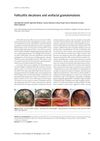 January 2018 in “Advances in Dermatology and Allergology”
 Treatment with dapsone, topical corticosteroids, and antibiotics improved the man's skin conditions.
28 citations
,
January 1986 in “International Journal of Dermatology” This case study describes a pregnant woman who developed a pruritic rash with follicular lesions containing yeast-like organisms, resistant to conventional acne treatments.
 6 citations
,
April 2015 in “Infection”
6 citations
,
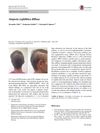
April 2015 in “Infection” This case study describes a patient with secondary syphilis, including alopecia syphilitica diffusa, whose symptoms resolved completely after treatment with benzylpenicillin following prednisolone prophylaxis.
 February 2026 in “Scientific Reports”
 This study established a murine model for radiation-induced skin reactions, replicating clinical and histological features to aid future mechanistic and therapeutic research.
July 2025 in “Journal of Investigative Dermatology” Reduced AhR signaling in HS tunnels leads to persistent inflammation and microbial imbalance.
 October 2020 in “Our Dermatology Online”
 This case report highlights how chronic bacterial folliculitis may contribute to persistent inflammation in lichen simplex chronicus and emphasizes the value of DIF and IHC in diagnosing obscure cases.
 4 citations
,
February 2020 in “Journal of Cosmetic Dermatology”
4 citations
,
February 2020 in “Journal of Cosmetic Dermatology” This study reported significant moderate-to-severe complications in two patients following synthetic hair fiber implantation, including recurrent infections, scalp issues, and granulomatous reactions, which were only resolved once the fibers were removed despite initial treatment attempts with antibiotics.
49 citations
,
July 1994 in “British journal of dermatology/British journal of dermatology, Supplement” This study observed that 13 out of 38 children with methylmalonic and propionic acidaemia exhibited specific cutaneous manifestations, suggesting these conditions may include skin symptoms more often than previously thought.
 42 citations
,
April 2012 in “Seminars in Oncology”
42 citations
,
April 2012 in “Seminars in Oncology” This review discusses the skin side effects associated with targeted cancer therapies and reports no new clinical results; it emphasizes the need for empirical management based on expert opinion.
 3 citations
,
January 2017 in “PubMed”
3 citations
,
January 2017 in “PubMed” This report describes a case of inflammation and infection with specific pathogens in synthetic hair implants done by a non-medical professional, highlighting risks associated with the procedure.
 2 citations
,
January 2011 in “Elsevier eBooks”
2 citations
,
January 2011 in “Elsevier eBooks” This book reviews the various types of acne and acneiform conditions, as well as their treatment options, with expert insights from multiple fields.
 1 citations
,
January 2015 in “Springer eBooks”
1 citations
,
January 2015 in “Springer eBooks” The document says a skin condition called alopecia areata causes hair loss and stress, and is treated with strong skin creams, injections, or other therapies, but treatment success varies.
 68 citations
,
May 2013 in “The American journal of medicine”
68 citations
,
May 2013 in “The American journal of medicine” This report documents two cases of severe systemic poisoning from heavy metals after short-term use of traditional Chinese medicines for treating damaged or infected tissue.
 36 citations
,
September 1999 in “Toxicologic pathology”
36 citations
,
September 1999 in “Toxicologic pathology” This study suggests that hairless dogs' skin shows sensitivity to topical corticosteroids, highlighting their potential as a model for studying the efficacy and adverse effects of these treatments on skin.