 July 2005 in “SKINmed/Skinmed”
 This study reported that BRL 7660 significantly reduced sebum secretion and acne symptoms in human studies with topical administration, but the placebo effect and commercial pressures halted further investigations.
 6 citations
,
July 2023 in “Spine Surgery and Related Research”
6 citations
,
July 2023 in “Spine Surgery and Related Research” This article reviews the potential of PRP as a treatment for spinal pain but calls for established use guidelines and protocols before wider clinical adoption, with no new clinical results reported.
 January 2024 in “International Journal of Trichology”
 In this laboratory study, researchers found that human platelet-rich plasma (hPRP) significantly improved the proliferation and hair-inductive capacity of human dermal papilla cells (hDPCs) compared to fetal bovine serum, suggesting hPRP as a potential substitute for FBS in expanding hDPCs for clinical hair regeneration therapies.
 October 2019 in “Tishreen University Journal -Medical Sciences Series”
 In this study, PRP injections were found to significantly increase hair density in men with androgenetic alopecia, with a 19.17% average improvement maintained over six months and minimal side effects.
 January 2026 in “Journal of Community Medicine and Health Solutions”
 In this study, the novel topical agent PP405 showed favorable tolerability and increased hair density by over 20% in men with advanced androgenetic alopecia after eight weeks, suggesting a promising potential treatment pending further trials.
September 2023 in “Journal of the American Academy of Dermatology” In this study of pediatric melanocytic lesions, researchers at Massachusetts General Hospital observed no concurrent BAP1 loss and BRAFV600E positivity, characteristics of adult BIMT, suggesting that these tumors may develop at a later age rather than in childhood.
 February 2026 in “Frontiers in Pharmacology”
 This study found that injecting PRP gel derived from a patient's own blood may promote tissue regeneration and closure of intestinal fistulas unresponsive to conservative therapy.
1 citations
,
January 2021 26 citations
,
November 2019 in “Medical Science Monitor” This study found that photobiomodulation via LED light at 630 nm and 810 nm increased proliferation and mineralization in osteoblast-like cells, with comparable effects between the two wavelengths.
 1 citations
,
January 2018 in “Acta dermato-venereologica”
1 citations
,
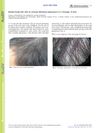
January 2018 in “Acta dermato-venereologica” A teenager's hair with alternating white and dark bands, known as Pili annulati, is a genetic condition that is usually harmless and often considered attractive.
 29 citations
,
December 2011 in “British Journal of Dermatology”
29 citations
,
December 2011 in “British Journal of Dermatology” The researchers reported that a novel leave-on treatment containing caffeine, niacinamide, panthenol, dimethicone, and an acrylate polymer significantly increased the diameter and improved the mechanical properties of scalp hair fibers, suggesting it may help mitigate thinning hair.
December 2024 in “Aesthetic Plastic Surgery” In this observational study, patients with androgenic alopecia or hair loss related to COVID-19 showed more significant hair regrowth when treated with combined pulsed electromagnetic field therapy and photobiostimulation therapy compared to photobiostimulation therapy alone, with a statistically significant increase in hair count.
 2 citations
,
January 2020 in “Libri Oncologici Croatian Journal of Oncology”
2 citations
,
January 2020 in “Libri Oncologici Croatian Journal of Oncology” In this study, PRP injections into the muscular layer of rabbits' intestinal walls improved anastomosis regeneration with less adhesion compared to PRP soaking, though further research is needed to determine the best application method.
38 citations
,
January 2017 in “PPAR Research” This review discusses the role of PPAR-γ in the pathogenesis of primary cicatricial alopecia, including its involvement in lichen planopilaris and treatment trials using PPAR-agonists, and reports no new clinical results.
January 2021 in “TURKISH JOURNAL OF VETERINARY AND ANIMAL SCIENCES” In this study, PRP administration in rabbit tibia bones with segmental defects improved bone healing scores and advanced bone development stages compared to the control group.
3 citations
,
January 2018 in “Elsevier eBooks” The abstract discusses that Serenoa repens, a commonly used phytotherapeutic agent, may play a crucial role as an alternative or complementary treatment for lower urinary tract symptoms in patients with benign prostatic hyperplasia, particularly those with mild-to-moderate disease severity.
12 citations
,
August 2022 in “Ecotoxicology and Environmental Safety” This study developed and validated a method using hair samples to simultaneously detect bisphenols and parabens, enabling the quantification of these endocrine disruptors in a hospital population’s hair.
December 2004 in “Annales d Urologie” This article examines the PCPT study on whether daily finasteride can reduce prostate cancer incidence, describing its methodology and findings but reporting no new clinical results.
 December 2024 in “JAPI (Jurnal Akses Pengabdian Indonesia)”
 This study found that a community education program using group discussions and leaflets significantly increased knowledge and skills among Sungai Bilu residents in South Kalimantan for using riverbank plants as alternative medicine.
This study found significant variability in the production and use of platelet-rich plasma and related products in Brazil, highlighting the need for regulatory measures to ensure safety.
September 2023 in “Journal of the American Academy of Dermatology” Recognizing IPPP is crucial to prevent misdiagnosis and unnecessary treatments.
September 2025 in “Development” In this study, deleting the transcriptional pause factor Nelfb in mouse preadipocyte lineages led to defective dermal fat formation and lethal outcomes, while interventions targeting Pparg could rescue adipocyte differentiation and promote dermal white adipose tissue formation, underscoring Nelfb's critical role in adipogenesis.
October 2006 in “Urology” Combination therapy with Finasteride is more effective than alpha-blocker alone for BPH symptoms in small prostate volume.
 176 citations
,
June 2016 in “PLoS ONE”
176 citations
,
June 2016 in “PLoS ONE” In these initial clinical studies, NAP monotherapy showed significant reductions in HBsAg levels among patients with chronic HBV, suggesting potential as part of future combination therapies.
 November 2023 in “The Journal of Urology”
 The conclusion is that future trials should report specific details about the PRP composition to better understand its effects on urologic conditions.
2 citations
,
November 2025 in “Biomedicines” This review explores how platelet- and marrow-derived biologics like PRP and BMAC exhibit both regenerative and antimicrobial properties useful in musculoskeletal conditions and wound healing, though their clinical outcomes are affected by preparation inconsistencies and lack of standardized protocols.
 June 2020 in “Journal of Investigative Dermatology”
 This study of photobiomodulation therapy devices for androgenetic alopecia found variable improvements in hair grade across different skin types and devices, suggesting a need for larger, more comprehensive trials.
 January 2011 in “Yearbook of Dermatology and Dermatologic Surgery”
 The adapalene-benzoyl peroxide gel works better and faster for acne treatment than using either ingredient alone, with manageable side effects.
February 2026 in “Frontiers in Bioengineering and Biotechnology” This review discusses the current evidence on platelet-rich plasma therapy's biological mechanisms and clinical applications, highlighting its promise in regenerative medicine and the challenges to its integration in nursing practice.
 January 2006 in “Actas Urológicas Españolas”
 This retrospective study observed no significant difference in the prevalence of incidental prostate cancer between suprapubic prostatectomy and transurethral prostate resection groups, with most tumors being well differentiated and early-stage.