 December 2025 in “International Journal of Surgery”
 In this study, researchers identified a causal link between Epstein-Barr virus infection and clear cell renal cell carcinoma, highlighting GBP1 as a key target and suggesting finasteride as a potential inhibitor, offering a new direction for treatment strategies.
 January 2024 in “Wiadomości Lekarskie”
 In this study, researchers examined a patient with ZMYM2::FGFR1 fusion-positive leukemia, finding that Pemigatinib showed efficacy, while Ponatinib resistance was linked to a specific FGFR1 mutation. Other FGFR inhibitors demonstrated high effectiveness in ex vivo assays.
 10 citations
,
September 1997 in “Molecular carcinogenesis”
10 citations
,
September 1997 in “Molecular carcinogenesis” This study found that mirex and TPA promote papilloma formation in CD-1 mouse skin through distinct populations of mutant Ha-ras cells, resulting in additive tumor yields.
 November 2009 in “Medical & surgical dermatology”
 This study found that haploinsufficiency of SPINK5 can lead to Netherton syndrome when a single null mutation combines with homozygous G1258A polymorphisms, suggesting it acts as a genuine mutation affecting LEKTI function.
65 citations
,
February 2011 in “Molecular cancer therapeutics” This study reported that the novel AKT inhibitor CCT128930 demonstrated significant antitumor activity in human cancer cell lines and xenografts, highlighting its potential as an anticancer therapy.
September 2019 in “The journal of investigative dermatology/Journal of investigative dermatology” This study identifies two previously unreported pathogenic RIPK4 gene variants, suggesting a functional link with cell adhesion molecules in ectodermal dysplasias.
253 citations
,
April 2009 in “Journal of Biological Chemistry” This study found that p2y5 functions as a novel LPA receptor involved in the G13-Rho signaling pathway, with implications for human hair growth, and proposes renaming it to LPA6.
27 citations
,
April 2004 in “Biochemical and Biophysical Research Communications” In this study, two novel clusters of keratin-associated protein genes on human chromosome 11 were analyzed, suggesting their products are crucial for hair formation due to preferential expression in hair roots.
January 1990 in “대한피부과학회지” This study found that peanut agglutinin binding patterns after neuraminidase pretreatment can help differentiate malignant melanoma from nevocellular nevus in skin specimens.
 76 citations
,
May 2011 in “Cell death and differentiation”
76 citations
,
May 2011 in “Cell death and differentiation” This study found that the enzyme A20 helps regulate EDAR-induced NF-κB signaling in mice, preventing ectodermal abnormalities like disheveled hair and assuring proper skin and appendage development.
 May 2011 in “Value in Health”
 This study found that the oral Janus kinase inhibitor CP-690,550 has a direct effect on reducing pruritus in patients with psoriasis, independent of clinician-assessed improvements in psoriasis severity.
4 citations
,
February 2024 in “Anais Brasileiros de Dermatologia”  3 citations
,
June 2022 in “European journal of human genetics”
3 citations
,
June 2022 in “European journal of human genetics” This study reports the first cases of recessive KRT17-related pachyonychia congenita involving all ectodermal derivatives in seven members of two consanguineous Pakistani families.
22 citations
,
July 1998 in “Journal of Investigative Dermatology” This study identified and characterized a gene called 4C32, which is expressed in the periderm of embryonic mouse skin and has a structure similar to keratin-associated proteins.
61 citations
,
September 1994 in “Journal of Medical Genetics” This study found strong evidence linking a keratin gene anomaly to pachyonychia congenita, supporting its role in affecting skin, nails, hair, and mucosa.
226 citations
,
January 2006 in “International review of cytology” Keratin-associated proteins are crucial for hair strength and structure.
 6 citations
,
January 2024 in “Annals of Dermatology”
6 citations
,
January 2024 in “Annals of Dermatology” In this study, treatment with recombinant DKK2 was shown to significantly stimulate hair progenitor cell growth and enhance hair shaft elongation in ex vivo human hair follicle cultures by activating the Wnt/ẞ-catenin signaling pathway, suggesting a potential role for DKK2 in promoting hair growth.
 June 2021 in “bioRxiv (Cold Spring Harbor Laboratory)”
 This research found that the microtubule catastrophe factor KIF18B plays a crucial role in promoting spindle orientation in keratinocytes, linking this process to cell fate decisions during hair follicle morphogenesis.
53 citations
,
September 2013 in “Journal of Investigative Dermatology” This study suggests that cultured hair follicle dermal sheath cup cells exhibit immune privilege properties, partly through the expression of PD-L1, which impacts co-cultured immune cells' behavior.
 5 citations
,
January 2018
5 citations
,
January 2018 This study optimized a screening assay to identify molecules that inhibit or enhance TRPM5 ion channel activity, which may have implications for treating dysfunctions linked to cardiac arrhythmias and diabetes.
 133 citations
,
May 2016 in “Cell Host & Microbe”
133 citations
,
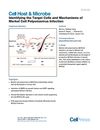
May 2016 in “Cell Host & Microbe” In this study, human dermal fibroblasts were identified as natural host cells that support productive Merkel cell polyomavirus infection, and the MEK antagonist trametinib was introduced as an effective inhibitor to control the virus.
September 2024 in “Pigment Cell & Melanoma Research” This study found that mitochondrial fusion regulator Opa1 is crucial for maintaining melanocyte stem cells during the hair follicle cycle in mice, with Opa1 deficiency leading to impaired SCF-KIT signaling, reduced melanocyte populations, and early hair graying.
April 2017 in “Journal of Investigative Dermatology” Deleting Crif1 in mouse skin disrupts skin balance and hair growth.
53 citations
,
June 2005 in “The journal of investigative dermatology/Journal of investigative dermatology” This article reviews extensive genetic polymorphisms in the keratin-associated proteins of human hair, indicating complexity but reporting no new clinical results and calls for further research on their potential impact on hair structure.
 54 citations
,
July 2017 in “Scientific Reports”
54 citations
,
July 2017 in “Scientific Reports” This study found that the JMJD3/NF-κB-Notch1 pathway plays a crucial role in regulating keratinocyte migration and skin wound healing, with Notch1 affecting key genes involved in cell migration.
 16 citations
,
December 2016 in “Molecular Medicine Reports”
16 citations
,
December 2016 in “Molecular Medicine Reports” This study found that platelet-rich plasma may influence the proliferation of human hair dermal papilla cells by affecting gene expression related to the cell cycle.
 32 citations
,
January 2000 in “Skin pharmacology and physiology”
32 citations
,
January 2000 in “Skin pharmacology and physiology” In this study, procyanidin B-2 and C-1 were found to promote hair growth by selectively inhibiting protein kinase C, supporting their potential use for hair-growing activity.
147 citations
,
August 2005 in “The Plant Cell” This study identified a key Arabidopsis thaliana gene, TIP1, whose product is involved in S-acylation crucial for normal plant cell growth, particularly affecting root hair development.
31 citations
,
March 2016 in “Journal of Investigative Dermatology” AKR1B10 enzyme may cause keloid scars and could be a treatment target.
477 citations
,
March 2004 in “Proceedings of the National Academy of Sciences” This study reports that the DMI3 gene, essential for nodule formation in legume-rhizobial symbiosis, encodes a calcium/calmodulin-dependent protein kinase, highlighting its role in multiple plant symbioses.