 1 citations
,
January 2024 in “Wiadomości Lekarskie”
1 citations
,
January 2024 in “Wiadomości Lekarskie” This study evaluated a new computer-aided detection system for identifying Breast Arterial Calcification in mammograms, achieving 70% accuracy, but highlighted the need for a larger dataset to explore its relationship with cardiovascular diseases.
 October 2023 in “Facial Plastic Surgery”
 This article describes the PHAT technique for lip and facial rejuvenation but reports no new clinical findings; the technique aims to improve skin quality and enhance surgical outcomes.
 January 2024 in “Wiadomości Lekarskie”
 This research highlights the development of cardiac pacing technologies, focusing on resynchronization and conduction system pacing, with clinicians particularly hopeful about direct left bundle branch pacing.
159 citations
,
July 2014 in “Molecular pharmaceutics” This study found that MPEG-dihexPLA micelles significantly improved the skin deposition of tacrolimus compared to a marketed ointment, suggesting better targeted delivery with reduced systemic absorption.
 February 2014 in “Plastic and Reconstructive Surgery”
 This abstract provides no new research findings; it appears to be text related to the American Society of Plastic Surgeons' educational resources.
43 citations
,
March 2017 in “Drug Design Development and Therapy” The researchers reported that a new nanoformulation of paclitaxel-loaded nanoparticles showed superior antitumor effects against malignant melanoma in vitro and in vivo compared to the commercial formulation Taxol®.
 1 citations
,
February 2018 in “Journal of Plastic Reconstructive and Aesthetic Surgery”
1 citations
,
February 2018 in “Journal of Plastic Reconstructive and Aesthetic Surgery” This review from the 2013 Keogh Review found that non-surgical cosmetic interventions in the UK are largely unregulated, leaving patients with little protection or recourse.
 December 2020 in “International Journal of Research in Pharmaceutical Sciences”
 This review analyzes the mnemonic MY PCOS, exploring diagnosis and treatment strategies for the metabolic, cosmetic, and reproductive complications of polycystic ovary syndrome, without reporting new clinical findings.
1 citations
,
October 2025 in “Micromachines” This review highlights the potential of integrating point-of-care testing with allele-specific amplification techniques like AS-PCR, AS-LAMP, and AS-RPA to improve the efficiency, accuracy, and affordability of genotyping single nucleotide polymorphisms associated with human diseases.

In this clinical case study, a 30-year-old man with systemic lupus erythematosus was diagnosed with both catastrophic antiphospholipid syndrome and acquired haemophilia A, successfully treated with immunosuppressive therapy, plasma exchange, and IVIG, leading to a favourable outcome.
June 2026 in “UNC Libraries” This case study reported a 49-year-old woman with metastatic adrenocortical carcinoma who experienced an abscopal effect after pulse electric field ablation, leading to the resolution of three untreated liver lesions, suggesting potential benefits of this treatment combined with immunotherapy.
 May 2025 in “The Journal of Rheumatology”
 This case report suggests that a proactive physical therapy model can be effective for improving physical function and meeting exercise guidelines in patients newly diagnosed with systemic lupus erythematosus.
March 2026 in “Journal of Enzyme Inhibition and Medicinal Chemistry” This review examines the development and challenges of using PROTACs, a targeted protein degradation strategy, to treat cancer by degrading specific proteins like PARPs and GPX4, highlighting issues such as target diversification and bioavailability.
 22 citations
,
January 2018 in “Experimental Dermatology”
22 citations
,
January 2018 in “Experimental Dermatology” This article reviews insights into the pathogenesis of primary cicatricial alopecias, such as lichen planopilaris, provided by emerging technologies, but it does not report new clinical results.
 May 2025 in “The Journal of Rheumatology”
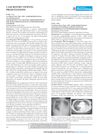
 This case report describes a 47-year-old woman with dilated cardiomyopathy as the first sign of primary antiphospholipid syndrome, highlighting the need for APS screening in similar patient presentations.
 44 citations
,
November 2011 in “The Journal of Dermatology”
44 citations
,
November 2011 in “The Journal of Dermatology” This review discusses recent advancements in the management and diagnosis of primary cicatricial alopecias but reports no new clinical results; emerging insights suggest sebaceous gland dysfunction may play a role in their etiopathogenesis.
January 2026 in “Dermatologic Therapy” This study suggests that autologous platelet concentrates may improve inflammatory activity, disease control, and hair regrowth in primary cicatricial alopecia, but the evidence is limited by small sample sizes and study quality.
44 citations
,
May 2023 in “MedComm” This review highlights the potential of PROTAC technology in drug discovery for previously undruggable targets, particularly in cancer therapy, while emphasizing the urgent need to discover more E3 ligase recruiters to optimize targeted protein degradation.
January 2020 in “JAAD case reports” Systemic mastocytosis may cause a type of hair loss called cicatricial alopecia.
 April 2016 in “Plastic and reconstructive surgery. Global open”
 This article from the PRS Global Open and ASPS Education Network does not present any new research findings; it likely serves as an introductory or descriptive overview.
September 2023 in “Journal of the American Academy of Dermatology” Recognizing IPPP is crucial to prevent misdiagnosis and unnecessary treatments.
 March 2012 in “Journal of Pediatric and Adolescent Gynecology”
 This study found significant variability among NASPAG members in diagnostic approaches for PCOS, though there was more agreement on recommended first-line therapies such as oral contraceptives and lifestyle changes.
39 citations
,
January 2006 in “Journal of Cosmetic and Laser Therapy” This study found that pneumatic skin flattening (PSF) significantly reduces pain and post-treatment erythema during high-energy IPL and laser hair removal while enhancing treatment efficacy.
This study developed a legally valid, evidence-based informed consent document specifically for platelet-rich plasma injections, intended to enhance patient rights and communication, and support legal defense in malpractice cases.
35 citations
,
June 1997 in “Annals of the New York Academy of Sciences” Early diagnosis and multidisciplinary care are crucial for managing PCOS in adolescents.
January 2022 in “Aesthetic Plastic Surgery” 2 citations
,
May 2011 in “Journal of Clinical Oncology” This study found that paclitaxel poliglumex showed limited effectiveness and was relatively well tolerated in post-menopausal women with advanced NSCLC, suggesting further testing of this treatment may not be justified.
 10 citations
,
October 2016 in “Monoclonal antibodies in immunodiagnosis and immunotherapy”
10 citations
,
October 2016 in “Monoclonal antibodies in immunodiagnosis and immunotherapy” This study developed rat monoclonal antibodies that specifically detect Pax1/PAX1 protein, which could improve diagnostic protocols for conditions involving deregulated Pax1/PAX1 expression.
 October 2020 in “Journal of Aesthetic Nursing”
 This article discusses the need for changes in governance and regulation within the aesthetics industry, focusing on creating standards and competency frameworks to ensure safe practices. Results are not reported in this summary.
 June 2023 in “Journal of cosmetic dermatology”
 This study concluded that both DPCP alone and combined with PRP are effective and safe for treating severe alopecia areata, with no significant difference between the two treatment methods.