 September 1995 in “American Journal of Contact Dermatitis”
 Antiyeast treatments work better for seborrheic dermatitis than steroids, and other findings include increased skin bacteria under plastic wrap, a nasal cell defect in Staphylococcus aureus carriers, quick resolution of certain skin reactions, high rubber latex allergy in spina bifida patients, and glyceryl monopentadecanoate's effectiveness for male hair loss.
11 citations
,
July 1984 in “Australian Veterinary Journal” This study found that povidone iodine, thiabendazole ointment, captan ointment, and Burroughs Wellcome Ringworm Ointment were effective against Trichophyton equinum var. autotrophicum in horses, but large-scale use may be limited by practicality and cost.
2 citations
,
June 1953 in “Journal of the American Medical Association” This article explores the correlation between alopecia leprotica and Buddhist customs, presenting evidence that leprosy is contracted during infancy or childhood rather than in maturity; it reports no new clinical findings.
 1 citations
,
March 2022 in “JAAD case reports”
1 citations
,
March 2022 in “JAAD case reports” This review discusses traction alopecia, its causes, and common treatments, noting a lack of data on effective treatment options; the authors emphasize altering hair care practices to potentially reverse early-stage alopecia.
This study reported that using hair gel is a cheap and practical method for preventing hair interference during otoplasty surgeries, as it keeps hair in place under sterile conditions without patient complaints about maintaining the gel for two days post-operation.
In this case study, a 20-year-old man with dermatitis initially misdiagnosed as caused by Herpes simplex was found to have a fungal infection, Trichophyton mentagrophytes, and successfully treated with oral terbinafine and ketoconazole products.
17 citations
,
May 2022 in “Cells and Development”  89 citations
,
May 1999 in “Pediatric Dermatology”
89 citations
,
May 1999 in “Pediatric Dermatology” This article reviews the treatment options for tinea capitis, suggesting that itraconazole, terbinafine, and fluconazole are effective and safe alternatives to griseofulvin but reports no new clinical results.
20 citations
,
April 2000 in “Experimental dermatology” This study observed that overexpression of the enzyme ODC in transgenic mice caused hair loss and skin changes similar to human papular atrichia, suggesting that ODC might be involved in a critical hair follicle function pathway.
 3 citations
,
January 2017 in “PubMed”
3 citations
,
January 2017 in “PubMed” This report describes a case of inflammation and infection with specific pathogens in synthetic hair implants done by a non-medical professional, highlighting risks associated with the procedure.
33 citations
,
December 1982 in “Developmental Medicine & Child Neurology” The authors reviewed cases of six children with both hair-shaft abnormalities and neurological disorders, noting that such hair defects may indicate neurological conditions, including potentially treatable metabolic errors.
1 citations
,
January 2025 in “Journal of Fungi” This narrative review and case report identified a rare association between erythema nodosum and kerion caused by *Trichophyton mentagrophytes*, with successful treatment using antifungals and corticosteroids.
 July 2021 in “Clinical Medicine”
 This abstract does not report research results but acknowledges feedback concerning adherence to inclusion criteria from a prior study on the Ottawa rule by Perry et al., as shared in their CT-based clinical research.
4 citations
,
December 2024 in “Photodiagnosis and Photodynamic Therapy” In this study, Wood's lamp effectively identified tinea capitis among pediatric patients with alopecia, particularly when contact with animals was a factor, supporting its diagnostic use in primary healthcare settings.
2 citations
,
June 2010 in “Medicina de Familia SEMERGEN” The girl's "dandruff" was actually harmless hair casts, not a hygiene issue.
April 2026 in “BMJ Case Reports” This case study highlights the challenges of diagnosing hyperandrogenism in postmenopausal women, reporting a patient with androgenic alopecia and high testosterone due to a benign Leydig cell tumor in the ovary; surgery successfully normalized testosterone levels.
 3 citations
,
January 2015 in “Journal of clinical and diagnostic research”
3 citations
,
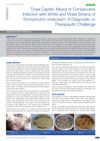
January 2015 in “Journal of clinical and diagnostic research” This case report described a seven-year-old with tinea capitis, which improved clinically after six weeks of griseofulvin treatment, changing the fungal strain from Trichophyton violaceum white variant to violet strain.
 2 citations
,
October 2015 in “Obstetrics and gynaecology cases - reviews”
2 citations
,
October 2015 in “Obstetrics and gynaecology cases - reviews” This case report details a postmenopausal woman with increased libido, hirsutism, and spontaneous orgasms, noting elevated testosterone levels and enlarged ovaries.
1 citations
,
August 2024 in “JAAD Case Reports” This report presents a rare case of diffuse hair loss resembling alopecia areata, following a tick bite on the scalp.
 September 2024 in “Cureus”
 This case report describes a woman who experienced worsened breast implant illness symptoms following a COVID-19 infection and vaccination, which improved after implant removal, even though numerous screenings had been inconclusive prior to explantation.
April 2018 in “Dermatologic Surgery” This overview describes the Dermatologic Surgery journal's comprehensive coverage of dermatologic surgical procedures, but it reports no new research findings.
 1 citations
,
December 2022 in “Pediatric dermatology”
1 citations
,
December 2022 in “Pediatric dermatology” This case report highlighted an instance of lichen spinulosus emerging as a new cutaneous sequela in a boy following toxic epidermal necrolysis, responding to treatment with ammonium lactate.
4 citations
,
November 2015 in “The journal of investigative dermatology. Symposium proceedings/The Journal of investigative dermatology symposium proceedings” This case study highlights a patient with alopecia areata who also has eosinophilic esophagitis, suggesting it may be considered an atopic disease and a potential trigger for alopecia areata in affected patients.
149 citations
,
March 1981 in “American Journal of Ophthalmology” This study found that Demodex folliculorum and Demodex brevis mites can cause eyelid follicular and glandular changes, potentially contributing to ocular disease in humans.
 2 citations
,
November 2011 in “Journal of Infection”
2 citations
,
November 2011 in “Journal of Infection” This case study presents an asthma patient with H1N1 pneumonia who developed invasive Aspergillosis despite avoiding steroids, suggesting that factors other than steroid use can contribute to IA in such patients.
Trichorrhexis nodosa causes hair to break easily, often affecting young to middle-aged black women.
June 2020 in “Journal of skin and stem cell” This case report describes a 19-year-old female with recurrent alopecia totalis who experienced complete remission after re-treatment with various therapies, emphasizing the importance of long-term follow-up in managing alopecia areata.
 June 2024 in “Annals of Medicine and Surgery”
 This case report highlights the rare co-occurrence of Pili Annulati and Trichorrhexis Nodosa in a Syrian woman, underlining the need for further research into their relationship and treatment.

This case study reports that a 14-year-old female with loose anagen hair syndrome and trichotillomania initially improved with topical minoxidil and counseling, but relapsed after a year, highlighting treatment challenges.
June 2025 in “AgroLife Scientific Journal” In a Romanian wildlife rehabilitation center, this study reported that dermatophytosis affected northern white-breasted hedgehogs, with 77.4% of the 31 treated cases responding favorably to a 14-day itraconazole regimen, emphasizing the importance of early diagnosis and treatment.