 1 citations
,
July 2007 in “Regenerative Medicine”
1 citations
,
July 2007 in “Regenerative Medicine” Stem cell research and regenerative medicine have made significant advancements in treating various diseases and conditions.
 May 2026 in “International Journal of Drug Delivery Technology”
 This review discusses PRP therapy's history, mechanisms, and innovations in its use across various medical fields, but provides no new clinical results; the authors highlight challenges like standardization and regulatory issues.
 May 2026 in “International Research Journal of Ayurveda & Yoga”
 This review explores the Charaka samhita's concept of Ashtanindita purusha, identifying eight physical constitutions traditionally regarded as undesirable due to their association with various diseases, and aims to correlate these with contemporary genetic, endocrinological, and metabolic disorders.
 April 2026 in “International Journal of Nanomedicine”
 This review explores quercetin's potential in multifunctional theranostic systems, highlighting its bioactivity and the challenges of improving its clinical application through innovative strategies like nanoencapsulation, while noting that research in this area is underdeveloped.
 March 2026 in “Trends in Sciences”
 This review suggests that while platelet-rich plasma has the most robust clinical evidence, platelet-rich fibrin and concentrated growth factors are gaining favor due to their ease of use and absence of additives.
 March 2026 in “Frontiers in Pharmacology”
 The study concluded that the Exprecell™ device for preparing anticoagulant-free f-PRF increases volume yield and simplifies the process while maintaining biological activity comparable to conventional methods, suggesting potential clinical utility.
Post-earthquake, skin issues like dermatitis and infections were common due to trauma, disinfectants, and stress.
 February 2026 in “Plastic and Aesthetic Research”
 This narrative review examines advancements in regenerative aesthetic medicine, focusing on injectable modalities like PRP, polynucleotides, and exosomes, but highlights the need for more robust evidence and standardization in clinical applications.
 January 2026 in “Nano-Micro Letters”
 This review discusses the principles, materials, and applications of melt electrowriting-based 4D printing for creating biomimetic scaffolds, but reports no new clinical results; it highlights recent advancements and remaining challenges in the field.
 January 2026 in “Asian Journal of Pharmaceutical and Clinical Research”
 This review discusses the potential of umbilical cord blood and umbilical cord-derived stem cells in treating various chronic diseases by highlighting their regenerative abilities and ethical advantages as well as the translational challenges and clinical implications.
 December 2025 in “Eastern Ukrainian Medical Journal”
 This study reviews current methods for making and using platelet-rich plasma and fibrin, emphasizing the variability in clinical outcomes due to differences in preparation protocols, and calls for standardized guidelines and large-scale studies for better effectiveness in regenerative medicine.
 December 2025 in “Lviv clinical bulletin”
 This review found that platelet-rich plasma therapy may enhance ovarian repair and fertility outcomes in ovarian insufficiency, but notes that optimal usage and long-term effects require further investigation.
 December 2025 in “International Journal of Pharmacology”
 This review highlights that iPSC-derived artificial platelets offer a promising alternative to platelet-rich plasma for regenerative medicine, with standardized manufacturing and reproducible pharmacological properties, addressing variability issues associated with donor-derived platelets and showing therapeutic potential in preclinical models of osteoarthritis.
 December 2025 in “Frontiers in Nutrition”
 This review suggests that although hydrolyzed collagen peptides with certain supplements may improve skin elasticity and joint function, evidence for collagen's anti-aging and regenerative benefits remains inconsistent.
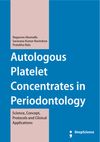
In this book, the authors provide an accessible overview of platelet concentrates and their dental applications, highlighting their role in tissue healing and regeneration, and reviewing recent studies on their efficacy in periodontal therapy, implant dentistry, and oral surgery.
 December 2025 in “VNU Journal of Science Medical and Pharmaceutical Sciences”
 This review synthesizes evidence supporting the efficacy of PRP in dermatological conditions like wound healing and alopecia, but emphasizes the need for standardized protocols and larger randomized controlled trials.

This review reports that empirical evidence suggests an overlap between Long Covid, chronic fatigue syndrome, and fibromyalgia, highlighting the need for standardized definitions and rigorous methodologies in related research.
 June 2025 in “Erzincan Binali Yıldırım Üniversitesi İktisadi ve İdari Bilimler Fakültesi Dergisi”
 This study conducted a bibliometric analysis of hair transplantation literature, revealing trends, leading researchers, and highly cited sources, while highlighting dermatology and surgical fields' concentration and the need for interdisciplinary research, clinical studies, and technological innovation.
 January 2025 in “Bright Sky Publications eBooks”
 This abstract does not report specific research findings but describes a book titled "Medical Physics and Laser Technology: Advancements and Applications in Modern Healthcare," authored by Zahraa Zuhair Ghafel Saeid and colleagues, which is available for purchase.
This case study reports that a 35-year-old woman developed nonscarring alopecia following the cosmetic use of poly-L-lactic acid on her face and hairline.
 August 2024 in “UPI Journal of Pharmaceutical Medical and Health Sciences”
 This review article discusses the current applications and research findings of platelet-rich plasma in musculoskeletal rehabilitation, highlighting its potential clinical utility but reporting no new clinical results.
This study found that women with PCOS in a Middle Eastern population reported significantly lower self-esteem and body image satisfaction compared to those without PCOS, with PCOS respondents feeling less attractive, avoiding mirrors and social interactions, and expressing a stronger desire to lose weight.
 March 2024 in “PLoS medicine”
 This study systematically reviewed meta-analyses and Mendelian randomization studies to identify factors influencing prostate cancer risk, finding suggestive associations for physical activity, height, and smoking but no robust, convincing overlapping evidence across tested factors.
 March 2024 in “Research Square (Research Square)”
 This study found no significant benefit of platelet-rich plasma injections over placebo in improving erectile function in patients with mild to moderate erectile dysfunction.
 January 2024 in “Regenerative Biomaterials”
 This review introduces the potential of metal-organic framework-based functional composite materials in tissue engineering but reports no new results, emphasizing the need for further innovation in the field.
 November 2023 in “Klìtinna ta organna transplantologìâ”
 This study reviews the regenerative potential and clinical applications of exosomes derived from mesenchymal stem cells in conditions like COVID-19, alopecia, skin aging, and osteoarthritis, highlighting their role as a promising tool in regenerative medicine.
 November 2023 in “International Journal of Medical Case Reports and Reviews”
 This review discusses the potential and current applications of platelet-rich plasma in otolaryngology and reports no new clinical results; the authors note varying evidence for its effectiveness across medical conditions.

Dental procedures and treatments show promise but need more research for conclusive results.
This study found significant cephalometric changes in patients with skeletal Class III malocclusion treated with rapid maxillary expansion and reverse traction, demonstrating maxilla advancement and improved facial convexity.
 October 2023 in “Clinical and experimental dermatology and therapies”
 In this study, researchers examined the backgrounds of 243 cosmetic surgeons in Japan and found that while medical history and surgical experience influenced training duration slightly, consistent skills could be acquired within a few months after joining their group.