This case report describes a novel mutation in the CDH3 gene in an 11-year-old Iranian boy with sparse scalp hair and macular dystrophy, leading to altered P-cadherin synthesis.
1 citations
,
March 2013 in “Clinical, cosmetic and investigational dermatology” This case report details an eleven-year-old male with recurring alopecia initially attributed to fungal infections but ultimately diagnosed as trichotillomania.
January 2022 in “The Pan African medical journal” This article discusses the rare condition of hypertrichosis, highlighting a case of a 10-year-old boy with congenital hair growth and emphasizing the need for patient support due to limited treatment options.
April 2016 in “Apollo (University of Cambridge)” This article reviews treatment approaches for trichotillomania, emphasizing differences from OCD therapies and recommending specific management strategies, without providing new experimental findings.
5 citations
,
July 2009 in “Clinical and experimental dermatology” This abstract reports no new research findings on the association between acquired hair pigment loss and a flexural dermatosis; it serves as an article access notice.
 January 2019 in “Global Dermatology”
 This review discusses the genetic disorder, monilethrix, characterized by fragile, brittle hair and its inheritance patterns, and reports no new clinical results.
4 citations
,
October 2023 in “Children” This study diagnosed a group of six girls with various ectodermal abnormalities, identifying cranio-skeletal malformations consistent with focal dermal hypoplasia (Goltz syndrome), and found heterozygous mutations in the PORCN gene in two children.
 5 citations
,
September 1986 in “Pediatric Dermatology”
5 citations
,
September 1986 in “Pediatric Dermatology” This study reported a previously undescribed form of hereditary hypotrichosis in a family, characterized by childhood-onset hair loss, morphea, and probable autosomal dominant inheritance.
 15 citations
,
October 2016 in “Journal of dermatological treatment”
15 citations
,
October 2016 in “Journal of dermatological treatment” This paper reviews the literature on acquired trichorrhexis nodosa, a clinical hair loss diagnosis associated with hair care practices, particularly in those with tightly curled hair, and emphasizes management through protective hair care regimens rather than traditional prescription therapies.
2 citations
,
May 2022 in “International journal of trichology” This article reviews the condition plica neuropathica, including its manifestations, potential causes, and treatment, but it does not provide new clinical findings.
 February 2023 in “Cosmoderma”
 Loose anagen hair syndrome causes easily shed hair but usually improves with time.
18 citations
,
November 1989 in “Clinical and experimental dermatology” This case report describes a 5-year-old girl with an extensive Microsporum canis scalp infection, highlighting griseofulvin as the preferred treatment and noting corticosteroids' benefit in severe inflammatory cases.
 6 citations
,
October 2022 in “American journal of clinical dermatology”
6 citations
,
October 2022 in “American journal of clinical dermatology” This review provides an updated overview of the symptomatology, diagnosis, trichoscopy findings, and treatment options for eyebrow and eyelash alopecia, but it reports no new experimental results.
10 citations
,
October 1981 in “Archives of Dermatology” This case report describes a 36-year-old man with tinea incognito manifesting as asymptomatic, flat patches of alopecia, which did not improve with standard treatments.
 7 citations
,
September 2011 in “International Journal of Dermatology”
7 citations
,
September 2011 in “International Journal of Dermatology” This study investigated demographic and clinical characteristics of twenty-nail dystrophy in Korea, identifying differences in subtype and gender predominance between children and adults.
 9 citations
,
January 2013 in “Acta dermato-venereologica”
9 citations
,
January 2013 in “Acta dermato-venereologica” The conclusion is that "trichoknesis" should be recognized as a separate condition from trichodynia, characterized by itching instead of pain.
July 2025 in “Actas Dermo-Sifiliográficas” This study outlines trichodynia, a painful scalp condition often linked with various types of alopecia and psychiatric disorders, noting the absence of specific treatments and highlighting the need for further research on therapeutic options.
16 citations
,
December 2006 in “Chinese Medical Journal” This case report describes a 12-year-old boy with congenital insensitivity to pain with anhidrosis and progressing acro-osteolysis, highlighting the severe complications and the necessity for early intervention.
3 citations
,
January 2017 in “Dermatology online journal” This case report describes the diagnosis of monilethrix in a 2-year-old boy using trichoscopy, highlighting its rarity and the challenge of diagnosing it without a family history.
January 2022 in “Optometric clinical practice” This case report describes a 59-year-old woman with a rare trichoepithelioma on her eyelid, emphasizing the importance for optometrists to differentiate it from basal cell carcinoma.
June 2026 in “JAAD Case Reports” Scurvy, caused by vitamin C deficiency, can occur in people with restrictive diets and can be diagnosed by twisted hair shafts.
3 citations
,
August 2018 in “Therapeutics and Clinical Risk Management” This case report discusses a young woman who developed bilateral osteonecrosis of the femoral head after corticosteroid treatment for alopecia areata, underscoring the risk of this complication in patients undergoing such therapy.
 13 citations
,
June 2012 in “Journal of Dermatological Case Reports”
13 citations
,
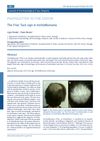
June 2012 in “Journal of Dermatological Case Reports” This report describes an 8-year-old male with trichotillomania, confirmed by trichoscopy showing characteristic hair damage and patterns.
4 citations
,
October 2015 in “JAAD Case Reports” This case report describes a patient experiencing nail nonadherence due to sterile matrix scarring associated with valproic acid use, and suggests nail bed excision with sterile matrix grafting as a potential surgical solution.
This study found that polycystic ovary syndrome was the most common cause of hirsutism among premenopausal Algerian women, affecting nearly 60% of participants.
 29 citations
,
January 2007 in “American Journal of Clinical Dermatology”
29 citations
,
January 2007 in “American Journal of Clinical Dermatology” This article reviews the social and functional impact of eyebrow loss and highlights the limited treatment options compared to scalp alopecia, but reports no new clinical results.
July 2021 in “Anais brasileiros de dermatologia/Anais Brasileiros de Dermatologia” This article reports on a family with six members diagnosed with monilethrix, highlighting varying degrees of alopecia linked to this rare hair shaft defect.
 August 2026 in “Dermatology and Therapy”
 In this study, researchers identified elongated corkscrew hairs as a new trichoscopic pattern in immunosuppressed adults with chronic endothrix tinea capitis, which may help in earlier diagnosis and targeted mycological investigation.
 2 citations
,
December 2017 in “Skin appendage disorders”
2 citations
,
December 2017 in “Skin appendage disorders” An elderly man's non-healing scalp lesion was successfully treated with a strong topical steroid.
 February 2010 in “Journal of The American Academy of Dermatology”
 NB-002 is a promising new topical treatment for fungal nail infections, showing better results than a non-medicated option.