9 citations
,
February 2002 in “PubMed” This study identified a novel mutation in the coproporphyrinogen oxidase gene, contributing to hereditary coproporphyria in a family, with decreased enzyme activity observed in the affected members.
8 citations
,
May 2025 in “Biomolecules” This review highlights the evolution of forensic genetics from basic DNA analysis to complex genome-wide studies, enabling insights into personal traits, ancestry, and habits, and suggests future advancements through technologies like CRISPR and AI.
 7 citations
,
March 2007 in “International Journal of Dermatology”
7 citations
,
March 2007 in “International Journal of Dermatology” This study observed that antisense oligonucleotides targeting FGFR-1 increased cellular activity in hair follicle cultures from mice, suggesting potential clinical utility for treating baldness.
5 citations
,
March 2022 in “Clinical Cosmetic and Investigational Dermatology” This study proposed a model that accurately predicts skin condition using genotype information and machine learning, suggesting potential for creating customized cosmetics.
3 citations
,
June 2025 in “Gyemyeong uidae haksulji” This review suggests that PDRN shows promise as a safe and versatile regenerative agent for wound healing and other dermatological applications, based on its dual mechanisms and clinical evidence of efficacy.
 3 citations
,
August 2022 in “Archives animal breeding/Archiv für Tierzucht”
3 citations
,
August 2022 in “Archives animal breeding/Archiv für Tierzucht” This study found that specific genetic variants of the KAP22-1 gene in Egyptian sheep breeds were significantly associated with wool traits like crimp, staple length, kemp score, and greasy color grade, suggesting their potential use in breeding programs.
July 2025 in “International Journal of Molecular Sciences” This genetic study identified four new keratin-associated protein genes in sheep, revealing significant sequence variation and suggesting complex evolutionary dynamics, with unique variants in some sheep breeds linking them to Romanov sheep ancestry.
November 2023 in “Вопросы современной педиатрии” This study reported that genetic testing is crucial for accurately diagnosing hypotrichosis, especially in cases with subtle symptoms or coexisting severe atopic dermatitis, as demonstrated in a young girl with a DSG4 gene mutation.
 November 2020 in “Journal of The American Academy of Dermatology”
 This study reported that using plain bottles instead of commercial kits for extracting platelet-rich plasma may be an effective method for treating hair loss.
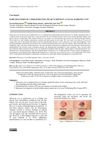 March 2022 in “Folia Medica Indonesiana”
 This case report described a facial hairline tumor initially diagnosed as a sebaceous cyst but ultimately confirmed as a rare Proliferating Pilar Tumor with focal malignancies upon histopathological examination.
January 2008 in “Memorial University Research Repository (Memorial University)” This study found that the NHD domain, but not the PHD domain, of hPygo2 is crucial for Wnt-independent growth of ovarian cancer cells, and identified a key interaction with Treacle protein involved in ribosomal biogenesis.
 124 citations
,
September 1992 in “Endocrinology”
124 citations
,
September 1992 in “Endocrinology” This article discusses the structure of the human type II 5 alpha-reductase gene and reports no new experimental results.
101 citations
,
September 2006 in “Journal of Biological Chemistry” This research quantified the fidelity of human mitochondrial DNA polymerase and found it averages 1 error in 440,000 nucleotides, impacting its function related to disease and mitochondrial health.
 94 citations
,
April 2002 in “The Journal of clinical endocrinology and metabolism/Journal of clinical endocrinology & metabolism”
94 citations
,
April 2002 in “The Journal of clinical endocrinology and metabolism/Journal of clinical endocrinology & metabolism” This study describes the first case of female pseudohermaphroditism due to a novel homozygous glucocorticoid receptor gene mutation, indicating possible pre- and postnatal virilization in affected females.
83 citations
,
October 1998 in “The American Journal of Human Genetics” A specific gene mutation causes complete hair loss in an Irish Traveller family.
76 citations
,
February 1993 in “Journal of Biological Chemistry” This research observed that sheep and rabbit KAP6 genes, expressed in hair follicle cells, have high sequence similarity and indicate conservation due to evolutionary selection pressures.
 76 citations
,
September 1992 in “Endocrinology”
76 citations
,
September 1992 in “Endocrinology” This study details the isolation and characterization of the human type II 5 alpha-reductase gene, which may play a role in male pseudohermaphroditism, prostate cancer, and benign prostatic hyperplasia.
29 citations
,
January 1996 in “The Journal of Clinical Endocrinology & Metabolism” This study identified a compound heterozygous mutation in the 3 beta-HSD gene that confirmed inherited 3 beta-HSD deficiency in a Pakistani child with salt-wasting congenital adrenal hyperplasia.
25 citations
,
April 2019 in “Animals” In this study, KRTAP28-1 variants were associated with wool fibre diameter in sheep, suggesting potential as a gene marker for reducing fibre diameter.
 21 citations
,
April 2019 in “Clinical, cosmetic and investigational dermatology”
21 citations
,
April 2019 in “Clinical, cosmetic and investigational dermatology” This article reviews the causes and clinical presentation of pseudofolliculitis barbae, highlighting how genetic susceptibility and hair removal practices contribute to its development, but reports no new research findings.
21 citations
,
June 2009 in “Mammalian genome” This study describes a mouse model for Marie Unna Hereditary Hypotrichosis, identifying mutations in the hairless gene that result in sparse or absent hair and cyst-like hair follicles.
18 citations
,
January 2018 in “Advances in experimental medicine and biology” This review discusses the evolutionary history of keratins and reports no new results, highlighting key events that contributed to the development of mammalian hair and integument.
 17 citations
,
April 2023 in “Aging”
17 citations
,
April 2023 in “Aging” In this study, the authors used AI-driven methods to identify and prioritize promising therapeutic targets that may address both aging and Glioblastoma Multiforme, proposing CNGA3, GLUD1, and SIRT1 as novel candidates.
 14 citations
,
July 2001 in “American Journal of Human Genetics”
14 citations
,
July 2001 in “American Journal of Human Genetics” Haplogroup X found in Altaian population supports Amerindian origin.
10 citations
,
September 2022 in “Animals” This research identified 18 significant SNPs and several candidate genes associated with udder conformation traits in Holstein cattle, providing insights into their genetic architecture.
 9 citations
,
October 2008 in “Mutation research”
9 citations
,
October 2008 in “Mutation research” This article discusses the genomic and postgenomic changes in chronic degenerative diseases and cardiovascular and skin disease contexts, highlighting potential modulation through diet and pharmacological interventions without presenting new experimental results.
8 citations
,
December 2017 in “Small Ruminant Research” This study reports that variation in the ovine TCHH gene may influence wool fibre curvature, with specific gene variants affecting the mean fibre curvature in sheep.
7 citations
,
April 2004 in “International Journal of Dermatology” This report describes a case of epidermolytic hyperkeratosis in a newborn and her mother, both possessing a specific KRT1 gene mutation known to cause this skin disorder.
6 citations
,
January 2004 in “DNA Research” This study identified a nonsense mutation in the Sgkl gene as the cause of defective hair growth in a mutant mouse strain, implicating the SGKL signaling pathway in hair development.
5 citations
,
April 2019 in “DOAJ (DOAJ: Directory of Open Access Journals)” This article discusses the characteristics and pathogenesis of pseudofolliculitis barbae, particularly its prevalence in men of African and Asian descent, but presents no new research findings.