September 2016 in “Journal of Dermatological Science” Polarizing light microscopy can easily and reliably diagnose congenital keratinizing disorders like Netherton syndrome.
16 citations
,
April 2025 in “Journal of the American Academy of Dermatology” In this study, an expert panel established a consensus guideline indicating that photobiomodulation is a safe and effective treatment for various conditions, including peripheral neuropathy and androgenic alopecia.
July 2026 in “Journal of Investigative Dermatology” November 2024 in “Journal of Investigative Dermatology” Genetic defects in the Wnt/PCP pathway may cause congenital yellow nail syndrome.
4 citations
,
February 2023 in “Frontiers in Oncology” In this study, Nano-Pulse Stimulation Therapy successfully cleared up to 91% of melanoma tumors in mice with less skin damage compared to cryoablation, which cleared up to 66% of tumors.
 June 2023 in “British Journal of Dermatology”
 In this case report, researchers described a female child with total alopecia due to a mutation in the SNRPE gene, emphasizing the need for updated genetic testing as knowledge advances to avoid diagnostic delays in hereditary nonsyndromic hypotrichosis.
 30 citations
,
June 2021 in “British Journal of Dermatology”
30 citations
,
June 2021 in “British Journal of Dermatology” This review discusses the association between WNT10A gene variants and various ectodermal disorders, highlighting their clinical relevance in dermatology and dentistry, but reports no new findings.
7 citations
,
September 1991 in “Journal of Andrology” In this study, 4‐MAPC treatment reduced ventral prostate weight in rats primarily through decreased synthetic activity, with testosterone propionate increasing prostate weight and activity at pharmacologic doses.
October 2024 in “Frontiers in Immunology” This study proposes that intranasal exposure to PTx and autoantigen in an animal model can trigger autoimmune disease, supporting the idea that subclinical nasal colonization by BP may cause alopecia areata.
 21 citations
,
April 2014 in “PLoS ONE”
21 citations
,
April 2014 in “PLoS ONE” In this study, researchers identified a novel KRT74 gene mutation associated with autosomal recessive pure hair and nail ectodermal dysplasia in a Pakistani family, expanding the known genetic causes of the disorder.
November 2024 in “Journal of Investigative Dermatology” This study identified PTEN as a key regulator in non-healing venous leg ulcers, suppressing immune responses and lymphangiogenesis, suggesting its potential as a therapeutic target for promoting VLU healing.
 16 citations
,
May 2000 in “Endocrinology”
16 citations
,
May 2000 in “Endocrinology” This study identified a new gene, mrp4, in mice, which suggests it may have a unique role in the growth and development of hair follicles in the ears and tails.
 March 2024 in “Tissue engineering. Part A”
 In this study, researchers observed that applying negative pressure to nude mice led to a significant increase in hair follicle growth and angiogenesis, suggesting potential for hair regeneration through mechanisms involving SOX-9, LHX-2, and β-catenin mediation.
 March 2023 in “Chemical biology & drug design”
 This study found that 8% Panax notoginseng saponins may promote hair follicle growth in C57BL/6J mice, potentially through the Wnt/β-catenin signaling pathway.
 June 2024 in “British Journal of Dermatology”
 This article presents a family case study of dermatopathia pigmentosa reticularis linked to a specific KRT14 gene variant, detailing symptoms and stressing the importance of molecular diagnosis for management.
January 2026 in “Journal of Aesthetic Nursing” This review discusses the regenerative potential of polynucleotides and polydeoxyribonucleotides in aesthetic medicine, noting their benefits for skin texture, hydration, and patient satisfaction despite limited high-quality evidence.
A new mutation in the TRPS1 gene caused Trichorhinophalangeal syndrome in a 17-year-old, highlighting the need for genetic testing.
November 2024 in “bioRxiv (Cold Spring Harbor Laboratory)” This study introduced a novel scarless healing material called pgPE, made from a porous UHMWPE nanomembrane, and found that it promotes complete skin reconstruction and hair follicle regeneration by alleviating hypoxia and modulating immune responses to foster scar-free wound healing.
January 2024 in “Defence life science journal” This review explores the potential of non-invasive photobiomodulation therapy for managing combat and traumatic soft tissue injuries, emphasizing its benefits, efficacy, and underlying mechanisms, but reports no new clinical results.
110 citations
,
January 2014 in “Journal of Controlled Release” Phospholipid-coated nanoparticles penetrate hair follicles better than others, especially in pig ears.
July 2025 in “Dermatologic Surgery” This article corrects a duplication error in a previous publication and reports no new research findings.
 June 2023 in “British Journal of Dermatology”
 This case study confirmed a diagnosis of Werner syndrome in a 27-year-old woman through genetic testing, highlighting the condition's characteristics and the importance of multidisciplinary management.
October 2019 in “Journal of Pakistan Association of Dermatologists” In this study, NB-UVB therapy significantly increased Wnt1 and β-catenin expression in hair follicles, which may play a role in vitiligo perifollicular repigmentation.
2 citations
,
January 2017 in “Indian dermatology online journal” This case study reports a 30-year-old woman with a mixed infection of white piedra and pediculosis capitis, indicating the difficulty in distinguishing between these conditions upon casual examination.
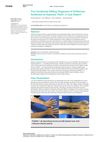
This study presents a rare instance of Netherton syndrome diagnosed incidentally in siblings of consanguineous parents, initially misdiagnosed as other skin conditions, emphasizing the need for careful evaluation in chronic skin cases to prevent misdiagnosis.
 January 2023 in “Dermatologic Therapy”
 In this randomized controlled trial, the nutritional supplement PPT5 α was associated with increased terminal hair percentages and improved self-assessed hair parameters in women with early-stage androgenetic alopecia.
 27 citations
,
February 2017 in “Biomedicine & Pharmacotherapy”
27 citations
,
February 2017 in “Biomedicine & Pharmacotherapy” This study found that white wax and its extract may promote hair growth in a mouse model of androgenetic alopecia by inhibiting 5α-reductase activity and increasing cell proliferation, with efficacy surpassing finasteride.
37 citations
,
January 2010 in “Journal of Clinical Investigation” In this study, N-WASP deficiency in mouse skin was found to cause severe alopecia and disrupt hair follicle cycling by 5 months, highlighting its critical role in skin function and Wnt signaling.
3 citations
,
December 2023 in “Pain Medicine” This case report described how peripheral nerve stimulation provided significant pain relief and reversal of dermatological symptoms for a female patient with complex regional pain syndrome after conventional treatments failed.
May 2024 in “JDDG Journal der Deutschen Dermatologischen Gesellschaft” This case study describes a middle-aged woman diagnosed with a proliferating trichilemmal tumor on her scalp, emphasizing the importance of comprehensive diagnostic approaches and highlighting surgical excision as the primary treatment.