September 2025 in “Cuadernos de Educación y Desarrollo” This study reviewed the literature on laser and light technologies in dermatology, highlighting their varied clinical applications such as skin rejuvenation, acne scar treatment, and hair removal, alongside their potential for combining with AI to improve outcomes.
 May 2025 in “Lasers in Medical Science”
 In this study, both erbium: YAG and erbium: glass lasers were found to be effective in treating androgenetic alopecia by improving hair density, growth rate, and thickness, particularly when combined with other therapies like minoxidil or platelet-rich plasma, though individual patient responses varied.
 January 2025 in “Journal of Cutaneous and Aesthetic Surgery”
 This review indicates that various laser therapies, alone or combined with other treatments, show potential in improving hair density and treating androgenetic alopecia, but outcomes can vary, underscoring the importance of personalized treatment.
 July 2024 in “Journal of Cosmetic Dermatology”
 This article highlights that fractionated laser therapy is gaining attention as a minimally invasive and effective treatment for androgenetic alopecia, offering a potential solution to traditional treatments' limitations.
 May 2024 in “Lasers in medical science”
 In this retrospective study, a combined therapy of ablative fractional Er: YAG laser and medication was more effective in treating male androgenetic alopecia than medication alone, without causing serious adverse effects, as evaluated over 24 weeks.
 August 2023 in “Journal of Cosmetic Dermatology”
 This study found that combining fractional ablative erbium YAG laser with minoxidil led to slightly better dermoscopy scores than minoxidil alone in male patients with moderate to severe androgenetic alopecia, although no significant difference was observed in photography scores between the two groups.
 January 2023 in “Journal of cosmetic dermatology”
 This study concluded that fractional laser therapy, alone or combined with minoxidil or cortisol, effectively treated alopecia areata, showing better outcomes than the drugs alone, without increasing adverse effects, though effectiveness did not significantly differ from similar physical treatments.
 7 citations
,
August 2018 in “Journal of Cosmetic and Laser Therapy”
7 citations
,
August 2018 in “Journal of Cosmetic and Laser Therapy” This study proposes an innovative treatment for stretch marks by combining skinbooster and microneedling techniques, which induce tissue remodeling and collagen synthesis, and suggests using confocal microscopy as a valuable tool for monitoring skin changes in aesthetic dermatology.
 6 citations
,
January 2017 in “British Journal of Dermatology”
6 citations
,
January 2017 in “British Journal of Dermatology” This article reviews frontal fibrosing alopecia, exploring its characteristics, demographics, and associated conditions, and calls for controlled trials due to an increase in worldwide cases; it reports no new findings.
1 citations
,
October 2025 in “Journal of Clinical Medicine” In this systematic review, researchers reported that various types of laser therapy effectively treat hidradenitis suppurativa at different severity stages, with each laser offering specific benefits such as lesion removal, inflammation reduction, and improved quality of life.
January 2025 in “Journal of the Egyptian Womenʼs Dermatologic Society” In this study, both fractional carbon dioxide laser therapy and cryotherapy were found to be effective and safe for treating patchy alopecia areata, showing similar efficacy in improving hair growth compared to untreated control patches.
 January 1998 in “Lasers in Surgery and Medicine”
 This study found that both 5-ALA and Photofrin can effectively destroy human microvascular endothelial cells in vitro and cause tissue necrosis in vivo, with Photofrin showing greater efficacy at lower concentrations or power densities.
26 citations
,
February 2022 in “Annals of Palliative Medicine” This study found that ultra-pulse CO2 fractional laser treatment improved skin smoothness and total skin lesion scores more effectively in patients with depressed acne scars compared to other treatments.
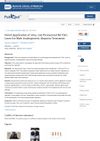
In this pilot study, researchers found that fractional picosecond laser therapy may promote hair regrowth in men with mild-to-moderate androgenetic alopecia, with significant improvements in expert assessments and patient satisfaction observed over a four-month period, though further research is needed to confirm these findings.
 42 citations
,
September 2018 in “Journal der Deutschen Dermatologischen Gesellschaft”
42 citations
,
September 2018 in “Journal der Deutschen Dermatologischen Gesellschaft” This review discusses the distinct clinical and psychological aspects of adult female acne and reports no new clinical results, highlighting the need for a comprehensive management approach.
 2 citations
,
May 2010 in “Actas Dermo-Sifiliográficas”
2 citations
,
May 2010 in “Actas Dermo-Sifiliográficas” This article reviews home-use laser and intense pulsed light systems for hair removal and growth, noting limited efficacy and safety data and emphasizing the need for long-term studies.
 June 2023 in “Dermatology and therapy”
 This literature review highlights challenges in managing alopecia areata in the Middle East and Africa, noting significant regional gaps in data, treatment guidelines, and public awareness that impede patient care and emphasize the need for improved support and resources.
 January 2015 in “Dermatology Review”
 This study found that LED light therapy may stimulate skin regeneration and wound healing, with various wavelengths affecting fibroblast proliferation, collagen synthesis, and hair growth in experimental settings.
 38 citations
,
February 2016 in “Surgery Journal”
38 citations
,
February 2016 in “Surgery Journal” This article discusses a wide range of procedures in facial plastic surgery and highlights the recent advancements and trends without reporting new clinical findings.
 22 citations
,
September 2018 in “Medical Clinics of North America”
22 citations
,
September 2018 in “Medical Clinics of North America” This article reviews the biological causes and treatment options for facial aging but reports no new clinical findings.
 October 2025 in “International Journal of Research in Dermatology”
 This review highlights the benefits of long-pulsed Nd:YAG lasers for hair removal in individuals with Fitzpatrick skin types IV-VI, offering deeper follicular targeting with reduced melanin interaction, and examines emerging technologies like radiofrequency and RF microneedling for safe treatment options in skin of color.
Tailored nonsurgical cosmetic procedures are crucial for safely treating diverse skin types, especially skin of color.
21 citations
,
December 2022 in “Pharmaceutics” This review found that laser-assisted drug delivery in humans was associated with several adverse effects, but no life-threatening events were reported in the studies examined.
 9 citations
,
May 2021 in “Archives of Dermatological Research”
9 citations
,
May 2021 in “Archives of Dermatological Research” This study concluded that while home-based intense pulsed light, laser diodes, radiofrequency, and light-emitting diode devices are recommended for certain skin conditions, ultraviolet B phototherapy for psoriasis showed mixed evidence compared to clinic treatments.
6 citations
,
September 2025 in “Cosmetics” This study introduced laser-assisted exosome delivery and observed early signs of clinical improvement in two patients, though causality cannot be inferred from these preliminary, uncontrolled cases.
 2 citations
,
January 2022 in “Lasers in Medical Science”
2 citations
,
January 2022 in “Lasers in Medical Science” This pilot study reported significant improvement in hair restoration and patient satisfaction with the use of fractional carbon dioxide laser followed by platelet-rich plasma, showing greater hair density increases using higher laser pulse energy settings in individuals with androgenetic alopecia.
 May 2024 in “Journal of the Egyptian Women's Dermatologic Society /Journal of the Egyptian Women's Dermatologic Society”
 In this split-scalp study, researchers observed that combining fractional CO2 laser and PRP treatment was significantly more effective in improving hair parameters in women with female pattern hair loss than using each intervention alone or placebo.
 January 2023 in “Skin appendage disorders”
 This study's review of existing research found insufficient data to determine the impact of skin type on the effectiveness of low-light laser therapy for hair growth in androgenetic alopecia, with a notable lack of data on darker skin types.
 November 2020 in “Postepy Dermatologii I Alergologii”
 This review discusses the potential of using SULT1A1 expression in the scalp as a biomarker to predict response to minoxidil treatment for androgenetic alopecia, but reports no new clinical results.
 4 citations
,
March 2009 in “British Journal of Dermatology”
4 citations
,
March 2009 in “British Journal of Dermatology” This article discusses the highlights and key topics from the 17th Congress of the European Academy of Dermatology and Venereology but reports no new results.