 10 citations
,
January 2012 in “Lupus”
10 citations
,
January 2012 in “Lupus” This case report is the first to associate NEMO syndrome with systemic lupus erythematosus, suggesting a potential role for NF-kB essential modulator in the pathogenesis of SLE.
3 citations
,
June 2016 in “JEADV. Journal of the European Academy of Dermatology and Venereology/Journal of the European Academy of Dermatology and Venereology” This letter to the editor describes a case of postcast hypertrichosis in a patient with frontal fibrosing alopecia and reports no new research findings.
January 2014 in “International Journal of Dermatology and Venereology” This case report describes a 42-year-old male with alopecia areata and a scalp neurofibroma, emphasizing the tumor's histopathological features and the patient's decision against surgical treatment.
This study found that theabrownin-selenium nanoparticles (TB-Se NPs) effectively target Malassezia-induced dermatitis through a dual antifungal and immunomodulatory mechanism, suppressing fungal overgrowth, reducing inflammation, and enhancing immune memory to prevent recurrence in a dermatitis model.
14 citations
,
November 2024 in “Pharmaceuticals” This study found that using spanlastics, a nano, surfactant-based drug delivery system, improved the bioavailability, drug release characteristics, and pharmacokinetic behavior of famotidine, a poorly soluble drug, by enhancing its dissolution and membrane permeation.
36 citations
,
February 1998 in “Journal of Anatomy” This study used fibre optic confocal imaging to visualize subsurface structures in live mouse skin, revealing cellular details and blood vessel networks that dynamic events could be studied in vivo.
2 citations
,
January 2025 in “Naunyn-Schmiedeberg s Archives of Pharmacology” Nanostructured lipid carriers can improve alopecia treatment by enhancing drug delivery and promoting hair growth.
 1 citations
,
October 2008 in “Expert Review of Dermatology”
1 citations
,
October 2008 in “Expert Review of Dermatology” This review discusses frontal fibrosing alopecia, noting its frequent misdiagnosis and highlighting the need for larger studies to better understand its epidemiology, causes, and treatment options; it reports no new clinical findings.
May 2026 in “Inovasi Kesehatan Global” This case report describes a 7-year-old boy with Tinea favosa caused by Trichophyton schoenleinii, treated for 8–12 weeks with oral griseofulvin and ketoconazole cream, leading to recovery from crusts and inflammation but permanent hair loss in some areas.
 7 citations
,
December 2011 in “Elsevier eBooks”
7 citations
,
December 2011 in “Elsevier eBooks” The document concludes that early diagnosis and treatment are crucial for managing skin diseases in ferrets.
 July 2020 in “CRS 2020 Virtual Annual Meeting”
 This study found that the newly developed microarray patches for intradermal delivery of finasteride showed high drug content and significantly improved skin deposition compared to existing methods.
 August 2019 in “Research Square (Research Square)”
 This study explored how long non-coding RNA mediates the effects of FGF5 on the hair follicle development and villus growth of Liaoning cashmere goats.
58 citations
,
November 1969 in “British Journal of Dermatology” This report describes two patients with ichthyosis linearis circumflexa exhibiting symptoms resembling Netherton's disease, noting multiple hair shaft defects and discussing a possible connection to aminoaciduria.
July 2000 in “The Pediatric Infectious Disease Journal” This case report highlights tinea faciei as a potential diagnosis for vesicular lesions in neonates, suggesting its consideration over more invasive diagnostics for similar presentations.
This study found that activating BMP signaling in rodent and primate models significantly promotes nail and digit regeneration after amputation by enhancing the role of specific nail stem cells, though extreme proximal amputation only permitted partial regeneration without bone reconstruction.
2 citations
,
May 2021 in “bioRxiv (Cold Spring Harbor Laboratory)” This study found that fibronectin is crucial for hair follicle stem cell function and regeneration, with its deletion impairing regeneration but restoration by dermal injection of exogenous fibronectin.
January 2026 in “Indian Journal of Paediatric Dermatology” This case report describes a rare co-existence of Becker nevus and plexiform neurofibroma in a child with genetically confirmed neurofibromatosis type 1, offering insights into the potential cellular and molecular links between these lesions.
7 citations
,
October 2023 in “BMC Genomics” In this study, researchers used transcriptome sequencing to identify various noncoding RNAs in the skin tissues of Jiangnan cashmere goats and found that certain long noncoding RNAs may play a role in regulating cashmere fiber fineness, offering new insights for breeding programs.
April 2021 in “Aktuelle Dermatologie” This review discusses frontal fibrosing alopecia, noting its clinical characteristics, possible environmental factors, and lack of evidence-based therapies, but reports no new research findings.
January 1994 in “Memorial University Research Repository (Memorial University)” This study suggests that oleosomes in Sesbania nodules are utilized for cell growth and development but are not directly involved in nitrogen fixation.
 2 citations
,
June 2024 in “Frontiers in Plant Science”
2 citations
,
June 2024 in “Frontiers in Plant Science” This study found that RALF peptides, through liquid-liquid phase separation, form condensates with pectin and other proteins, playing a pivotal role in plant development and stress response regulation.
 5 citations
,
August 2014 in “Australasian journal of dermatology”
5 citations
,
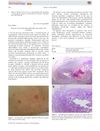
August 2014 in “Australasian journal of dermatology” This article discusses a case of delayed onset perforating folliculitis linked to the use of sorafenib, but it reports no new clinical results.
 July 2024 in “Iranian journal of pathology”
 This study described the clinicopathological features of patients with frontal fibrosing alopecia who underwent skin biopsies.
 2 citations
,
April 2023 in “Cutis”
2 citations
,
April 2023 in “Cutis” This systematic review discusses the treatment characteristics and outcomes for frontal fibrosing alopecia specifically in Black patients with skin of color, addressing a gap in clinical evidence due to underrepresentation in studies.
 1 citations
,
July 2016 in “British Journal of Dermatology”
1 citations
,
July 2016 in “British Journal of Dermatology” Men with a certain type of hair loss often use facial moisturizers, and a specific antibiotic treatment may help another hair condition.
This study suggests that the ANE syndrome mutation in yeast Nop4, analogous to human RBM28, disrupts protein folding and protein-protein interactions, contributing to ribosomal dysfunction.
2 citations
,
May 1991 in “PubMed” This article reviews naevus comedonicus, highlighting potential treatments like retinoic acid application and surgical intervention, but reports no new clinical findings.
1 citations
,
August 2024 in “Anais Brasileiros de Dermatologia” This review discusses the non-follicular skin manifestations of frontal fibrosing alopecia and how they affect diagnosis and treatment, but reports no new clinical results.
January 2018 in “Surgical and Cosmetic Dermatology” This study found that a nutraceutical containing vitamins and trace elements was effective in reducing telogen strands and improving hair and nail conditions in individuals with telogen effluvium and brittle nails syndrome.
66 citations
,
October 2003 in “Dermatologic clinics” Excision and laser techniques can effectively treat acne keloidalis nuchae.