8 citations
,
July 2015 in “International Journal of Dermatology” This study reports that a homozygous A1103G mutation in DSG 4 is responsible for localized autosomal recessive hypotrichosis in a 2-year-old Chinese girl, resulting in reduced DSG 4 expression and hair defects.
3 citations
,
August 2021 in “Clinical Case Reports” This case report describes a patient with a NUDT15 minor variant who experienced severe myelosuppression due to azathioprine, emphasizing typical symptoms as clues to the adverse reaction.
December 2023 in “International Journal of Dermatology” This study found an increased risk of asthma and allergic rhinitis in individuals with hidradenitis suppurativa.
 August 2025 in “BMC Pregnancy and Childbirth”
 In this study, prenatal ultrasonography was found to be a valuable tool for screening ectodermal dysplasia during pregnancy, and a new EDA gene variant associated with X-linked hypohidrotic ectodermal dysplasia was identified, aiding in more accurate diagnoses and reproductive decision-making.
 11 citations
,
August 2019 in “Journal of Molecular Histology”
11 citations
,
August 2019 in “Journal of Molecular Histology” This study found that upregulation of NFIC may enhance proliferation and osteogenic/cementogenic differentiation in rat dental follicle cells.
 59 citations
,
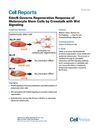
April 2016 in “Cell Reports”
59 citations
,
April 2016 in “Cell Reports” This study demonstrated that EdnrB signaling promotes melanocyte stem cell proliferation and differentiation, enhancing hair and epidermal melanocyte regeneration, especially under conditions of active Wnt signaling.
 40 citations
,
January 2017 in “Intestinal Research”
40 citations
,
January 2017 in “Intestinal Research” This study found that among Japanese IBD patients, the NUDT15 p.Arg139Cys variant was significantly associated with thiopurine-induced leukopenia and severe hair loss, suggesting its genotyping is important for predicting these adverse events.
November 2025 in “Indian Journal of Dermatology” This study reports a rare cluster of four patients with ectodermal dysplasia, highlighting its typical dental and dermatological manifestations and the necessity of multidisciplinary management.
 1 citations
,
October 2024 in “Journal of Clinical Immunology”
1 citations
,
October 2024 in “Journal of Clinical Immunology” This study observed that adult Netherton syndrome patients showed a range of normal to diminished immune responses to polysaccharide, conjugate, and mRNA-based vaccines, with responses generally overlapping those of healthy controls, suggesting no consistent B- or T-cell immunodeficiency in this population.
 June 2020 in “Journal of Investigative Dermatology”
 This study reports that extracellular microvesicles isolated from stimulated dermal fibroblasts enhanced hair follicle growth ex vivo and identified norrin as a novel modulator in hair regeneration processes.
 10 citations
,
December 2015 in “International Journal of Molecular Sciences”
10 citations
,
December 2015 in “International Journal of Molecular Sciences” This study suggests that PDCD4 regulates keratinocyte proliferation and contact inhibition, playing a role in epidermal homeostasis and wound healing.
44 citations
,
September 2011 in “Journal of Pediatric Gastroenterology and Nutrition” This study reported four new cases of NISCH syndrome in a Moroccan family, confirming genetic variability in liver disease severity and suggesting potential benefits from early UDCA therapy.
 16 citations
,
May 2000 in “Endocrinology”
16 citations
,
May 2000 in “Endocrinology” This study identified a new gene, mrp4, in mice, which suggests it may have a unique role in the growth and development of hair follicles in the ears and tails.
 27 citations
,
July 2017 in “Scientific Reports”
27 citations
,
July 2017 in “Scientific Reports” This study found that conditional knockout of N-WASP in keratinocytes of mice led to skin barrier defects, increased immune cell infiltration, and hyperproliferation of keratinocytes, indicating its crucial role in skin homeostasis.
March 2026 in “Journal of Investigative Dermatology” 7 citations
,
January 2020 in “Dermatology online journal” In this case report, adult-onset porokeratotic eccrine ostial and dermal duct nevus improved with topical tazarotene treatment, as evidenced by dermatoscopic images.
28 citations
,
November 2018 in “American Journal of Medical Genetics Part A” This report describes a neurometabolic disorder linked to gain-of-function variants in the ODC1 gene, characterized by developmental delay, ectodermal abnormalities, and notable facial and neuroimaging features.
 48 citations
,
January 2012 in “The journal of investigative dermatology/Journal of investigative dermatology”
48 citations
,
January 2012 in “The journal of investigative dermatology/Journal of investigative dermatology” This study identified chemokine receptor ligands cxcl10 and cxcl11 as new hair-specific transcriptional targets of the Eda pathway, suggesting chemokine signaling plays a role in primary hair follicle patterning.
1 citations
,
January 2011 in “ScholarlyCommons (University of Pennsylvania)” In this study, researchers investigating the Drosophila testis niche system reported that Notch signaling is crucial for niche cell specification, with early gonadogenesis showing signals coming from outside the gonad to direct cell fate.
April 2015 in “The FASEB Journal” In this study, NM exposure in mouse skin disrupted pilosebaceous units, initially decreasing markers of sebum production and cellular division, but showed signs of healing and marker recovery by day five.
Recognizing bamboo hair helps diagnose Netherton’s syndrome.
 May 2023 in “Journal of the Dermatology Nurses' Association”
 This editorial discusses the experiences and highlights of the Dermatology Nurses' Association's annual convention, including educational sessions about skin conditions and nursing strategies, and emphasizes the importance of continuing education and involvement in health policy and advocacy for dermatology nursing professionals.
November 2025 in “Journal of Investigative Dermatology” N,N-Dimethylglycine sodium salt may improve skin health and treat hair loss.
 1 citations
,
June 2018 in “International Journal of Dermatology”
1 citations
,
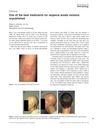
June 2018 in “International Journal of Dermatology” DNCB is highly effective for treating alopecia areata with minimal long-term side effects.
14 citations
,
June 1982 in “Archives of Dermatology” This letter to the editor shares concerns about possible systemic effects from topical dinitrochlorobenzene therapy in a 25-year-old man treating alopecia areata.
8 citations
,
March 2007 in “The journal of investigative dermatology/Journal of investigative dermatology” This study reports that the near-naked hairless mutation in mice is not an allele of the Hairless gene but may involve a mutation in a linked gene or a regulatory mutation.
25 citations
,
February 2021 in “Diabetes” This study found that Dock5 plays a crucial role in keratinocyte function and wound healing, with its expression reduced in diabetic models but improving healing when restored.
 6 citations
,
April 2013 in “International Journal of Dermatology”
6 citations
,
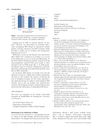
April 2013 in “International Journal of Dermatology” This correspondence describes the dermoscopic features of an osteonevus of Nanta but does not report new clinical findings.
74 citations
,
October 2012 in “The American Journal of Human Genetics” This study found that loss-of-function mutations in the HOXC13 gene cause autosomal-recessive pure hair and nail ectodermal dysplasia, emphasizing its role in hair and nail development.
7 citations
,
December 2016 in “Journal of the American Academy of Dermatology” In this study, researchers found that patients with alopecia areata had a significant increase in NKG2D+CD4+ T cell levels in their blood compared to healthy controls.