139 citations
,
October 2005 in “Journal of Investigative Dermatology” This study describes previously unknown immune characteristics of the normal human nail, highlighting its similarities to the hair follicle immune system and suggesting an immune privilege in the proximal nail matrix that both provides autoimmunity protection and presents infection susceptibility.
13 citations
,
April 2009 in “Journal der Deutschen Dermatologischen Gesellschaft” This article reviews nail involvement in various skin diseases, such as psoriasis and lichen planus, and highlights characteristic changes but reports no new clinical findings.
2 citations
,
February 2021 in “PubMed” This case report describes a 25-year-old woman with alopecia areata and nail spooning, which regressed almost completely after treatment with oral corticosteroids.
This study found that the nail immune system is similar to the hair follicle immune system, with both showing a relative "immune privilege" that may protect against autoimmunity.
 21 citations
,
January 2005 in “Skinmed”
21 citations
,
January 2005 in “Skinmed” This article reviews the structural similarities and common disorders of hair and nails, highlighting their joint involvement in congenital and acquired conditions, but it reports no new clinical results.
 6 citations
,
September 2017 in “Multiple Sclerosis and Related Disorders”
6 citations
,
September 2017 in “Multiple Sclerosis and Related Disorders” This study suggests that nail loss may be a new, reversible adverse event related to teriflunomide treatment, akin to its known effects on hair loss.
 2 citations
,
October 2021 in “Journal of skin and stem cell”
2 citations
,
October 2021 in “Journal of skin and stem cell” This study observed that nail abnormalities often indicate underlying dermatological or systemic conditions, with psoriasis and infections being the most common causes among patients.
 1 citations
,
November 2025 in “Journal of Korean Medical Association”
1 citations
,
November 2025 in “Journal of Korean Medical Association” This review describes nail changes linked to various non-infectious skin diseases, highlighting how these alterations can help diagnose and manage conditions like psoriasis and lupus by noting specific and overlapping nail characteristics.
 January 2018 in “Elsevier eBooks”
 Different nail disorders are treated by targeting their specific causes and using appropriate medications or protective measures.
 18 citations
,
March 2004 in “Clinics in Dermatology”
18 citations
,
March 2004 in “Clinics in Dermatology” This review discusses recent advances in understanding the cellular, molecular, and genetic factors contributing to lupus erythematosus and reports no new experimental findings.
 7 citations
,
December 2008 in “Expert Review of Dermatology”
7 citations
,
December 2008 in “Expert Review of Dermatology” This article reviews hair and nail disorders in children, emphasizing their prevalence, congenital and acquired origins, and the diagnostic challenges compared to treatment, but reports no new clinical results.
 65 citations
,
January 2013 in “Cochrane library”
65 citations
,
January 2013 in “Cochrane library” This review found that infliximab, golimumab, and some forms of radiotherapy significantly improved nail psoriasis compared to controls, although they could have serious adverse effects and are not commonly used specifically for nail issues.
 July 2017 in “British Journal of Dermatology”
 The document concludes that scalp conditions have various causes and can present in many different ways.
 43 citations
,
November 2007 in “Dermatologic Clinics”
43 citations
,
November 2007 in “Dermatologic Clinics” This article discusses various hair and nail abnormalities linked to paraneoplastic conditions and cancer treatments, emphasizing their potential role in diagnosing and managing internal malignancies and reports no new clinical findings.
 7 citations
,
May 2014 in “Clinical practice”
7 citations
,
May 2014 in “Clinical practice” This article reviews drug-induced hair and nail disorders and discusses their clinical recognition, underlying mechanisms, and potential treatment strategies, without presenting new research findings.
 1 citations
,
February 2022 in “International Journal of Health and Pharmaceutical (IJHP)”
1 citations
,
February 2022 in “International Journal of Health and Pharmaceutical (IJHP)” This study found that a combination of cantigi and henna leaf extracts, in a 1:2 ratio, demonstrated the strongest antioxidant activity with an IC50 value of 29.85 µg/mL.
 January 2012 in “Yearbook of Dermatology and Dermatologic Surgery”
 Alopecia areata is a hair loss condition that often starts before age 30 and can affect various body parts, with unpredictable hair regrowth chances.
 January 2024 in “Dermatology Practical & Conceptual”
 In this study, researchers identified the presence of a "spotted lunula" as a rare sign in patients with alopecia areata, detailing its clinical and onychoscopic features.
25 citations
,
January 2003 in “Plastic & Reconstructive Surgery” This study indicates that nail-matrical fibroblasts can induce hard keratin expression in non-nail-matrical keratinocytes, suggesting potential for using non-nail-matrical epidermal grafts to treat nail injuries.
 104 citations
,
August 2008 in “Clinics in Dermatology”
104 citations
,
August 2008 in “Clinics in Dermatology” This review discusses current treatment challenges and strategies for managing psoriasis in the scalp, nails, and intertriginous areas, emphasizing the need for effective and well-tolerated long-term options, but reports no new clinical results.
55 citations
,
February 2013 in “The Anatomical Record” This study found that the mouse nail unit structurally resembles the human nail unit, indicating it could be useful for researching nail diseases and biology.
 44 citations
,
August 2010 in “Lupus”
44 citations
,
August 2010 in “Lupus” This article reviews the characteristics and classification criteria of cutaneous lupus erythematosus and reports no new clinical findings.
42 citations
,
June 1998 in “The journal of investigative dermatology/Journal of investigative dermatology” This study observed that PAI-2 is consistently expressed in differentiating cells of murine hair and nail, suggesting it may function as a marker of differentiation and possibly protect against premature cell death.
 10 citations
,
October 2016 in “Experimental Dermatology”
10 citations
,
October 2016 in “Experimental Dermatology” This essay discusses the role of the nail in mammalian digit tip regeneration and explores whether nail stem cells are solely responsible for this regenerative ability, with no new results presented.
4 citations
,
January 2025 in “Diagnostics” This article reviews the use of high-frequency ultrasonography to visualize nail units and scalps in dermatology, highlighting its potential benefits for disease assessment and treatment monitoring, but reports no new clinical results.
 February 2026 in “Journal of Clinical Medicine”
 In this narrative review, researchers found preliminary evidence suggesting that minoxidil, both topical and oral, may enhance nail growth and improve nail strength and appearance, though more extensive studies are needed to confirm its efficacy and safety for this off-label use.

This study found significant correlations between scalp and nail involvement and laboratory findings in Korean patients with chronic cutaneous lupus erythematosus, highlighting their importance for diagnosis and management.
January 2022 in “IAR Journal of Parasitology & Infectious Disease” This study observed that 30.1% of older adults had nail changes, predominantly affecting the lower limbs, and hair disorders were less common, with alopecia being the only type recorded.
 1 citations
,
January 2015 in “Springer eBooks”
1 citations
,
January 2015 in “Springer eBooks” Chemotherapy can cause skin side effects that affect patients' lives, but they can be managed to avoid interrupting cancer treatment.
 1 citations
,
January 2013 in “Elsevier eBooks”
1 citations
,
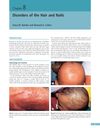
January 2013 in “Elsevier eBooks” The document reviews various hair and nail disorders, their causes, and treatments, emphasizing the need for proper diagnosis and the link between nail changes and systemic diseases.