 6 citations
,
April 2025 in “Communications Biology”
6 citations
,
April 2025 in “Communications Biology” In this study, researchers used a murine model of irritant contact dermatitis to reveal that hair follicle regions serve as key sites for neutrophil transepidermal migration, which requires MMP-9 expression stimulated by dermal monocytes.
 32 citations
,
November 2016 in “Journal of Dental Research”
32 citations
,
November 2016 in “Journal of Dental Research” This review explores the role of Panx3 in skeletal formation and discusses its potential in developing new therapies for conditions like osteoarthritis, without presenting new clinical findings.
This study found that combining Ganoderma lucidum extract with microneedle therapy promoted hair growth in a mouse model of alopecia more effectively than microneedle therapy alone.
1 citations
,
October 2023 in “European Journal of Dermatology” This study found that combining hair transplantation with platelet-rich plasma led to significantly better outcomes, such as reduced hair loss area and increased hair regeneration, compared to hair transplantation alone in patients with androgenic alopecia.
19 citations
,
December 2021 in “Stem Cell Research & Therapy” This study found that Muse cells, when injected subcutaneously, alleviated symptoms of atopic dermatitis in mice, suggesting potential for treating inflammatory skin conditions.
 51 citations
,
January 2004 in “Domestic animal endocrinology”
51 citations
,
January 2004 in “Domestic animal endocrinology” This study concluded that an endogenous circannual rhythm of prolactin secretion in mouflon influences their seasonal hair growth and moulting cycle, which varies under different photoperiodic and melatonin treatments.
 January 2008 in “Pratique médicale & chirurgicale de l'animal de compagnie”
 This review discusses the controversial non-inflammatory alopecia known as alopecia X, highlighting its unknown etiology and the variable effectiveness of various proposed treatments, but reports no new results.
 32 citations
,
March 2013 in “Journal of Pharmaceutical Sciences”
32 citations
,
March 2013 in “Journal of Pharmaceutical Sciences” This study observed that iontophoresis significantly improved the delivery of minoxidil sulfate to hair follicles compared to passive methods, suggesting potential benefits for alopecia treatment.
 July 2022 in “Research, Society and Development”
 This study observed variable therapeutic responses in dogs with Alopecia X, with some showing complete hair regrowth while others did not, following similar treatments including orchiectomy and supplementation.
9 citations
,
December 2023 in “Materials Today Bio” This study found that modified microcrystalline cellulose with citric and ascorbic acid demonstrated enhanced hemostatic properties and biocompatibility in vitro and in animal hemorrhage models.
5 citations
,
February 2022 in “Molecular genetics & genomic medicine” This study identified genetic variants in the DSG4 gene associated with the autosomal recessive form of monilethrix in Chinese patients, expanding the understanding of its phenotypic spectrum and clinical features.
1 citations
,
January 2016 in “Journal of Biosciences and Medicines” This study found that the ACTH/MC2R system is important for hair cycle regulation, with deficiencies in MC2R leading to altered hair growth phases in mice.
56 citations
,
July 2004 in “Mechanisms of Development” Pax9 is crucial for proper tongue surface development and preventing skin-like changes.
November 2025 in “Journal of Investigative Dermatology” Skin-associated cartilage cells can influence hair growth by altering specific signaling pathways.
78 citations
,
October 2007 in “Journal of Investigative Dermatology” Delta1 is crucial for controlling skin cell growth and preventing tumors in mice.
February 2023 in “Medicine in novel technology and devices” This study found that microneedle delivery of Polygonum multiflorum extract led to earlier pigmentation and hair regrowth in mice with androgenetic alopecia.
2 citations
,
January 2024 in “Revista Paulista de Pediatria” In this case report, researchers described a 6-year-old girl with severe mandibuloacral dysplasia type A, noting unique physical deformities and a rare homozygous LMNA gene mutation not commonly associated with the condition.
221 citations
,
July 2012 in “Proceedings of the National Academy of Sciences of the United States of America” This study found that the circadian clock in mouse skin regulates cell proliferation and affects sensitivity to UVB-induced DNA damage, with potential implications for understanding human skin cancer risk.
 31 citations
,
November 2016 in “Cell Reports”
31 citations
,
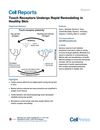
November 2016 in “Cell Reports” This study reveals that somatosensory neurons in mouse skin exhibit structural plasticity during hair-follicle regeneration, which may temporarily impair the reliability of encoding gentle touch.
 17 citations
,
June 2019 in “Cellular signalling”
17 citations
,
June 2019 in “Cellular signalling” Minoxidil treatment in mice preserved the integrity of elastic lamellae and improved arterial biomechanical properties, especially in females, suggesting it could be an anti-arterial aging agent potentially suitable for female-targeted therapies.
 April 2023 in “The journal of investigative dermatology/Journal of investigative dermatology”
 In this study, researchers found that Dlx3 plays a crucial role in regulating chromatin accessibility and gene transcription during keratinocyte differentiation in the epidermis, highlighting its potential impact on epidermal barrier formation and differentiation.
 12 citations
,
February 2022 in “Acta Biomaterialia”
12 citations
,
February 2022 in “Acta Biomaterialia” In this study, researchers found that dissolving microneedles made with hyaluronic acid enhanced the effectiveness of minoxidil in reducing hair loss and promoting hair growth in alopecia-affected mice more effectively than topical minoxidil alone, while using only 10% of the drug amount.
 January 2025 in “Institutional Repositories DataBase (IRDB)”
 This study observed that topical application of maslinic acid stimulated hair growth in mice comparably to minoxidil, possibly through the Wnt/β-catenin pathway and involving ciliary gene activity, highlighting increased levels of trichogenic gene expression and protein levels.

This study identified the TALE homeodomain transcription factor Meis2 as a crucial regulator for the maturation and end-organ innervation of certain mechanoreceptors in mice, with its absence leading to altered sensory neuron structure and impaired touch sensitivity.
 April 2023 in “Journal of Investigative Dermatology”
 This study found that MPZL3 plays a crucial role in controlling sebaceous gland size and sebocyte proliferation in mice and humans, implicating its potential involvement in skin disorders like acne and psoriasis.
24 citations
,
January 2023 in “Cancer Research” This study suggests that activating AMPK to phosphorylate ZDHHC13 may enhance MC1R function and reduce melanoma risk in individuals with red hair.
26 citations
,
October 1998 in “Experimental Dermatology” This study describes a co-dominant E410D mutation in keratin hHb6 associated with severe hair loss and extensive papules in homozygous individuals, with variable expression in heterozygous family members.
 April 2018 in “The journal of investigative dermatology/Journal of investigative dermatology”
 This study found that in a mouse model of Focal Dermal Hypoplasia, treatment with lithium carbonate improved skin disease symptoms compared to controls, though disease severity varied and posed interpretation challenges.
 17 citations
,
June 2018 in “Frontiers in Physiology”
17 citations
,
June 2018 in “Frontiers in Physiology” This study found that acellular dermal matrix scaffolds may facilitate full-thickness skin wound healing by promoting a pro-regenerative immune response through M2 macrophage polarization via the Lamtor1 pathway.
47 citations
,
May 1994 in “Experimental Brain Research” This study observed that innervation of the mystacial pad in rats by fine-caliber axons is more extensive and complex than previously described, with distinct differences in labeling patterns depending on the tracer and survival time.