Search
for
Sort by
Research
300-330 / 1000+ resultsresearch Pseudoxanthoma Elasticum: Progress in Research Toward Treatment: Summary of the 2012 PXE International Research Meeting
This review discusses the state-of-the-art knowledge on pseudoxanthoma elasticum, summarizing recent advancements in genetics, pathomechanisms, and potential treatments but reports no new clinical findings.
research An in vivo method for the detection of somatic mutations at the cellular level in mice
This study reports that treatment with X-rays or procarbazine induced dose-dependent mutations in melanocytes in mouse hair follicles, showing similar mutation rates to previous methods.

research Comparing minoxidil-finasteride mixed solution with minoxidil solution alone for male androgenetic alopecia: a systematic review and meta-analysis of randomized controlled trials
This meta-analysis found that the combination of topical minoxidil-finasteride was more effective than minoxidil alone in improving hair density, hair diameter, and global photographic assessment for male androgenetic alopecia, though larger standardized trials are needed to confirm long-term outcomes.
research 489 Seborrhea-like dermatitis phenotype in the Mpzl3 knockout mice
In this study, Mpzl3-/- mice developed severe seborrhea-like dermatitis with skin inflammation, indicating MPZL3's role in the skin condition's development, independent of adaptive immunity.
research Differential cutaneous wound healing in thermally injured MRL/MPJ mice
This study found that MRL/MpJ mice heal burn wounds with scar formation, experiencing delayed wound closure and impaired myofibroblast development, which contrasts with quicker contraction in BALB/c mice.
research Computational design and development of a novel voltammetric sensor for minoxidil detection based on electropolymerized molecularly imprinted polymer
In this study, a novel electrochemical sensor using a molecularly imprinted polymer was developed for the sensitive detection of minoxidil, successfully measuring its concentration in real samples.
research Meibomian gland changes in the rhino (hrrhhrrh) mouse.
In this study, researchers observed that rhino mice exhibit significant ductal hyperkeratinization in the meibomian gland, which may represent the first naturally occurring disorder of this gland in mice.
research Rejuvenating senescent hair follicles: a novel conjugated linoleic acid based nanovesicle approach to treat androgenic alopecia
This study found that MNX@Arg-CLAVs nanovesicles enhanced hair regeneration and reduced aging in hair follicles in AGA mice, with less skin irritation compared to traditional minoxidil tincture.

research Combining rapid degrading microneedles with Slow-Released drug delivery system for the treatment of alopecia areata
In this laboratory study, a novel minoxidil-loaded microneedle patch demonstrated potential for treating alopecia areata by promoting slow drug release and reducing application frequency, while exhibiting antibacterial properties to prevent infection during use.
research Scanning Electron Microscopic Study on Collagen Fibrils in the Mink Dermis during the Hair Cycle and Growth
This study observed that mink dermal collagen fibrils undergo structural changes during the hair cycle, with increased fiber thickness and bundle density as minks grow.
research M2 Macrophage and Extracellular Matrix Genes Are Enriched in High‐Activity Lichen Planopilaris
In this research, RNA expression analysis of scalp biopsies from lichen planopilaris patients revealed changes in specific genes after treatments with hydroxychloroquine, narrow band UVB, or low level laser light therapy, suggesting potential biomarkers and implicating M2 macrophages in the disease's immunopathogenesis.
research Co-occurrence of monilethrix and Type 1 diabetes mellitus
This case report presents a 14-year-old girl with both type I diabetes and monilethrix, detailing her symptoms and treatment with topical minoxidil, while exploring a possible genetic link between the conditions.
research Lanceolate hair-J (lahJ ): A mouse model for human hair disorders
This study investigated a spontaneous mutation in mice resulting in hair abnormalities and elevated IgE levels, which resembles human Netherton's syndrome and monilethrix.
research Cross‐linked features of mouse pelage hair resistant to detergent extraction
This study observed defects in hair cuticle cross-linking in some, but not all, mouse mutants with sparse or structurally unsound hair.
research Gene detection in a family with monilethrix and observation of the treatment effect with 5% topical minoxidil
This study found that a specific gene mutation was identified in a family with monilethrix, and treatment with 5% minoxidil liniment improved hair quality in the proband without adverse events.

research LHX2: a transcription factor in development, homeostasis, repair, and disease
This review synthesizes the diverse roles of the transcription factor LHX2 in development, tissue maintenance, and injury repair across various organ systems, highlighting its potential therapeutic applications and significance in regenerative medicine, particularly in developmental disorders and tissue regeneration.
research Delta Opioid Receptors Presynaptically Regulate Cutaneous Mechanosensory Neuron Input to the Spinal Cord Dorsal Horn
This study found that the opioid system, particularly via the delta opioid receptor, broadly regulates cutaneous mechanosensation, including touch, and suggests targeting this receptor could alleviate injury-induced mechanical hypersensitivity.

research Effects of different dietary protein levels and DL‐methionine supplementation on hair growth and pelt quality in mink (Neovision vision)
This study demonstrated that mink hair growth and pelt quality significantly depend on dietary protein levels and DL-methionine supplementation during the growing-furring period.
research Role of the nail and dorsoventral patterning in regeneration
In this study, researchers found that mouse digits without nails could not regenerate after amputation, highlighting the necessity of nails for fingertip regeneration and suggesting a potential role for the Lmx1b gene in this process.
research Mesenchymal Meis2 controls whisker development independently from trigeminal sensory innervation
This study in mice found that MEIS2 expression in mesenchymal dermal cells is crucial for the formation of whiskers and the initial steps of epithelial placode development, independently of sensory nerve innervation or Foxd1 expression.
research Double-Lined Frontoparietal Scleroderma en coup de sabre
This case report describes a rare instance of double-lined frontoparietal scleroderma en coup de sabre and suggests a genetic basis involving postzygotic mosaicism.
research Anti-MRSA malleable liposomes carrying chloramphenicol for ameliorating hair follicle targeting
In this study, the researchers reported that chloramphenicol-loaded liposomes, particularly those incorporating deoxycholic acid, enhanced follicular uptake and showed strong antibacterial activity against methicillin-resistant Staphylococcus aureus, offering potential for treating MRSA-infected skin conditions with good skin biocompatibility and minimal toxicity.
research Hair Defects and Pup Loss in Mice with Targeted Deletion of the First Cut Repeat Domain of theCux/CDPHomeoprotein Gene
In this study, researchers created a mutant mouse lacking the first cut repeat in the Cux/CDP protein, resulting in curly vibrissae and wavy hair, supporting the role of Cux/CDP's DNA binding domains in gene regulation during development.
research Evidence That the Satin Hair Mutant Gene Foxq1 Is among Multiple and Functionally Diverse Regulatory Targets for Hoxc13 during Hair Follicle Differentiation
This study found that overexpression of Hoxc13 in GC13 mouse models affects hair follicle differentiation by interacting with medulla-specific genes, particularly Foxq1, suggesting a regulatory pathway for medulla differentiation.
research Spatial relationship between Merkel cells and Langerhans cells in human hair follicles
This study demonstrated a close anatomical relationship between Merkel cells and Langerhans cells in human hair follicles, suggesting potential functional interactions in the bulge area.
research Three-dimensional reconstructions of mechanosensory end organs suggest a unifying mechanism underlying dynamic, light touch
This study found that Piezo2 channels are primarily located on sensory axon membranes in mechanosensory end organs, supporting a model where mechanical stimuli activate Aβ RA-LTMR neurons via axon protrusions.
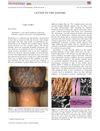
research Monilethrix: A case report imaged by trichoscopy, reflectance confocal microscopy and histopathology
Advanced imaging techniques are crucial for accurately diagnosing Monilethrix, a rare hair disorder.

research Biopharmaceutical Performance of DiluCap: A Line of Functional Excipients Enhancing Dissolution Profiles of Minoxidil, Finasteride, Melatonin, and Naltrexone.
In this study, researchers reported that hardshell capsules using the DiluCap® line of excipients demonstrated varying dissolution profiles under gastrointestinal-simulating conditions, with minoxidil and finasteride showing rapid release and melatonin and naltrexone displaying controlled release, indicating their suitability for different applications in compounding pharmacies.