 12 citations
,
September 2024 in “Frontiers in Immunology”
12 citations
,
September 2024 in “Frontiers in Immunology” This study found that metabolism-related genes significantly impact the prognosis and metastasis in breast cancer, and the development of prediction models may guide personalized therapeutic strategies.
 April 2016 in “Journal of Investigative Dermatology”
 This study found that inhibiting JAK signaling can unexpectedly trigger hair growth in resting-phase mouse skin, implicating JAK-STAT pathways and oncostatin M in maintaining hair follicle stem cell quiescence.
 April 2023 in “The journal of investigative dermatology/Journal of investigative dermatology”
 This study suggests that structural changes in the TRPV3 channel are linked to severe skin conditions like Olmsted syndrome, with differences observed between heat-activated and resting states.
3 citations
,
January 2017 in “Acta Dermato Venereologica” This study found that a specific T-cell receptor motif associated with lipid-antigen stimulation may play a role in the pathogenesis of folliculotropic mycosis fungoides.
 October 2020 in “Medicine - Programa De Formación Médica Continuada Acreditado”
 This review discusses female hyperandrogenism, focusing on its diagnosis, differential diagnoses, and individualized treatment approaches to improve patient health and quality of life, and reports no clinical results.
 February 2021 in “Endocrinology, diabetes & metabolism case reports”
 This case report describes a postmenopausal woman with hirsutism and hair loss attributed to ovarian stromal hyperplasia; surgical removal of the ovaries normalized testosterone levels and resolved symptoms.
 January 1999 in “American Journal of Medical Genetics Part A”
 This case report describes a rare occurrence of ectodermal dysplasia features in a 14-year-old with MBTPS1 gene variants, expanding the known spectrum of related disorders.
 20 citations
,
March 1994 in “Clinical and Experimental Dermatology”
20 citations
,
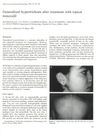
March 1994 in “Clinical and Experimental Dermatology” In this case report, a 16-year-old girl developed generalized hypertrichosis after using excessive doses of topical minoxidil for diffuse alopecia, which resolved four months after stopping treatment.
 9 citations
,
August 2019 in “Journal of The European Academy of Dermatology and Venereology”
9 citations
,
August 2019 in “Journal of The European Academy of Dermatology and Venereology” Minoxidil activation by hair enzymes predicts treatment success for female hair loss.
2 citations
,
January 2014 in “Journal of Cytology & Histology” In a mouse model, this study found that LAM/TSC cells invaded the uterus and increased angiogenesis, while anti-EGFR antibody and rapamycin effectively reduced cell presence and blood vessel proliferation.
 5 citations
,
December 2004 in “Dermatology”
5 citations
,
December 2004 in “Dermatology” This review describes two cases of young women with primary amenorrhea and hyperandrogenemia, suggesting that adrenal tumors should be considered in patients with significantly elevated circulating testosterone levels.

This study found that activating autophagy in hair follicle stem cells can promote hair growth by shifting their metabolism to glycolysis, while inhibiting it led to delayed hair cycle progression.
 April 2023 in “Journal of Investigative Dermatology”
 This study found that mitochondrial dysfunction in T cells led to defective hair follicle stem cell function and premature skin aging signs in a mouse model.
2 citations
,
March 2003 in “Endocrine Practice” The woman's symptoms and tests suggest her adrenal glands are producing too many male hormones.
April 2026 in “BMJ Case Reports” This case study highlights the challenges of diagnosing hyperandrogenism in postmenopausal women, reporting a patient with androgenic alopecia and high testosterone due to a benign Leydig cell tumor in the ovary; surgery successfully normalized testosterone levels.
October 2024 in “Frontiers in Oncology” This case study reports a novel mutation in the TRPV3 gene causing atypical Olmsted syndrome, characterized by disabling keratoderma and squamous cell carcinoma, highlighting the need for careful long-term monitoring in affected patients.
 5 citations
,
October 2013 in “Endocrine”
5 citations
,
October 2013 in “Endocrine” This case report describes three instances where occult ovarian Leydig cell tumors were suspected based on severe hyperandrogenism symptoms, despite negative imaging findings, highlighting that elevated testosterone levels are a crucial diagnostic marker.
 April 2019 in “Journal of the Endocrine Society”
 This study reported that testosterone levels over 150 ng/dL combined with lack of testosterone suppression during a low-dose dexamethasone suppression test may indicate androgen-producing tumors, though this wasn't consistent across all cases.
February 2009 in “RePub (Erasmus University Rotterdam)” This thesis investigates the role of phosphorylation and the mutation F826L in modulating androgen receptor activity, but concludes that the precise effects are not yet fully clear.
26 citations
,
January 1992 in “Carcinogenesis” This study suggests that chronic treatment with TPA in mouse skin selectively expands a keratinocyte subpopulation hyperinducible for ODC, which may be a key target for neoplastic transformation.
 1 citations
,
June 2021 in “Revista de la Facultad de Ciencias Médicas de Córdoba”
1 citations
,
June 2021 in “Revista de la Facultad de Ciencias Médicas de Córdoba” This case report describes a postmenopausal woman with virilization linked to ovarian stromal hyperthecosis, highlighting the importance of detailed clinical evaluation and complementary testing for accurate diagnosis and treatment.
 9 citations
,
January 2007 in “Endocrine Practice”
9 citations
,
January 2007 in “Endocrine Practice” This case report describes a 60-year-old postmenopausal woman with virilization and hirsutism caused by hilus-cell hyperplasia, which was confirmed following bilateral salpingo-oophorectomy.
 October 2023 in “Journal of the Endocrine Society”
 This case report describes a unique instance where elevated prolactin levels from a pituitary adenoma were associated with hirsutism due to increased dihydrotestosterone, with treatment leading to normalization.
 118 citations
,
February 2009 in “Fertility and Sterility”
118 citations
,
February 2009 in “Fertility and Sterility” This study found that approximately 75% of women with PCOS exhibited hyperandrogenemia, with free testosterone being the most frequently elevated marker.
88 citations
,
August 1998 in “Carcinogenesis” This study found that overexpression of ornithine decarboxylase and activated Ha-ras together led to a high rate of tumor development in a mouse model without additional carcinogens.
 12 citations
,
January 2009 in “Gynecological Endocrinology”
12 citations
,
January 2009 in “Gynecological Endocrinology” This case report identified ovarian hyperthecosis as the cause of recent-onset androgenic symptoms in a 73-year-old woman, which was confirmed by ovary removal and led to symptom improvement.
6 citations
,
July 2005 in “Acta Ophthalmologica Scandinavica” This case report suggests that madarosis, or eyelash loss, may be associated with mitochondriopathy, expanding the known causes of madarosis to include this condition.
 4 citations
,
December 2018 in “Case reports in endocrinology”
4 citations
,
December 2018 in “Case reports in endocrinology” This case study reported a postmenopausal woman with a testosterone-secreting ovarian tumor that was not detected through standard clinical or radiological examination but was found via biopsy.
100 citations
,
May 2006 in “American Journal Of Pathology” Matriptase is crucial for skin barrier, hair growth, and may contribute to skin cancer.
81 citations
,
February 2014 in “EMBO molecular medicine” This study found that prolonged Nrf2 activation in mouse keratinocytes led to enlarged sebaceous glands, hair loss, and cysts, suggesting a role for Nrf2 in conditions like MADISH.