 January 2015 in “Indian Journal of Medical Biochemistry”
 Men with early balding should be checked for metabolic syndrome, as there's a link between the two.
 October 2014 in “Aktuelle Dermatologie”
 This case report describes a 19-year-old with Mayer-Rokitansky-Küster-Hauser syndrome developing alopecia areata totalis, discussing potential connections and treatment options like methylprednisolone pulse therapy, but reports no new clinical results.
47 citations
,
May 1994 in “Experimental Brain Research” This study observed that innervation of the mystacial pad in rats by fine-caliber axons is more extensive and complex than previously described, with distinct differences in labeling patterns depending on the tracer and survival time.
 October 2022 in “Linköping University medical dissertations”
 This abstract only provides a list of abbreviations and does not report any new research findings or results.
9 citations
,
March 2017 in “Journal of Visualized Experiments” This study introduced a novel in vitro murine assay using transgenic mice to identify immunomodulatory compounds, which identified 160 potential hits from 4,398 compounds screened.
4 citations
,
January 2009 in “International journal of trichology” Minoxidil topical foam is a better, less irritating treatment for hair loss.
 1 citations
,
June 2022 in “JCRPE”
1 citations
,
June 2022 in “JCRPE” This study reports that metreleptin treatment in a boy with congenital generalized lipodystrophy significantly improved metabolic complications and overall health outcomes during the first year of therapy.
2 citations
,
January 2009 This study found that the hair cortisol measurement procedure was reliable, unaffected by the choice of tubes, and that hair cortisol concentration correlated moderately with the number of intense aggressions experienced.
 1 citations
,
December 2018 in “Journal of genetic medicine”
1 citations
,
December 2018 in “Journal of genetic medicine” In this case report, a 20-year-old male with tricho-rhino-phalangeal syndrome was found to have a de novo frameshift mutation in the TRPS1 gene, highlighting the challenges in diagnosing this rare disorder.
November 2004 in “Emergency Medicine News” This article reviews the clinical characteristics, treatment challenges, and epidemiology of community-acquired methicillin-resistant Staphylococcus aureus infections, highlighting their spread outside traditional hospital settings but presenting no new clinical results.
28 citations
,
December 2002 in “Der Hautarzt” TrichoScan accurately measures hair growth and loss, showing increased hair counts and thickness with treatment.
 133 citations
,
May 2016 in “Cell Host & Microbe”
133 citations
,
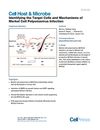
May 2016 in “Cell Host & Microbe” In this study, human dermal fibroblasts were identified as natural host cells that support productive Merkel cell polyomavirus infection, and the MEK antagonist trametinib was introduced as an effective inhibitor to control the virus.
10 citations
,
January 1997 in “Dermatology” This case report details two siblings with trichothiodystrophy, identifying reduced hair sulfur content as essential for diagnosis despite varied symptoms complicating recognition.
 April 2018 in “Journal of Investigative Dermatology”
 This paper presents a new methodology combining magnetic tweezers and traction force microscopy to study keratinocyte mechanobiology, but reports no experimental results yet.
 2 citations
,
July 2008 in “Hair transplant forum international”
2 citations
,
July 2008 in “Hair transplant forum international” This article highlights the increasing impact of methicillin-resistant Staphylococcus aureus as the most significant multi-drug-resistant organism affecting surgical settings, but reports no new experimental results.
26 citations
,
July 2007 in “Wound Repair and Regeneration” This study found that MRL/MpJ mice heal burn wounds with scar formation, experiencing delayed wound closure and impaired myofibroblast development, which contrasts with quicker contraction in BALB/c mice.
 31 citations
,
August 2001 in “PubMed”
31 citations
,
August 2001 in “PubMed” This study found that the TrichoScan method detected significant increases in hair counts and cumulative hair thickness in men after finasteride treatment, suggesting its potential for monitoring hair treatment responses.
2 citations
,
October 2019 in “The Egyptian Journal of Hospital Medicine” This study found that anti-Müllerian hormone (AMH) showed high sensitivity and specificity as a diagnostic marker for polycystic ovary syndrome in the studied population, suggesting its promise as an objective diagnostic tool.
9 citations
,
April 2013 in “Journal of Chromatography B” This study developed and validated a sensitive LC-MS/MS method for quantifying tamsulosin in human serum, achieving high analyte recovery and demonstrating applicability in clinical research for benign prostatic hyperplasia.
 9 citations
,
February 2018 in “Journal of The American Academy of Dermatology”
9 citations
,
February 2018 in “Journal of The American Academy of Dermatology” This study found that methylene blue staining helped identify late catagen and telogen hair follicles more accurately than unstained follicles, which suggests that established telogen percentage standards may be overestimated.
July 2021 in “British Journal of Dermatology” This report describes a boy with ectodermal dysplasias who was genetically diagnosed due to newly discovered TSPEAR gene variants, which have now been associated with this condition.
 October 2023 in “Journal of the Endocrine Society”
 This case report describes a challenging diagnosis of Cushing’s syndrome using endocrine tests and imaging, which ultimately identified an adrenal etiology. Successful treatment involved a non-invasive desmopressin stimulation test and right adrenalectomy, leading to improvement in symptoms and health outcomes for the patient.
 April 2016 in “Journal of Investigative Dermatology”
 This study found that administering botulinum toxin A via Flex-PADs to mouse footpads inhibited sweating similarly to traditional injections, suggesting a promising patient-friendly delivery method for hyperhidrosis treatment.
 April 2020 in “Journal of the Endocrine Society”
 This study found that among transgender men undergoing long-term testosterone therapy, a severe pattern of androgenetic alopecia may indicate increased arterial stiffness, as measured by higher intima-media thickness of the carotid artery.
 29 citations
,
March 2008 in “Dermatologic Surgery”
29 citations
,
March 2008 in “Dermatologic Surgery” This study developed a prototype device that suggests potential for diagnosing changes in hair quantity, diameter, and density, though formal clinical studies are needed to confirm these findings.
2 citations
,
March 2022 in “Laboratory Animal Research” This study suggests that a mild intramuscular dose of botulinum toxin improved spermatogenesis and sperm parameters in ageing mice.
 May 2023 in “JAAD international”
 This study evaluated the clinical outcomes of using tattoo equipment to deliver a combination of minoxidil and dutasteride directly to the scalp over three sessions for treating male androgenetic alopecia, but results are not reported in the abstract.
 December 2013 in “Appetite”
 This study identified a nonfunctional Itpr3 gene in BTBR mice, attributed to a 12-bp deletion, which likely causes their simultaneous hair loss and taste perception deficits.
 August 2025 in “BMJ Open”
 In this randomized controlled trial, researchers are assessing the efficacy and safety of acupoint catgut embedding combined with topical 5% minoxidil in treating androgenetic alopecia among 70 men, with primary outcomes focusing on changes in hair count after 24 weeks of treatment.
November 2025 in “Journal of Investigative Dermatology” Alpha-MSH affects mitochondrial function, and MC1R mutations may increase skin aging.