3 citations
,
September 2013 in “Journal of the American Academy of Dermatology” This report details two patients with Hutchinson-Gilford Progeria syndrome who exhibited generalized shiny skin in infancy and had a novel mutation in the LMNA gene.
 5 citations
,
January 2018
5 citations
,
January 2018 This study optimized a screening assay to identify molecules that inhibit or enhance TRPM5 ion channel activity, which may have implications for treating dysfunctions linked to cardiac arrhythmias and diabetes.
June 2026 in “Journal of Dermatological Science” This study found that a topical formulation containing DMG-Na significantly improved hair loss parameters in people experiencing hair loss, suggesting its potential effectiveness for such conditions.
 November 2023 in “ACS Nano”
 In a mouse model of deep skin burns, this study found that a neuro-inspired biomimetic microreactor, when delivered through a hydrogel and activated by near-infrared light, significantly promoted functional skin regeneration, sensory recovery, and hair follicle formation.
November 2025 in “Scientific Reports” In this experimental study, researchers found that Notopterygii rhizoma et radix (Qiang Huo) significantly alleviated psoriasis symptoms in mice and cell models, primarily by modulating the PI3K/Akt/mTOR pathway, indicating potential as a multi-target alternative therapy for psoriasis treatment.
3 citations
,
July 2024 in “Biomolecules” This paper explores how melatonin interacts with various magnetic fields, noting that it can enhance certain positive health effects or inhibit destructive processes, but may also exacerbate conditions like multiple sclerosis by intensifying inflammation.
December 2025 in “Biomedicine & Pharmacotherapy” This study found that Melamax®, originally developed as an eco-friendly hair dye, provides significant protection against ultraviolet-induced oxidative and inflammatory damage in keratinocytes by modulating gene expression and signaling pathways, highlighting its dual potential for cosmetic coloration and skin photoprotection.
 6 citations
,
January 2016 in “Journal of Clinical and Diagnostic Research”
6 citations
,
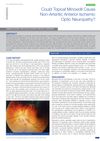
January 2016 in “Journal of Clinical and Diagnostic Research” This case report describes a non-arteritic anterior ischemic optic neuropathy that resolved after discontinuing topical 5% minoxidil treatment.
 April 2023 in “Journal of Investigative Dermatology”
 This study demonstrated that the Epidermal Biopotential Sensing System (EBSS) can measure digital biomarkers of pain in mice, suggesting potential applications in assessing pain and screening analgesics in populations with communication difficulties.
 2 citations
,
July 2023 in “International Journal of Molecular Sciences”
2 citations
,
July 2023 in “International Journal of Molecular Sciences” This study found that applying a formulation derived from Bacopa procumbens significantly promoted hair growth, pigmentation, and follicular cycle acceleration in mice compared to minoxidil, potentially offering a new therapeutic approach for hair health.
In this thesis, researchers explored ways to enhance the management of myotonic dystrophy type 1 by investigating the genetic inheritance patterns, especially small-sized repeat expansions, and assessing cardiac care, energy expenditure, and body composition in affected individuals.
 January 2024 in “Frontiers in Bioengineering and Biotechnology”
 In this mouse study, researchers found that nanoparticles loaded with umbilical cord-derived stem cell membranes and minoxidil enhanced hair growth by improving drug solubility and transdermal delivery, increasing VEGF, IGF-1, MKI67, and CTNNB protein levels in skin tissue compared to regular minoxidil.
January 2026 in “JCEM Case Reports” This case report presents a rare instance of recurrent ACTH-independent Cushing’s syndrome due to PBMAH, coinciding with the development of a pheochromocytoma, highlighting the need for thorough reevaluation in similar recurring cases.
12 citations
,
May 2006 in “Journal of Neurology Neurosurgery & Psychiatry” Neuromyotonia and morphoea can occur together in the same body areas.
1 citations
,
September 2017 in “BMJ” The man has a disease causing skin patches, thickened nerves, and mild muscle weakness.
January 2025 in “Dermatology Research and Practice” In this research, RNA expression analysis of scalp biopsies from lichen planopilaris patients revealed changes in specific genes after treatments with hydroxychloroquine, narrow band UVB, or low level laser light therapy, suggesting potential biomarkers and implicating M2 macrophages in the disease's immunopathogenesis.
 April 2025 in “ACS Applied Nano Materials”
 In AGA mouse models, this study found that the combination of nickel–copper nanozymes and minoxidil in dissolvable microneedles significantly enhanced hair regeneration and improved the hair follicle microenvironment by reducing reactive oxygen species and increasing vascular density, compared to minoxidil alone.
January 2026 in “International Journal of Gynaecology Sciences” This review discusses the proposal to rename Polycystic Ovary Syndrome as PolyMetabolic Ovarian Syndrome and reports no new clinical results, highlighting diagnostic misconceptions and the importance of personalized management.
13 citations
,
December 2021 in “Wound repair and regeneration” This study found that photobiomodulation enhanced hair regeneration in injured dermis of mice, likely through increased migration and exosome secretion of dermal papilla cells via the Akt/GSK-3β/β-catenin pathway.
This study found that the patient receiving microneedling and platelet-rich plasma treatment showed earlier significant improvements and high satisfaction compared to the patient treated with microneedling and topical minoxidil.
 1 citations
,
August 2022 in “Chemical engineering journal advances”
1 citations
,
August 2022 in “Chemical engineering journal advances” This study demonstrated that human hair can be coated with Fe3O4 nanoparticles, allowing it to be oriented and moved by a magnetic field, which may enhance drug delivery and hair care applications.
January 2019 in “International Journal of Case Reports and Images” This article discusses a combination of photobiomodulation and microneedling as a four-week treatment for male androgenetic alopecia in a case series, but reports no new clinical results.
43 citations
,
March 2017 in “Drug Design Development and Therapy” The researchers reported that a new nanoformulation of paclitaxel-loaded nanoparticles showed superior antitumor effects against malignant melanoma in vitro and in vivo compared to the commercial formulation Taxol®.
May 2025 in “Lasers in Surgery and Medicine” This study reported that nonablative monopolar radiofrequency therapy provided sustained reductions in both inflammatory and noninflammatory acne lesion counts and sebum production in participants with moderate-to-severe acne vulgaris, with high patient satisfaction and no significant adverse effects observed up to 12 months posttreatment.
41 citations
,
July 2016 in “Journal of Investigative Dermatology” This study identified molecular differences between dysplastic nevi and common melanocytic nevi, including altered keratinocyte differentiation, increased hair follicle-related molecule expression, and distinct immune microenvironment characteristics in dysplastic nevi.
November 2018 in “Journal of dermatology & cosmetology” This manuscript reports on the first case of perforating necrobiosis lipoidica in Colombia, marking the 19th documented case worldwide.
August 2023 in “Zenodo (CERN European Organization for Nuclear Research)” This abstract discusses the non-invasive technique of scalp micropigmentation for hair loss, focusing on its cosmetic effects and customization options, and reports no new research findings.
 April 2023 in “Journal of Investigative Dermatology”
 This study found that MPZL3 plays a crucial role in controlling sebaceous gland size and sebocyte proliferation in mice and humans, implicating its potential involvement in skin disorders like acne and psoriasis.
 April 2023 in “IntechOpen eBooks”
 This review discusses neuropathic pruritus, detailing its clinical presentations and management strategies, but reports no new clinical results.
2 citations
,
May 2022 in “Journal of Industrial and Engineering Chemistry” This study observed that minoxidil-loaded nanoparticles significantly enhanced skin penetration and hair regrowth in mice within three weeks, without ethanol and propylene glycol, suggesting they are a promising delivery method for treating hair loss.