April 2026 in “Microscopy Research and Technique” In this study, researchers found that a high-cost hair restoration product containing coconut oil and glycerol effectively restored the structural integrity of chemically processed hair, particularly in samples that were significantly damaged by bleaching and color treatments.
10 citations
,
January 2020 in “Royal Society Open Science” This study developed a quantitative measure for scoring hair surface damage from SEM images and found it accurately classified hair damage caused by explosive blasts, similar to an existing classification system.
 April 2023 in “Han'gug miyong haghoeji/Journal of the Korean society of cosmetology”
 This study compared the effects of direct heat perms and softening heat perms on hair, analyzing damage and morphological changes to understand their impact on hair fibers and provide foundational data for future research.
 42 citations
,
April 2008 in “Acta materialia”
42 citations
,
April 2008 in “Acta materialia” This study investigated the tensile response and morphological changes of different ethnic hair types using AFM, showing variations between virgin, chemically damaged, and conditioner-treated Caucasian hair under different conditions.
February 2024 in “Medicina” In this study, researchers used atomic force microscopy to capture and analyze morphological changes in the surface of healthy hair, identifying features such as pitting and rod-shaped macro-fibrillar elements, which could inform future research on hair conditions and care.
January 2001 in “China Surfactant Detergent & Cosmetics” This study compared the protective effects of two conditioners, Protective factor C and Keratin, on hair damaged by perm treatment using a model of damaged hair.
99 citations
,
July 2005 in “Ultramicroscopy” This study analyzed the nanotribological properties of various hair types and human skin, revealing differences in friction and adhesion based on ethnicity and hair condition.
25 citations
,
February 2007 in “Forensic science international” This study found that different decontamination protocols caused varying levels of cuticle damage in hair, with aqueous buffer treatment resulting in the most substantial degradation.
9 citations
,
June 2020 in “European Radiology Experimental” This study found that single-dose x-ray irradiation in rat calvaria skin led to morphological changes in collagen fibers, disorganization, and a temporary absence of sebaceous glands and hair follicles.
 4 citations
,
January 2007 in “Sen'i Gakkaishi”
4 citations
,
January 2007 in “Sen'i Gakkaishi” This study found that permanent wave treatment accelerates hair degradation after protease exposure, showing significant morphological differences compared to untreated hair and linked to damage from Alpha-helical region denaturation.
 September 2024 in “Heliyon”
 In this study, researchers observed that even a single session of hair dyeing can damage hair fibers, with significant worsening of mechanical properties and protein composition after three or more consecutive treatments, emphasizing the need to consider the cumulative impacts of dyeing on hair health.
1 citations
,
January 2021 in “Acta Cirurgica Brasileira” This study found that both finasteride and dutasteride led to morphological and functional kidney damage in rats, with more severe effects observed in the dutasteride group.
 16 citations
,
July 2013 in “The American Journal of Dermatopathology”
16 citations
,
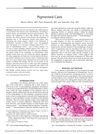
July 2013 in “The American Journal of Dermatopathology” This study observed that pigmented casts are present in various alopecia types but are not specific to any single diagnosis, with distinct morphological features noted in trichotillomania.
 October 2023 in “Toxicology and Applied Pharmacology”
 This study found that finasteride and minoxidil act as hormone disruptors in mice, with finasteride having a more significant association with reproductive injuries, such as damage to the epididymis and reduced semen volume.
 6 citations
,
March 2018 in “Hair transplant forum international”
6 citations
,
March 2018 in “Hair transplant forum international” This article notes the importance of graft quality in hair restoration surgery, particularly in Follicular Unit Excision, but offers no new research findings.
1 citations
,
June 1998 in “Journal of Forestry Research” Mammalian hair scales change from smooth to wavy due to friction.
 12 citations
,
December 2017 in “Food and chemical toxicology”
12 citations
,
December 2017 in “Food and chemical toxicology” This study found that mixtures used in permanent hair dyes had irritant effects on reconstructed human epidermis, while individual ingredients alone did not.
 20 citations
,
January 2003 in “Journal of oleo science”
20 citations
,
January 2003 in “Journal of oleo science” This study found that both everyday physical and environmental stresses, as well as chemical treatments, contributed to hair damage, with cuticle layers being more noticeably affected.
August 2025 in “Applied Sciences” This study found that peroxide-rich plasma-activated water caused minimal morphological damage to hair, while nitrate-rich plasma-activated water induced significant damage, especially in porous hair types.
81 citations
,
December 2007 in “Acta materialia” This study conducted in situ tensile loading experiments with atomic force microscopy to observe how conditioning treatments affect the tensile response of virgin, chemically damaged, and mechanically damaged Caucasian hair.
 8 citations
,
February 2017 in “Archives of Dermatological Research”
8 citations
,
February 2017 in “Archives of Dermatological Research” This study found that IPL hair reduction led to significant decreases in hair count and thickness by promoting hair follicle miniaturization, increased telogen phase, and reduced cell proliferation.

In this study, researchers found that both minoxidil and finasteride, commonly used for treating androgenetic alopecia, pose risks to male reproductive health due to their endocrine-disrupting effects and impact on testicular morphology and function, suggesting the need for further research into their reproductive safety.
January 2001 in “Zhongguo linchuang jiepouxue zazhi” This study found that transplanted human hair keratin may help reduce damage and promote function recovery in spinal cord injuries in rats.
May 2026 in “International Journal of Cosmetic Science” This study found that repeated exposure to ozonated water caused oxidative changes in hair proteins, lipids, and pigments, leading to altered hair properties, with minimal effects on shine and color.
 6 citations
,
February 2021 in “Journal of Ovarian Research”
6 citations
,
February 2021 in “Journal of Ovarian Research” In this study, 150 kHz electromagnetic radiation reduced the number and size of follicular cysts in a rat model of polycystic ovary syndrome without causing significant morphological damage to developing follicles.
May 2026 in “Jurnal Pendidikan Kimia Fisika dan Biologi” This study found that rebonding hair straightening treatments visibly damage the hair cuticle, causing surface erosion and cracks, as shown through Scanning Electron Microscopy analysis.
46 citations
,
April 1971 in “American Journal of Clinical Nutrition” Lack of protein causes hair root damage, but it can be reversed by eating protein again.
 34 citations
,
December 2000 in “The journal of investigative dermatology/Journal of investigative dermatology”
34 citations
,
December 2000 in “The journal of investigative dermatology/Journal of investigative dermatology” This study observed that rat vibrissa hair follicles cultured in vitro showed morphological changes suggesting cyclical activity but remained blocked in the pro-anagen stage.
 September 2022 in “International journal of pharmaceutical quality assurance”
 This study concluded that sodium lauryl sulfate is very toxic to hair, damaging its structure, while natural conditioners help protect hair integrity and improve consistency and shine.
 134 citations
,
September 2008 in “Lasers in surgery and medicine”
134 citations
,
September 2008 in “Lasers in surgery and medicine” This study found that low fluence photoepilation with intense pulsed light targets the pigmented area of hair follicles, causing temporary hair loss by inducing a catagen-like state without severe follicle damage.