 7 citations
,
November 2010 in “Genesis”
7 citations
,
November 2010 in “Genesis” Mouse Scube3 affects teeth, tongue, vibrissae, and eye development, but not facial structure or limb growth.
 August 2025 in “Indian Dermatology Online Journal”
 This review discusses how metaphorical language in dermatology, particularly terms like "butterfly" and "moth," aids in diagnosing and understanding skin conditions by highlighting their distinctive clinical presentations and underlying pathophysiology.
 85 citations
,
October 2006 in “Current opinion in cell biology”
85 citations
,
October 2006 in “Current opinion in cell biology” This article reviews advances in feather development and regeneration, including pattern formation, stem cell biology, and evolution, but presents no new experimental results.
 13 citations
,
December 2018 in “Development, Growth & Differentiation”
13 citations
,
December 2018 in “Development, Growth & Differentiation” This study found that male and female chicken feather morphology and color patterns can be extrinsically modified through molting and resetting the stem cell niche during regeneration.
 57 citations
,
November 1998 in “Wound Repair and Regeneration”
57 citations
,
November 1998 in “Wound Repair and Regeneration” This research observed that dermal papilla cells have the potential to regenerate hair bulbs under preferred environmental conditions when associated with dermal sheath cells or exposed to specific growth factors.
10 citations
,
November 2008 in “Veterinary Dermatology” In this study, the misshaped and hairy ear phenotype in mutant mice was linked to mis-expression of certain Hoxc genes due to a chromosomal inversion.
 81 citations
,
April 1941 in “Physiological zoology”
81 citations
,
April 1941 in “Physiological zoology” Experiments can shape how feathers grow and develop.
 245 citations
,
January 1998 in “Genes & Development”
245 citations
,
January 1998 in “Genes & Development” This study found that Hoxc13 mutations in mice cause defects in hair, nail, and tongue structures, with the most noticeable issue being brittle hair leading to alopecia.
5 citations
,
June 1993 in “Pediatric dermatology” Monilethrix Syndrome causes fragile, beaded hair that breaks easily and needs early diagnosis for better care.
 131 citations
,
March 2004 in “The American journal of pathology”
131 citations
,
March 2004 in “The American journal of pathology” This study found that modulating BMP activity in transgenic mice affects the development and characteristics of several ectodermal organs, such as skin, hair, and claws, highlighting a stage-dependent influence on organogenesis.
February 2025 in “Proceedings of the National Academy of Sciences” Only Deomyinae rodents can regenerate complex tissues.
 7 citations
,
May 2019 in “European Journal of Human Genetics”
7 citations
,
May 2019 in “European Journal of Human Genetics” This study describes three new cases of MCOPS6 with BMP4 variants, noting expanded phenotypic variability but no clinically apparent microphthalmia in these individuals, which is commonly reported in the disorder.
 August 2024 in “Microscopy Research and Technique”
 This study described the structure of the hair brush on male Endoclita vietnamensis moths' legs, identifying characteristics such as specialized scales and a pheromone gland, which could facilitate the future development of pheromone-based pest control methods for eucalyptus pests in China.
April 2016 in “Journal of Investigative Dermatology” Mutations in the TSPEAR gene cause a new form of ectodermal dysplasia affecting hair and tooth development.
 January 2019 in “Global Dermatology”
 This review discusses the genetic disorder, monilethrix, characterized by fragile, brittle hair and its inheritance patterns, and reports no new clinical results.
13 citations
,
July 2004 in “Pediatric dermatology” This case study describes a 9-year-old boy with monilethrix and associated abnormalities, suggesting a new, severe autosomal recessive variant termed "monilethrix syndrome.
158 citations
,
December 2002 in “Development” In this study, Msx2-deficient mice showed progressive hair loss due to shortened anagen phase and prolonged catagen and telogen phases, resulting in cyclic alopecia with structurally abnormal hair shafts.
January 2000 in “Medical Entomology and Zoology”  25 citations
,
September 2006 in “Birth Defects Research”
25 citations
,
September 2006 in “Birth Defects Research” This article discusses various skin pattern formations, their molecular mechanisms, and highlights the need for further understanding to connect molecular biology with organism phenotypes, without providing new clinical findings.
 January 2022 in “Revista Dermatológica Centro Uraga”
 This article reviews two cases of monilethrix in siblings, detailing their clinical and dermatoscopic characteristics, but reports no new findings.
 4 citations
,
August 2023 in “Nature Communications”
4 citations
,
August 2023 in “Nature Communications” In this study, researchers observed that the combination of hair progenitors and their micro-niche changes every three days in mouse zigzag hair, and disruptions in specific genes affected this rhythm, highlighting the importance of this periodic change for normal hair morphology.
 1 citations
,
February 2018 in “Australasian journal of dermatology”
1 citations
,
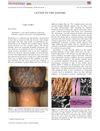
February 2018 in “Australasian journal of dermatology” Advanced imaging techniques are crucial for accurately diagnosing Monilethrix, a rare hair disorder.
22 citations
,
April 2012 in “The American journal of pathology” This study found that the loss of Msx2 in knockout mice led to phenotypes similar to Peters anomaly and microphthalmia, suggesting that MSX2 plays a critical role in anterior segment development of the eye.
48 citations
,
July 1988 in “PubMed” In this study, researchers observed that rhino mice exhibit significant ductal hyperkeratinization in the meibomian gland, which may represent the first naturally occurring disorder of this gland in mice.
46 citations
,
August 2022 in “Animals” This study identified key genes and miRNAs involved in feather morphogenesis in Zhedong White geese, highlighting a negative correlation between FOXO3 and miR-144-y.

This review synthesizes current knowledge on choriogenesis, the final stage of oogenesis in insects, by exploring the role of follicle cells, regulatory mechanisms of gene expression, and the biochemical makeup of the eggshell, while also highlighting structural diversity and adaptations across insect species.
 1 citations
,
October 2025 in “Scientific Reports”
1 citations
,
October 2025 in “Scientific Reports” This study investigated the Mandarin duck as a model for understanding lifelong developmental changes, finding that male sail feather morphogenesis involves a combination of local morphogenetic programs, epigenetic regulation, and hormonal cues, with increased female estrogen levels observed before the mating season.
47 citations
,
July 1998 in “Journal of Investigative Dermatology” A new mutation, Glu402Lys, in hair keratin is linked to variable symptoms of monilethrix.
 16 citations
,
January 2005 in “The International Journal of Developmental Biology”
16 citations
,
January 2005 in “The International Journal of Developmental Biology” This study found that Hex gene expression patterns in chick embryo dorsal skin during feather bud development suggest a significant role in initiating feather morphogenesis.
11 citations
,
November 2019 in “The FASEB Journal” In this study, a missense mutation in the MAP2 gene was found to be associated with reduced hair follicle density, leading to the hairless phenotype in pigs.