11 citations
,
September 1996 in “Journal of applied polymer science” In this study, treatment with aqueous KCN selectively converted disulfide bonds to monosulfide crosslinks in hair, leading to changes in microstructural properties and rubberlike elasticity under specific laboratory conditions.
2 citations
,
September 1996 in “Journal of Applied Polymer Science” This study found that treating hair with aqueous KCN converts disulfide bonds to monosulfide crosslinks, affecting the elasticity and crosslink distribution in hair microstructures.
 May 2020 in “International Journal of Engineering Applied Sciences and Technology”
 This study explored the antimicrobial potential of natural bioactive materials such as Citrus lemon, Garlic, Baeckea frutescens, Neem, and Eclipta Alba, highlighting their eco-friendly and non-toxic properties for combating harmful bacteria.
53 citations
,
July 2016 in “Cosmetics” This study reviews the biology and cosmetic treatment of hair, emphasizing future advancements in safer, more effective procedures to meet consumer needs for hair care.
73 citations
,
October 2013 in “International Journal of Cosmetic Science” This review examines the chemical composition and potential health risks of hair straighteners, but it reports no new findings and emphasizes the importance of understanding hair fibre structure for safe use.
 January 2026 in “Beilstein Journal of Organic Chemistry”
 This study developed a metal-free method for synthesizing sulfinimidate esters, showcasing their potential as versatile intermediates for enantioselective bond formation under mild conditions.
 2 citations
,
January 2015 in “Sen'i Gakkaishi”
2 citations
,
January 2015 in “Sen'i Gakkaishi” This study found that washing hair after reduction in a permanent waving process allows for significant reformation of disulfide cross-links, enhancing the strength and elasticity of hair fibers.
44 citations
,
January 1984 in “Molecular and Cellular Biochemistry” 75 citations
,
March 2007 in “Journal of Biological Chemistry” This review discusses the complexities and uncertainties in the pathways and mechanisms for disulfide bond formation in multicellular organisms and reports no new experimental findings.
 January 2024 in “International Journal of Cosmetic Science”
 This study found that 1,4-n-butylene dimaleate can restore the mechanical properties of reduced hair by reconnecting disulfide bonds and improving the hair's structural integrity using a thiol-Michael click reaction, compared to untreated reduced hair.
 9 citations
,
March 1968 in “The BMJ”
9 citations
,
March 1968 in “The BMJ” In their 1957 study, Neuman and Neuman suggested that magnesium deficiency may inhibit the ion exchange process required for calcium ions to enter extracellular fluid, potentially affecting calcium mobilization.
54 citations
,
January 1984 in “Molecular and Cellular Biochemistry” 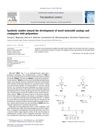 12 citations
,
February 2010 in “Tetrahedron Letters”
12 citations
,
February 2010 in “Tetrahedron Letters” This article describes the synthesis of novel polyamine-modified minoxidil analogs and conjugates to potentially enhance minoxidil's biological activity, selectivity, and water solubility, but reports no new biological results.
January 2026 in “Molecules” In this study, the novel thiol-Michael click perming molecule, MA2-CySS, achieved repeatable perming with reduced oxidative damage, preserving hair keratin's structure while maintaining efficiency comparable to traditional oxidative methods.
 April 2025 in “Pharmaceuticals”
 This study found that novel thiol-reactive cross-linking agents, particularly APA, significantly improved the tensile strength and elasticity of human hair fibers by effectively regenerating disulfide bridges, with potential applications for advanced hair repair treatments in the cosmetic industry.
February 2020 in “The Pharmaceutical Society of Japan”  18 citations
,
January 2008 in “Sen'i Gakkaishi”
18 citations
,
January 2008 in “Sen'i Gakkaishi” This study observed that repeated perm treatments decrease disulfide bonds in hair due to their conversion largely into cysteic acid, affecting the waving efficiency depending on the reduction agent used.
22 citations
,
November 2014 in “Proteins Structure Function and Bioinformatics” In this study, researchers mapped cysteine accessibility in wool keratins and KAPs, revealing that certain cysteines in keratin end domains and Types I and II rod domains are accessible and likely involved in forming disulfide bonds.
July 2023 in “Nature Reviews Chemistry” A new method strengthens hair without using harmful chemicals.
 66 citations
,
February 2010 in “CrystEngComm”
66 citations
,
February 2010 in “CrystEngComm” Made 8 minoxidil samples; 1 cocrystal, 7 salts formed.
39 citations
,
June 2012 in “Journal of Structural Biology” Disulfide bonds are crucial for hair structure during keratinization.
75 citations
,
August 2018 in “Plant physiology” In this study, researchers found that increased hydrogen sulfide levels in Arabidopsis disrupted actin dynamics through S-sulfhydration, leading to the depolymerization of actin filaments and inhibited root hair growth.
1 citations
,
January 2017 in “Science” In this study, researchers used iron ion coordination to successfully create a molecular knot with three organic ligand strands and eight crossings.
August 2026 in “Materials Technology” This study developed a multifunctional TA-MoS2-SF hydrogel for diabetic ulcer treatment, demonstrating enhanced photothermal bactericidal effects, immune environment remodeling, and fibroblast proliferation, suggesting it may serve as an effective 'antibacterial-immunomodulatory-repair' strategy.
 March 2010 in “International Journal of Cosmetic Science”
 This study found that oxidative treatment with peracetic acid dissociates some disulfide bonds in human hair fibers while maintaining the crystalline structure, suggesting different mechanisms stabilize different regions of intermediate filaments.
 6 citations
,
January 2016 in “Bioorganic & Medicinal Chemistry Letters”
6 citations
,
January 2016 in “Bioorganic & Medicinal Chemistry Letters” This study reported that certain minoxidil conjugates, specifically those with spermine, methylenedianiline, and diaminofluorene, were able to induce differentiation in HL-60 acute myeloid leukemia cells without toxicity at a concentration of 10 μM.
 15 citations
,
February 1999 in “The anatomical record”
15 citations
,
February 1999 in “The anatomical record” This study found that defective cross-linking in hair cuticles is observable in a minority of mouse hair mutants, suggesting different proteins are involved in cross-linking across cell types.
January 2023 in “International Journal of Molecular Sciences” This study found that a double-crosslinked hydrogel using GelMA and sulfhydrylated chitosan showed promising results in healing full-thickness skin wounds in rats by accelerating tissue repair and promoting collagen and blood vessel formation.
3 citations
,
September 2023 in “Journal of Photochemistry and Photobiology A Chemistry”  3 citations
,
June 2023 in “ACS sustainable chemistry & engineering”
3 citations
,
June 2023 in “ACS sustainable chemistry & engineering” In this study, a method using riboflavin phosphate, citric acid, and polyols successfully optimized protein cross-linking in hair of all colors through visible light-mediated photo-cross-linking, improving the mechanical properties and hair-setting effects without the influence of hair color.