16 citations
,
April 2000 in “Contact dermatitis” In this report, a 19-year-old Japanese man experienced severe and prolonged urticarial reactions following treatment with diphenylcyclopropenone for alopecia universalis, emphasizing the need for caution with potent sensitizers.
August 2025 in “International Journal of Clinical Dermatology” In this study, a possible case of Wolf’s isotopic response was observed, where a 72-year-old woman developed superficial basal cell carcinoma at a prior herpes zoster site on her scalp, possibly due to altered local immunity from the zoster episode.
2 citations
,
May 2024 in “International Journal of Molecular Sciences” This study found that in a mouse model of psoriasis, depleting CD169+ macrophages led to milder symptoms and decreased inflammation, suggesting these macrophages play a crucial role in psoriasis development.
 12 citations
,
November 2022 in “Archives of Dermatological Research”
12 citations
,
November 2022 in “Archives of Dermatological Research” This review summarizes existing and new cases of generalized pustular psoriasis and acute generalized exanthematous pustulosis associated with COVID-19, noting that over half lacked a known drug trigger.
17 citations
,
May 1969 in “American Journal of Physical Anthropology” This study describes unique anatomical characteristics of the skin and hair structures in the silver marmoset, including features such as thin epidermis, specialized nerve end-organs, and distinctive gland compositions.
 January 2025 in “Parasites & Vectors”
 This observational study identified L. infantum infection in meerkats housed in two zoological parks in Madrid, marking the first such report for this species, though the disease persisted in one individual despite treatment.
June 2025 in “British Journal of Dermatology” In this report, two cases of melanocytic matricoma, a rare benign hair follicle lesion that mimics melanoma and basal cell carcinoma, were described and successfully treated with complete surgical excision. Histological analysis was crucial for differentiation from similar malignant lesions.
 14 citations
,
December 2010 in “Journal of human genetics”
14 citations
,
December 2010 in “Journal of human genetics” This study identified a severe MBTPS2 gene mutation in a Japanese patient with IFAP syndrome, suggesting other factors may influence the varied clinical severity of the condition.
53 citations
,
June 2020 in “The journal of allergy and clinical immunology/Journal of allergy and clinical immunology/The journal of allergy and clinical immunology” This review discusses the development and use of various animal models for studying psoriasis, highlighting their strengths and limitations, but reports no new experimental results.
 May 2011 in “British Journal of Dermatology”
 The 1891 epidemic skin disease was likely caused by arsenic poisoning, possibly from beer or fish.
 April 2023 in “Journal of Investigative Dermatology”
 This study found that mRNA booster vaccinations for SARS-CoV-2 increased protective antibodies without worsening autoimmune disease activity in patients with pemphigus and bullous pemphigoid.
8 citations
,
June 2017 in “The Journal of Infection in Developing Countries”  143 citations
,
September 1991 in “Archives of Dermatology”
143 citations
,
September 1991 in “Archives of Dermatology” In this study, patients with generalized pustular psoriasis were classified into subgroups to better understand the disease's variability and assist in treatment selection, highlighting the role of localized infections in triggering flares.
1 citations
,
January 2026 in “International Journal of Dermatology” In this case series, three patients with advanced non-small cell lung cancer experienced severe skin eruptions and scarring alopecia after treatment with amivantamab, highlighting the critical need for prompt recognition and management of these adverse effects to minimize treatment interruptions.
2 citations
,
October 1931 in “Archives of Dermatology and Syphilology” This report describes a rare case of scalp kerion due to microsporosis in a Portuguese child, noting the unusual combination with other microsporid features and treatment details.
 April 2018 in “Journal of Investigative Dermatology”
 This study found that palmoplantar pustulosis patients exhibited oral dysbiosis, particularly among those with pustulotic arthro-osteosis, as compared to healthy controls.
1 citations
,
November 2023 in “Pathogens” This study detected sarcoptic mange in five free-ranging raccoon dogs in Schleswig-Holstein, Germany, with four showing severe skin lesions and potential secondary bacterial infections, suggesting they may act as vectors in disease spread.
 22 citations
,
December 2003 in “Veterinary clinical pathology”
22 citations
,
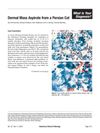
December 2003 in “Veterinary clinical pathology” This case study reported a diagnosis of dermatophytic pseudomycetoma in a Persian cat with dermal nodules, highlighting potential heritable predisposition and suggesting systemic antifungal therapy for fair prognosis.
 February 2026 in “International Journal of Homoeopathic Sciences”
 This paper reviews plica polonica, a rare hair disorder linked historically to poor hygiene and now to severe self-neglect or medical conditions, and outlines various treatment and preventive strategies but reports no new findings.
 September 2017 in “Journal of Investigative Dermatology Symposium Proceedings”
 This review discusses the clinical features of hypopigmented mycosis fungoides in primary cutaneous T cell lymphoma and reports no new clinical results.
 18 citations
,
March 1985 in “Journal of The American Academy of Dermatology”
18 citations
,
March 1985 in “Journal of The American Academy of Dermatology” Cocaine use can cause a blistering skin disease.
 June 2023 in “British Journal of Dermatology”
 This study reviews historical accounts suggesting several British monarchs suffered from various skin diseases, including leprosy, psoriasis, stasis dermatitis, systemic lupus erythematosus, and porphyria.
November 2024 in “Journal of Investigative Dermatology” Blocking the JAK/STAT pathway may help reduce skin sensitivity in Xeroderma pigmentosum.
September 2025 in “Jurnal Penelitian Pendidikan IPA” In this study, researchers identified two significant genetic polymorphisms in the 3'-UTR of the HSP70 gene in Moa buffalo, which may play an important role in heat adaptation, providing insights for conservation and performance improvement in tropical climates.
January 2014 in “ACTA SCIENTIAE VETERINARIAE” This case report describes a cat with localized scleroderma (morphea-like) that did not show clinical resolution or spontaneous remission after treatment, differing from previously documented cases.
 7 citations
,
January 1989 in “Leprosy Review”
7 citations
,
January 1989 in “Leprosy Review” This report describes a woman with borderline lepromatous leprosy who developed a serious skin reaction to dapsone; she recovered quickly after stopping dapsone and receiving corticosteroids.
5 citations
,
September 1991 in “Veterinary dermatology” In this study of seborrhoeic dermatitis in pigmy goats, researchers found that the disease has chronic cycles of remission and relapse without clear infectious or nutritional causes, and corticosteroid treatment provided only temporary relief.
 August 2025 in “Cermin Dunia Kedokteran”
 This article discusses Human Metapneumovirus (HMPV) and highlights the need for continued research, noting that while supportive treatments exist, no vaccines or specific therapies are currently available.
 25 citations
,
January 2005 in “Pediatric Dermatology”
25 citations
,
January 2005 in “Pediatric Dermatology” This article discusses the use of methotrexate for treating generalized pustular psoriasis in a 2-year-old child, providing a specific case study but reporting no new clinical results.
January 2011 in “Journal of the American Academy of Dermatology” This book critiques Dr. Conroy's theory on Morgellon's disease, highlighting a lack of scientific evidence and detailing his unverified claims about fungal organisms attracted to cocaine.