 44 citations
,
August 2008 in “Archives of Dermatology”
44 citations
,
August 2008 in “Archives of Dermatology” This abstract provides no results; it is a website notification about cookies and general access to JAMA content.
 19 citations
,
October 2014 in “Veterinary Dermatology”
19 citations
,
October 2014 in “Veterinary Dermatology” Dermoscopy is a good, noninvasive way to see normal cat skin structures and could be useful for check-ups.
 136 citations
,
February 2017 in “International Journal of Molecular Sciences”
136 citations
,
February 2017 in “International Journal of Molecular Sciences” This study observed that autologous platelet-rich plasma treatment improved hair count and density in areas with androgenetic alopecia compared to placebo, with differing outcomes based on the PRP collection device used.
 76 citations
,
July 2011 in “Clinical, Cosmetic and Investigational Dermatology”
76 citations
,
July 2011 in “Clinical, Cosmetic and Investigational Dermatology” This review discusses clinical methods for diagnosing alopecia and examines current treatments for both cicatricial and noncicatricial forms but provides no new clinical results.
 91 citations
,
January 2009 in “International Journal of Trichology”
91 citations
,
January 2009 in “International Journal of Trichology” This review discusses the advantages and limitations of various hair loss evaluation methods but reports no new results; it emphasizes the importance of cautious interpretation for these diagnostic tools.
 41 citations
,
January 2020 in “BioMed Research International”
41 citations
,
January 2020 in “BioMed Research International” This study found that micrografts containing human hair follicle mesenchymal stem cells significantly increased hair count and density compared to placebo over 58 weeks in patients experiencing hair loss.
 13 citations
,
January 2011 in “Journal of natural pharmaceuticals”
13 citations
,
January 2011 in “Journal of natural pharmaceuticals” This study suggests that extract from Musa paradisiaca unripe fruit may promote hair growth in mice, indicating potential as a hair growth treatment.
 11 citations
,
January 2012 in “Archives of Dermatology”
11 citations
,
January 2012 in “Archives of Dermatology” Polarized microscopy is a quick and free method to correctly identify types of hair loss.
 April 2019 in “Dermatology reports”
 This case study reported that scalp dermoscopy, or trichoscopy, provided a useful noninvasive method to evaluate and confirm hair regrowth in a child treated for tinea capitis.
 13 citations
,
January 2007 in “International journal of pharmaceutics”
13 citations
,
January 2007 in “International journal of pharmaceutics” This study found that a papain-containing cream had a significantly greater depilatory effect and altered skin morphology more than a papain-containing gel when applied to mice.
 28 citations
,
February 2016 in “International Journal of Nanomedicine”
28 citations
,
February 2016 in “International Journal of Nanomedicine” This study found that freeze-dried finasteride nanoparticles improved the stability, solubility, and in vitro dissolution of the drug, indicating potential benefits for poorly water-soluble drugs.
 24 citations
,
September 2018 in “Lasers in Surgery and Medicine”
24 citations
,
September 2018 in “Lasers in Surgery and Medicine” This study shows that multiphoton microscopy can non-invasively distinguish between scarring and non-scarring alopecia by identifying certain morphological features, but further research is needed to confirm its clinical utility.
 18 citations
,
May 2013 in “Journal of The American Academy of Dermatology”
18 citations
,
May 2013 in “Journal of The American Academy of Dermatology” This study concludes that elastic tissue staining is the most reliable method for identifying scarring patterns in alopecia biopsy specimens, and polarized microscopy may provide specific insights for nonscarring alopecia.
 13 citations
,
January 2013 in “International Journal of Trichology”
13 citations
,
January 2013 in “International Journal of Trichology” This study found that androgenetic alopecia patients showed significantly higher perifollicular lymphocytic inflammation and fibrosis compared to controls, emphasizing the need for histopathological evaluation during hair transplantation.
 8 citations
,
April 1999 in “Dermatologic Clinics”
8 citations
,
April 1999 in “Dermatologic Clinics” This study evaluates if using a dissecting stereomicroscope affects the rate of hair follicle transection during graft dissection, but reports no new conclusive results.
 December 2015 in “Turk Dermatoloji Dergisi”
 This study found that tinea capitis was the most frequent form of dermatomycosis in children, and suggested that topical antifungal treatments may be effective and well-tolerated for these infections.
 June 2002 in “Seminars in Cutaneous Medicine and Surgery”
 Using a microscope during hair transplants cuts damage to follicles in half and could improve hair growth.
 15 citations
,
July 2002 in “Clinical and Experimental Dermatology”
15 citations
,
July 2002 in “Clinical and Experimental Dermatology” This review discusses the role of hair microscopy in diagnosing alopecia, stating that while it excludes diagnoses related to hair breakage, it only confirms nonspecific short anagen in alopecia cases.
 3 citations
,
September 2002 in “Dermatologic Surgery”
3 citations
,
September 2002 in “Dermatologic Surgery” This study presents an evaluation system that helps hair restoration surgeons better identify candidates for alopecia-reducing procedures, resulting in more consistently good outcomes by excluding poor and borderline candidates.
 September 2002 in “Dermatologic Surgery”
 The author reports that an evaluation system for assessing candidacy in alopecia-reducing procedures significantly decreased unsuitable surgeries while maintaining consistently good outcomes.
 90 citations
,
June 2006 in “The American Journal of Dermatopathology”
90 citations
,
June 2006 in “The American Journal of Dermatopathology” This review outlines the classification, histopathologic presentation, and pathogenetic concepts of scarring and nonscarring alopecias, reporting no new clinical results and emphasizing the need for clinicopathologic correlation.
 41 citations
,
July 2002 in “Clinical and Experimental Dermatology”
41 citations
,
July 2002 in “Clinical and Experimental Dermatology” This review evaluates hair growth measurement methods for human scalp hair, suggesting that combining highly resolutive analytical approaches with global calibrated methods is recommended for assessing hair changes in clinical settings.
 27 citations
,
August 2014 in “Journal of Cosmetic and Laser Therapy”
27 citations
,
August 2014 in “Journal of Cosmetic and Laser Therapy” This study compared the microscopic treatment zones created by different fractional lasers and radiofrequency in swine skin, finding distinct patterns and damage levels for each technology.
 17 citations
,
October 2016 in “Artificial Cells Nanomedicine and Biotechnology”
17 citations
,
October 2016 in “Artificial Cells Nanomedicine and Biotechnology” This study found that arginine-loaded lipidic nanoparticles improved hair follicle growth in male hamsters more effectively than an aqueous arginine solution.
 17 citations
,
May 2016 in “Archives of Dermatological Research”
17 citations
,
May 2016 in “Archives of Dermatological Research” This study identified specific reflectance confocal microscopy features that help differentiate scarring from non-scarring alopecia, providing a non-invasive diagnostic tool.
 14 citations
,
January 2020 in “Biomaterials Science”
14 citations
,
January 2020 in “Biomaterials Science” Created microspheres show potential for safe and effective use in prostate artery embolization.
 13 citations
,
September 2020 in “International Journal of Molecular Sciences”
13 citations
,
September 2020 in “International Journal of Molecular Sciences” This study found that combining platelet-rich plasma therapy with minoxidil was more effective in treating androgenetic alopecia in men than either treatment alone.
 12 citations
,
July 2016 in “Forensic science international”
12 citations
,
July 2016 in “Forensic science international” This study found that postmortem root banding in hair is likely due to the degradation of the intermacrofibrillar matrix in the cortex, with no damage to the cuticle observed.
 9 citations
,
November 2013 in “Dermatologic Surgery”
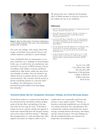
9 citations
,
November 2013 in “Dermatologic Surgery” Hair transplant complications were likely due to deep graft placement and rough handling.
 6 citations
,
July 2024 in “The Journal of the American Board of Family Medicine”
6 citations
,
July 2024 in “The Journal of the American Board of Family Medicine” This study found that while GPT-4 shows high accuracy and efficiency in clinical decision making, physicians' critical thinking and lifelong learning skills remain essential, particularly in addressing and interpreting AI errors in medical settings.