2 citations
,
March 2017 in “Sultan Qaboos University medical journal” This case report describes a six-month-old infant with focal scalp hair heterochromia and no detectable underlying abnormalities, which was still present at a one-year follow-up.
 January 2018 in “Springer eBooks”
 Congenital triangular alopecia is a harmless, non-spreading hair loss condition often seen in young children.
 January 2007 in “Revista del Centro Dermatológico Pascua”
 This case report describes a 2-year-old boy diagnosed with trichothiodystrophy, characterized by fragile hair, intellectual damage, diminished fertility, and short stature.
54 citations
,
June 2001 in “The Indian Journal of Pediatrics” This study found that newborns with neural tube defects and their mothers had significantly lower hair zinc levels compared to controls.
4 citations
,
October 2006 in “Anais Brasileiros de Dermatologia” This case report describes a patient with alopecia areata treated with diphencyprone, who experienced both successful hair regrowth and later intense hair shedding, compatible with telogen effluvium, suggesting a possible link between contact dermatitis treatments and telogen effluvium onset.
 February 2010 in “Journal of The American Academy of Dermatology”
 This study found that among Chinese patients with alopecia areata, those with alopecia totalis or universalis had an earlier onset, longer disease duration, and more severe quality of life impact than those with patchy alopecia.
 3 citations
,
June 2018 in “International Journal of Clinical Pharmacy”
3 citations
,
June 2018 in “International Journal of Clinical Pharmacy” In this case report, maternal use of finasteride during early pregnancy was not associated with external genitalia abnormalities in a male infant, but the findings are limited to one case and broader safety conclusions cannot be drawn.
 9 citations
,
October 2013 in “Pediatric dermatology”
9 citations
,
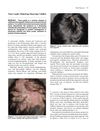
October 2013 in “Pediatric dermatology” This study highlights a dissecting cellulitis-like presentation of tinea capitis in children that should be identified to ensure correct diagnosis and treatment to prevent scarring alopecia.
4 citations
,
October 2023 in “Children” This study diagnosed a group of six girls with various ectodermal abnormalities, identifying cranio-skeletal malformations consistent with focal dermal hypoplasia (Goltz syndrome), and found heterozygous mutations in the PORCN gene in two children.
 46 citations
,
December 2003 in “Advances in neonatal care”
46 citations
,
December 2003 in “Advances in neonatal care” This article reviews fetal scalp hair formation and related disorders but reports no new research results.
 December 2024 in “Kırıkkale Üniversitesi Tıp Fakültesi Dergisi”
 This study found that chromosomal microarray analysis identified copy number variations in 12% of patients with dysmorphic features and congenital anomalies, demonstrating its potential as a diagnostic tool, especially for rare CNVs and immune deficiency linked to the deletion of CTLA4.
 4 citations
,
May 2015 in “Indian Journal of Dermatology, Venereology and Leprology”
4 citations
,
May 2015 in “Indian Journal of Dermatology, Venereology and Leprology” Congenital triangular alopecia can occur outside the typical fronto-temporal region.
9 citations
,
December 1985 in “JAMA” This article highlights the rising recognition of tinea capitis in children, noting a shift from Microsporum to Trichophyton tonsurans as the main causative agent, with potential implications for day-care centers.
 October 2022 in “The Journal of Family Practice”
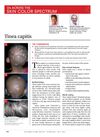
 This article describes cases of tinea capitis in young Black and Latina children, highlighting the condition's diverse presentations such as erythema, scaling, and subtle signs like comma hairs, but reports no new clinical results.
63 citations
,
December 2010 in “Journal of Endocrinology” This study found that decreased allopregnanolone levels through inhibition or intrauterine growth restriction in guinea pigs were linked to altered brain development markers, suggesting a role for neurosteroids in fetal brain protection and development.
1 citations
,
April 2021 in “Annals of Otology Rhinology & Laryngology” This report highlights the diagnosis of a giant congenital blue nevus with secondary cutis verticis gyrata in a 20-year-old Asian male, underscoring the need for clinicopathologic correlation due to overlapping features with cerebriform intradermal nevi.
 39 citations
,
June 1982 in “The BMJ”
39 citations
,
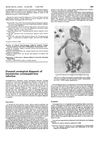
June 1982 in “The BMJ” Blood tests confirmed a baby in the womb had a CMV infection.
23 citations
,
January 2017 in “BMC Medical Genetics” This study presents the first reported Spanish case of Hypotrichosis with Juvenile Macular Dystrophy, identifying a new CDH3 mutation and highlighting the importance of clinical and genetic evaluation for accurate diagnosis.
 February 2024 in “Medical mycology case reports”
 This study reported the presence of dermatophyte macroconidia directly in clinical samples from a 3-year-old boy with tinea capitis, marking the first time this has been documented. The infection, caused by Microsporum ferrugineum, was successfully treated with systemic itraconazole and topical ketoconazole shampoo.
42 citations
,
August 1972 in “Archives of Disease in Childhood” This study observed that infants exposed to diazoxide in utero exhibited abnormal hair growth and, in some cases, impaired glucose tolerance, particularly those born to diabetic mothers.
 February 2023 in “Cosmoderma”
 An infant with complete hair loss was diagnosed with a genetic disorder affecting hair growth.
24 citations
,
January 1969 in “Archives of Dermatological Research” Hair malformations may occur due to timing issues in hair development.
2 citations
,
June 2019 in “The Journal of Dermatology” This report describes two cases of aplasia cutis congenita with hair collar signs and hemangioma, which may suggest neural tube defects, although imaging showed no bone or neural tissue abnormalities.
February 2026 in “Pediatrics in Review” This case report describes an infant with congenital hyperinsulinism linked to a genetic mutation in the ABCC8 gene, illustrating challenges in managing persistent hypoglycemia despite medical interventions, leading to a near-total pancreatectomy.
1 citations
,
August 2024 in “Pediatric Dermatology” In this report, researchers describe an unusual case of congenital pili multigemini, a hair follicle disorder, presenting on the eyebrow of a female infant, highlighting its rarity and atypical location.
July 2011 in “F1000Research” 3 citations
,
December 1991 in “PubMed” This report describes an infant who was diagnosed with Rothmund-Thomson syndrome, a rare genetic disorder characterized by diverse skin changes, short stature, and other developmental anomalies.
 December 2025 in “Meditsinskiy sovet = Medical Council”
 This case study highlights the importance of an integrated diagnostic and treatment approach for children with rare genetic disorders, as demonstrated in a 10-year-old girl with CNOT3 syndrome, characterized by symptoms like mental retardation, gastrointestinal issues, and unique facial features.
 35 citations
,
January 1996 in “Dermatologic clinics”
35 citations
,
January 1996 in “Dermatologic clinics” This article reviews tinea capitis as a common infectious scalp condition in children, reporting no new findings.
 January 2026 in “Pediatria Polska”
 In this case series, five pediatric patients with tinea capitis showed varied clinical presentations, emphasizing the need for early diagnosis and prompt systemic antifungal therapy to prevent permanent outcomes such as alopecia and scarring.