 17 citations
,
January 2014 in “Annals of Dermatology”
17 citations
,
January 2014 in “Annals of Dermatology” This study observed that using serial sectioning and d-PAS staining improved detection of Malassezia folliculitis, notably in lesions on the trunks of male patients.
13 citations
,
October 2005 in “Analytical Sciences” This study developed a method using LC/APCI-MS to measure the activity of steroid 5α-reductase, applied to kinetic studies and inhibitory tests with Finasteride in a rat prostatic enzyme model.
15 citations
,
January 2012 in “International journal of trichology” This study found that the HairCheck® device, demonstrating high correlation between its Hair Mass Index and hair characteristics such as strand number and diameter, may be an effective tool for assessing hair mass changes in alopecia patients.
 November 2025 in “Scientific Reports”
 This study demonstrates that an AI-based grading framework using a novel area ratio metric improves the accuracy and consistency of male pattern hair loss classification, especially in advanced grades, compared to traditional methods.
 44 citations
,
January 2011 in “Journal of Cutaneous Pathology”
44 citations
,
January 2011 in “Journal of Cutaneous Pathology” This study introduces the "HoVert" technique, which generates both vertical and horizontal sections from a single biopsy to effectively differentiate lichen planopilaris from discoid lupus erythematosus in alopecia cases.
 1 citations
,
January 1987 in “Journal of Society of Cosmetic Chemists of Japan”
1 citations
,
January 1987 in “Journal of Society of Cosmetic Chemists of Japan” This study used a multi-point tension test method to evaluate hair damage over time and found it useful for assessing the effects of cosmetics and metal content on hair strength.
February 2021 in “European Chemical Bulletin” This study developed and validated a reverse phase liquid chromatography method to accurately and reliably measure Minoxidil and Finasteride in bulk and marketed formulations.
 19 citations
,
November 1971 in “Clinica Chimica Acta”
19 citations
,
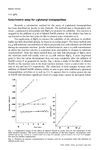
November 1971 in “Clinica Chimica Acta” In this study, the researchers found that the absence of the NFI-C transcription factor delayed the hair growth cycle in mice by affecting key gene expressions and signaling pathways.
November 2019 in “Journal of Vertebrate Biology” QIA-64 software can measure straight wire lengths accurately but needs improvement for curved wires and width measurements.
 5 citations
,
January 2018 in “Skin Research and Technology”
5 citations
,
January 2018 in “Skin Research and Technology” This letter compares automated digital image analysis (TrichoScan) with manual marking of hairs in male patients with androgenetic alopecia but reports no new results.
 April 2016 in “Journal of Investigative Dermatology”
 This study found a perfect correlation between laser Doppler velocimetry measurements of scalp blood perfusion after minoxidil application and sulfotransferase enzyme activity in hair follicles, indicating a potential non-invasive test to predict minoxidil response in female pattern hair loss.
17 citations
,
January 2013 in “Talanta” A new method was developed to accurately measure enzyme activity related to prostate health.
April 2023 in “Journal of Investigative Dermatology” A new image-based method improves accuracy in measuring hair loss in mice.
 295 citations
,
September 2006 in “Cell Cycle”
295 citations
,
September 2006 in “Cell Cycle” This review discusses the role of the TOR pathway in aging and suggests that rapamycin could potentially target age-related diseases, but reports no new clinical results.
 179 citations
,
October 2018 in “American Journal of Clinical Dermatology”
179 citations
,
October 2018 in “American Journal of Clinical Dermatology” This review outlines various dermatologic adverse events associated with targeted therapies and immunotherapies, emphasizing the need for collaboration between dermatologists and oncologists to manage these effects effectively; it reports no new clinical findings.
 25 citations
,
May 2018 in “Clinical & Translational Oncology”
25 citations
,
May 2018 in “Clinical & Translational Oncology” This review summarizes common skin-related side effects of BRAF inhibitors and immunotherapy in advanced melanoma treatment, reporting no new clinical findings, and emphasizes consensus management to improve patient outcomes.
 21 citations
,
February 2013 in “Clinics in Dermatology”
21 citations
,
February 2013 in “Clinics in Dermatology” This review discusses recent developments in targeted melanoma therapies, including BRAF/MEK/ERK pathway inhibitors and challenges like resistance and skin toxicities, but reports no new clinical results.
 13 citations
,
April 2022 in “Frontiers in oncology”
13 citations
,
April 2022 in “Frontiers in oncology” This review discusses the early phases of melanomagenesis and the factors influencing melanoma cell variability and reports no new clinical results.
 7 citations
,
July 2017 in “Australasian Journal of Dermatology”
7 citations
,
July 2017 in “Australasian Journal of Dermatology” This article evaluates reflectance confocal microscopy features of scalp melanoma but reports no new clinical results, suggesting further investigation is needed.
 2 citations
,
January 2018 in “Elsevier eBooks”
2 citations
,
January 2018 in “Elsevier eBooks” Targeted therapies for lung cancer are effective but require careful management of side effects to benefit patients.
 1 citations
,
March 2019 in “Actas Dermo-Sifiliográficas”
1 citations
,
March 2019 in “Actas Dermo-Sifiliográficas” This review discusses the adverse effects on hair associated with targeted cancer therapies and reports no new clinical results; it emphasizes the need for comprehensive documentation of these effects.
 1 citations
,
March 2015 in “Journal of the European Academy of Dermatology and Venereology”
1 citations
,
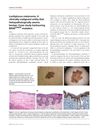
March 2015 in “Journal of the European Academy of Dermatology and Venereology” This letter to the editor shares a case study of lentiginous melanoma that appears clinically malignant but histopathologically benign, involving the BRAFV600R mutation.

This review supports iron deficiency anemia as a valid cause of chronic generalized pruritus and suggests potential mechanisms by which iron deficiency may lead to pruritus, but reports no new clinical results.
 December 2018 in “Meandros medical and dental journal”
 This case study describes a male patient with very late-onset trichotillomania, highlighting the condition's potential association with comorbid depression.
 162 citations
,
August 2005 in “The journal of investigative dermatology/Journal of investigative dermatology”
162 citations
,
August 2005 in “The journal of investigative dermatology/Journal of investigative dermatology” This study introduces a novel non-invasive method called "differential stripping" to quantify the penetration of topically applied substances into hair follicles.
 11 citations
,
September 2020 in “Steroids”
11 citations
,
September 2020 in “Steroids” This study developed a new method using liquid chromatography-tandem mass spectrometry to measure multiple steroid hormones in hair, requiring significantly fewer strands than previous methods, with high accuracy and precision.
 January 2010 in “Nihon Hou Kagaku Gijutsu Gakkaishi”
 This study concluded that their modified immunohistochemical staining protocol can determine the ABO blood group of both medullated and non-medullated scalp hair, potentially aiding in hair sample screening before DNA analysis.
January 2024 in “ResearchWorks at the University of Washington (University of Washington)” This study found that while measuring zinc in hair did not allow calculation of individual hair growth rates, it effectively characterized zinc, lead, and mercury concentrations and improved methods for analyzing these exposures using LA-ICP-MS.
 55 citations
,
June 2007 in “Journal of Statistical Planning and Inference”
55 citations
,
June 2007 in “Journal of Statistical Planning and Inference” This study introduces an extended approach to the Bonferroni procedure that accounts for correlations among endpoints, aiming to improve test power while maintaining strong control of the family-wise type I error rate in clinical trials.
 7 citations
,
August 2011 in “Giornale italiano di dermatologia e venereologia : organo ufficiale, Società italiana di dermatologia e sifilografia”
7 citations
,
August 2011 in “Giornale italiano di dermatologia e venereologia : organo ufficiale, Società italiana di dermatologia e sifilografia” This study found that the modified wash test demonstrated high reliability in diagnosing and assessing the severity of androgenetic alopecia and telogen effluvium.