3 citations
,
January 2025 in “Journal of Natural Products” In this study, researchers isolated new compounds from the plant *Calanthe cardioglossa* and found that five of these compounds, particularly calancardin B, significantly reduced TNF-α levels in immune cells relevant to multiple sclerosis, suggesting potential for immunomodulatory effects.
 13 citations
,
June 2020 in “Scientific reports”
13 citations
,
June 2020 in “Scientific reports” In this study, melatonin administration enhanced various cellular and structural features of the scrotal skin in Soay rams, including increased thickness, cell count, and gland activity.
 April 2026 in “bioRxiv (Cold Spring Harbor Laboratory)”
 This study introduced hydrogel microneedles loaded with palladium nanoparticles, which utilize the inherent cytotoxicity of polyethyleneimine to enhance the effectiveness of doxorubicin in treating melanoma, achieving a tumor inhibition rate of up to 98% in a murine model.
42 citations
,
May 2009 in “Contraception” This study found that the combined oral contraceptive containing ethinyl estradiol and chlormadinone acetate was effective in reducing moderate papulopustular acne and other androgen-related skin disorders compared to placebo.
 60 citations
,
June 1997 in “Drugs & Aging”
60 citations
,
June 1997 in “Drugs & Aging” Mitoxantrone with a corticosteroid helps manage symptoms for some advanced prostate cancer patients but doesn't extend life.
46 citations
,
September 2018 in “Expert Opinion on Drug Delivery” This study reported that nanostructured lipid carriers with melatonin improved hair density and decreased hair loss in patients with androgenic alopecia, suggesting a promising direction for future treatments.
 7 citations
,
January 2001 in “Annales de zootechnie”
7 citations
,
January 2001 in “Annales de zootechnie” This study found that melatonin treatment significantly increased wool production and hair follicle activity in German angora rabbits, with larger effects seen in defleeced animals and those treated in July.
This study suggests that Myrtus communis shows promising effects for various conditions like GERD, menstrual bleeding, and wound healing in clinical trials, though some adverse effects may occur with systemic administration of myrtle essential oil.
 March 2014 in “Medicina cutánea ibero-latino-americana”
 This review discusses the role of melatonin in skin and hair physiology, highlighting clinical evidence for its potential benefits in treating androgenetic alopecia, but does not report new results.
 31 citations
,
January 2011 in “Dermato-endocrinology”
31 citations
,
January 2011 in “Dermato-endocrinology” This review updates the protective effects and molecular mechanisms of melatonin against ultraviolet-induced damage in human skin, reporting no new clinical findings.
January 1972 in “NBER Chapters” This review discusses clinical studies on topical melatonin for skin protection and hair growth and reports no definitive conclusions on its anti-aging or hair-promoting efficacy, although skin photoprotection results are promising.
 June 2006 in “Almustansiriya journal of pharmaceutical sciences/Al-Mustansiriyah journal of pharmaceutical sciences”
 This study found that melatonin may reduce the dose of prednisone needed for treating alopecia areata and its associated side effects by attenuating free radical damage on the immune system.
 2 citations
,
January 1990 in “Leukemia & Lymphoma”
2 citations
,
January 1990 in “Leukemia & Lymphoma” This study reported a 74% overall response rate for a new combination chemotherapy of mitoxantrone, etoposide, and prednisolone in patients with relapsed or refractory Hodgkin's disease or non-Hodgkin's lymphoma.
 January 2025 in “Brazilian Journal of Veterinary Medicine/Revista Brasileira de Medicina Veterinária”
 This source describes the first successful use of a deslorelin acetate implant to treat alopecia X in a neutered female dog, achieving profuse hair regrowth in 9 months, suggesting an uncomplicated and cost-effective alternative after melatonin failure.
In scalded rats, this study found that early melatonin administration may reduce oxidative stress and inflammation, thus protecting hair follicle cells after severe burns.
12 citations
,
December 1981 in “Journal of Endocrinology” This study found that α-melanocyte-stimulating hormone increased melanin production in hair follicles of moulting Siberian hamsters, whereas [8-arginine]-vasotocin inhibited melanin production without affecting tyrosinase activity.
 August 2005 in “British journal of dermatology/British journal of dermatology, Supplement”
 This article replies to a critical appraisal of a randomized trial on melatonin in alopecia and reports no new clinical findings.
7 citations
,
March 1990 in “Pigment Cell Research” This animal study observed that while topical MBEH and intraperitoneal phenol induced hair graying in eumelanic mice, they had little effect on pheomelanic mice, and amcinonide reduced certain epidermal melanocytes in both.
 222 citations
,
January 2005 in “Endocrine journal”
222 citations
,
January 2005 in “Endocrine journal” This article discusses the potential role of melatonin in protecting skin against stress and maintaining homeostasis, based on its local synthesis and various protective functions, but presents no new clinical results.
14 citations
,
December 2014 in “PubMed” This study found that melatonin implants in cashmere goats significantly altered the expression pattern and co-expression of miRNAs, suggesting a possible role in inducing a second growth of cashmere.
 165 citations
,
February 2014 in “Phytotherapy Research”
165 citations
,
February 2014 in “Phytotherapy Research” Myrtle has various health benefits and potential for medicine development.
 November 2022 in “Journal of Investigative Dermatology”
 This study developed a chalcone-based molecule that significantly increased tyrosinase inhibition and solubility, showing potential as a safe and effective skin depigmenting and antiaging agent, with supportive epigenetic and antioxidant properties observed in vitro.
August 2025 in “World Academy of Sciences Journal” This scoping review revealed that topical metformin shows potential in dermatology, displaying anti-inflammatory, antioxidant, anti-photoaging, wound-healing, and antitumor properties, while also being effective for conditions like melasma and acne vulgaris; further clinical trials are needed to confirm its safety and efficacy for long-term human use.
26 citations
,
July 1995 in “Small ruminant research” This study found that melatonin implants at specific times of the year may increase cashmere production in young Australian cashmere goats by altering their growth cycles.
 December 2023 in “Journal of ethnopharmacology”
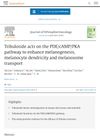
 This study found that tribuloside, a flavonoid from Tribulus terrestris L., enhances melanin production in human melanocytes, zebrafish, and human skin samples without causing toxicity, potentially through inhibiting PDE to increase cAMP levels and promote the melanin biosynthesis pathway.
1 citations
,
November 2013 in “Asian Journal of Pharmaceutical and Clinical Research” In this study, the medicated oil made from Martynia annua leaves showed strong hair growth-promoting activity in a mouse model of testosterone-induced alopecia, potentially outperforming the standard treatment, finasteride.
26 citations
,
February 2022 in “Journal of pineal research” This review examines melatonin's potential effects on human skin and hair follicle pigmentation, highlighting the need to confirm findings from cell cultures in physiological tissue contexts.
 February 2025 in “BMC Genomics”
 This study found that in cashmere goats, melatonin treatments enhanced cashmere growth by stimulating secondary hair follicles, increasing follicle density, and improving yield and quality, highlighting key genes and metabolic pathways involved in this process.
July 2024 in “Journal of Investigative Dermatology” ATR12-351 ointment safely delivers LEKTI protein to the skin, reducing enzyme activity in Netherton syndrome.
 59 citations
,
February 2021 in “Advanced Functional Materials”
59 citations
,
February 2021 in “Advanced Functional Materials” In this study, a silk-inspired hydrogel system was developed that combines photodynamic therapy and wound healing, which may significantly reduce melanoma recurrence and enhance healing of infected wounds.