![Discovery of 7-Methoxy-6-[4-(4-Methyl-1,3-Thiazol-2-yl)-1H-Imidazol-5-yl]-1,3-Benzothiazole (TASP0382088): A Potent and Selective Transforming Growth Factor-β Type I Receptor Inhibitor as a Topical Drug for Alopecia](/images/assets/9620bd26-3366-4f2a-bcac-f511697bbc41/small/35997.jpg) 6 citations
,
January 2013 in “Chemical & pharmaceutical bulletin/Chemical and pharmaceutical bulletin”
6 citations
,
January 2013 in “Chemical & pharmaceutical bulletin/Chemical and pharmaceutical bulletin” In this study, TASP0382088 showed potent selective inhibition of the ALK5 receptor, significantly reducing Smad2 phosphorylation in mouse skin following topical application.
5 citations
,
January 2016 in “Open Journal of Regenerative Medicine” This article describes the potential applications of myoblast implantation for muscle regeneration and its promising social and economic value but reports no new clinical results.
 2 citations
,
April 2007 in “arXiv (Cornell University)”
2 citations
,
April 2007 in “arXiv (Cornell University)” This study describes a follicular automaton model that simulates human hair cycles and may replicate hair pattern evolution seen in diffuse or androgenetic alopecia.
 December 2023 in “bioRxiv (Cold Spring Harbor Laboratory)”
 This study found that targeting connective tissue sheath contraction with an MLCK inhibitor may improve hair growth in androgenetic alopecia by reducing premature hair regression caused by ectopic apoptosis of hair follicle progenitor cells.
 July 2023 in “Frontiers in Veterinary Science”
 This study found that exogenous melatonin binds to the nuclear receptor RORα in Inner Mongolia cashmere goats, stimulating secondary hair follicle development and promoting villus growth.
 38 citations
,
October 2011 in “Analytical biochemistry”
38 citations
,
October 2011 in “Analytical biochemistry” This study used proteomic techniques to analyze human hair proteins, revealing keratin heterogeneity and identifying posttranslational modifications, such as cysteine trioxidation and methylation.
 April 2026 in “Academic Dermatology”
 In this retrospective observational study, researchers found that the Dean Scale showed better diagnostic accuracy than the CTCAE scale for detecting clinician-reported therapeutic responses to minoxidil in patients with anticancer therapy-induced alopecia, but both scales had limitations in recording clinically significant hair regrowth.
April 2021 in “The journal of investigative dermatology/Journal of investigative dermatology” This study found that MPZL3 plays a crucial role in regulating the hair cycle clock in mice, with its absence leading to accelerated hair follicle cycling and suggesting potential therapeutic pathways for alopecia treatment.
4 citations
,
August 2023 in “Journal of Cosmetic Dermatology” Gynostemma pentaphyllum extract may help grow hair and prevent graying.
February 2026 in “International Journal of Cosmetic Science” This study found that a novel Mito-Activator Complex, containing nicotinamide and epigallocatechin gallate, significantly increased hair density and growth in a 6-month human trial, with no adverse effects reported, potentially offering a new approach to hair loss treatment through mitochondrial activation.
January 2026 in “Dermatologic Therapy” In this prospective study, researchers identified advanced age, androgenetic alopecia, high levels of lactate dehydrogenase and dihydrotestosterone, and low levels of adenosine triphosphate as independent risk factors for posttransplant telogen effluvium, offering insights for optimizing surgical strategies to reduce PTE risk.
26 citations
,
December 2020 in “Photodermatology Photoimmunology & Photomedicine” This review discusses photobiomodulation as a potential treatment for hair loss, highlighting its safety and possible effectiveness but noting cost, protocol standardization, and expectation management as limitations; it reports no new clinical results.
 May 2022 in “Annals of Oncology”
 This study found that photobiomodulation may accelerate hair regrowth one month after chemotherapy in breast cancer patients, but no significant differences were observed at two and three months post-therapy.
January 1999 in “Birkhäuser Basel eBooks” This study observed increased metallothionein expression in regenerating liver and hyperplastic mouse skin, suggesting a potential role in cellular proliferation and differentiation.
March 2025 in “Journal of Investigative Dermatology” This study found that a traction alopecia prevention program for middle school students increased awareness and understanding of TA, but converting this awareness into changes in hairstyling habits proved challenging, highlighting the need for culturally sensitive strategies to influence behavior in at-risk communities.
 1 citations
,
January 2018 in “Acta dermato-venereologica”
1 citations
,
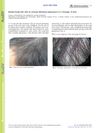
January 2018 in “Acta dermato-venereologica” A teenager's hair with alternating white and dark bands, known as Pili annulati, is a genetic condition that is usually harmless and often considered attractive.
 January 2023 in “Skin appendage disorders”
 This study concluded that combining 5% minoxidil with microneedling was more effective in improving hair density at 6 months for adults with pattern hair loss compared to other treatments analyzed.
November 2021 in “Journal of Asia Pacific Aesthetic Sciences” This case report describes a 31-year-old man with androgenic alopecia who experienced an unsatisfactory scalp micropigmentation treatment and subsequently underwent a follicular unit extraction procedure to correct the unnatural hairline.
December 2025 in “Pediatric Dermatology” In this study, a 14-year-old girl developed Malassezia folliculitis and seborrheic dermatitis after starting trametinib, which improved with itraconazole treatment. The research underscores the importance of recognizing trametinib-related skin reactions and suggests managing them with antifungal therapy without necessarily discontinuing the medication.
January 2010 in “프로그램북(구 초록집)” 4 citations
,
January 2014 in “Indian journal of paediatric dermatology” This review discusses the use of methotrexate for pediatric dermatoses and reports increased use in certain conditions like psoriasis, but mainly isolated case reports for others.
 January 2007 in “대한피부과학회지”
 In this clinical trial, the topical agent AP-FHG0604T significantly increased hair counts and growth rates in women with female pattern hair loss compared to a placebo, though some reported mild local irritation.
34 citations
,
January 2004 in “Genomics” In this study, researchers identified a cluster of hair-specific keratin-associated protein genes within the 21q22.3 region, revealing a novel transcription mechanism involving TSPEAR/C21orf29 that may bypass typical transcriptional termination sites.
 1 citations
,
July 2020 in “International journal of radiology & radiation therapy”
1 citations
,
July 2020 in “International journal of radiology & radiation therapy” This study found that VMAT hair-sparing WBRT partially preserved scalp hair at four weeks post-treatment without compromising symptomatic disease control in the short term, but reduced hair loss did not improve quality of life.
15 citations
,
August 2014 in “Journal of dermatological science” This study found that puerarin, derived from Pueraria thunbergiana, may stimulate melanogenesis and prevent follicular depigmentation in a hair graying mouse model.
 5 citations
,
January 1998 in “Journal of Toxicologic Pathology”
5 citations
,
January 1998 in “Journal of Toxicologic Pathology” This study found that topical treatment with Maneb led to delayed epithelial cell degeneration in hair follicles of rats due to apoptosis.
November 2020 in “Дерматовенерология, косметология” This study found that among men with androgenetic alopecia, the M-type pattern, either isolated or combined with others, was observed most frequently, using the BASP classification.
6 citations
,
January 2019 in “Indian Journal of Pharmacology” In this case study, a 14-year-old female with premature hair graying showed improved hair color after treatment with a topical Melitane 5% formulation and oral hair supplements.
2 citations
,
October 2023 in “Cancer Reports” This study found that colorectal cancer patients could be categorized into two groups based on mitochondrial-related gene features, with distinct survival outcomes and tumor microenvironment characteristics, suggesting these features could inform individualized treatment plans.
 43 citations
,
February 2008 in “Journal of cutaneous pathology”
43 citations
,
February 2008 in “Journal of cutaneous pathology” This study revealed that during fetal development, MITF and Mart-1 expressing melanocytes progress from the dermis to the epidermis and hair follicles, with MITF possibly marking follicular stem cells.