
This review discusses lifestyle interventions and dietary modifications for managing PCOS symptoms but reports no new clinical results; the authors emphasize the importance of early diagnosis and management to prevent associated health issues.
 June 2020 in “Italian journal of gynaecology & obstetrics”
 This review discusses the complexities of diagnosing and managing PCOS in teens, focusing on its association with obesity and insulin resistance, but reports no new clinical findings.
 January 2020 in “Przegla̧d dermatologiczny”
 This article presents a clinical approach to diagnosing and managing hirsutism from a dermatological perspective, but it reports no new clinical findings.
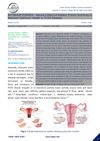 January 2020 in “Asian Journal of Basic Science & Research”
 This review discusses the role of Nutrease powder in managing hormonal disturbances in polycystic ovary syndrome and reports no new clinical results.

This article discusses the challenges of diagnosing and managing polycystic ovarian syndrome and reports no new research findings, emphasizing the need for improved diagnostic criteria and lifestyle intervention to prevent complications.
October 2019 in “PDEAS International Journal of Research in Ayurved and Allied Sciences” This editorial discusses the potential of Ayurveda in managing skin diseases and emphasizes the requirement for scientific validation of these approaches.
 January 2019 in “Przegląd Dermatologiczny”
 This article reviews clinical issues and dermatologist perspectives on managing periungual lesions in patients undergoing docetaxel chemotherapy, but it reports no new clinical outcomes.
December 2018 in “International journal of women’s dermatology” Early diagnosis and strong corticosteroids are crucial for managing lymphocytic cicatricial alopecia.
 August 2018 in “Ayurlog: national journal of research in ayurveda science”
 This study reviewed Ayurvedic and modern texts to identify methods for managing PCOD through Ayurvedic dietary practices, proposing that these may help address symptoms by improving metabolic and endocrine functions without specific experimental results reported.
August 2018 in “Ayurline: IJ-RIM” This review discusses the role of diet and lifestyle in managing alopecia and reports no new clinical results.
 July 2016 in “Cancer Research”
 This study developed a topical botanical lotion for managing chemotherapy-induced hair loss in cancer patients, reporting that it improved hair recovery times by 5-16 weeks, reduced inflammation, and enhanced scalp collagen levels with no observed side effects.
 April 2014 in “Medical Clinics of North America”
 Accurate diagnosis and tailored treatment are crucial for managing common primary care symptoms.
January 2013 in “프로그램북(구 초록집)” This review discusses the efficacy and safety of cyclosporine, methotrexate, and acitretin for managing psoriasis and reports no new clinical results; cyclosporine showed a rapid onset for severe psoriasis, methotrexate highlighted liver concerns, and acitretin was noted for its non-immunosuppressive benefits.
 July 2012 in “Hair transplant forum international”
 This article proposes a more comprehensive approach to managing androgenic alopecia by considering factors beyond genetics and androgens, but it reports no new findings.
November 2011 in “Nature Clinical Practice Urology” This article reviews the use of 5alpha-reductase inhibitors for managing benign prostatic hyperplasia and reports no new clinical results.
 June 2011 in “Oncology times”
 This article outlines the author's personal strategies for managing dermatological toxicities, such as acneiform rash and dry skin, associated with EGFR inhibitor therapy; it does not present new research findings.
 September 2010 in “Companion Animal”
 This article reviews a clinician's approach to diagnosing and managing canine alopecia and reports no new clinical findings.
 May 2010 in “Current Women's Health Reviews”
 This article reviews the challenges and importance of diagnosing and managing PCOS, especially in adolescent girls, and reports no new clinical findings; the authors emphasize early intervention.
 August 2009 in “Australian Prescriber”
 This article discusses the newly approved drug dutasteride for managing benign prostatic hyperplasia, but reports no new research findings; the authors advise obtaining complete information before prescribing.
 January 2009 in “Elsevier eBooks”
 This chapter reviews botanical treatments for polycystic ovary syndrome, discussing potential benefits but presenting no new clinical results; it emphasizes the use of botanicals for managing symptoms like anovulation, insulin resistance, and inflammation.
 August 2007 in “Drug and therapeutics bulletin”
 This article reviews the prescription-only cream eflornithine for managing facial hirsutism in women and reports no new clinical results; the authors evaluate its potential role in treatment.
This review addresses various gender-specific challenges in managing women with epilepsy, such as AED-related cosmetic concerns and hormonal impacts on seizure frequency, but it reports no new clinical findings.
January 2004 in “Chinese Journal of Blood Purification” This study found that minoxidil is highly effective in managing severe hypertension in hemodialysis patients without affecting renal function, though it may cause hair growth.
December 2021 in “International Journal of Research in Dermatology” This article summarizes expert opinions from Indian dermatologists on managing androgenetic alopecia and telogen effluvium, emphasizing varied treatments based on individual patterns and responses.
July 2021 in “Hair transplant forum international” This review discusses the use of fenugreek seeds for managing androgenetic alopecia and finds insufficient evidence to recommend their routine use, highlighting necessary caution due to potential drug interactions.
 June 2025 in “International Journal of Research and Review”
 This review concluded that Unani medicine offers a promising holistic approach to managing androgenetic alopecia by focusing on humoral balance and follicular rejuvenation, but further scientific validation is needed for widespread clinical use.
 275 citations
,
March 1999 in “Journal of The American Academy of Dermatology”
275 citations
,
March 1999 in “Journal of The American Academy of Dermatology” This review elaborates on the skin side effects of chemotherapy and emphasizes identifying and managing both common and life-threatening skin reactions, without presenting new clinical findings.
 218 citations
,
January 2013 in “The Lancet Oncology”
218 citations
,
January 2013 in “The Lancet Oncology” This review discusses the pathobiology of chemotherapy-induced alopecia and highlights challenges in managing it, reporting no new clinical results and emphasizing the need for well-designed preclinical models to develop effective treatments.
 218 citations
,
April 2012 in “British Journal of Dermatology”
218 citations
,
April 2012 in “British Journal of Dermatology” This updated guideline from the British Association of Dermatologists discusses current recommendations for managing alopecia areata but reports no new clinical research findings.
 91 citations
,
April 2017 in “Diabetes & Metabolic Syndrome: Clinical Research and Reviews”
91 citations
,
April 2017 in “Diabetes & Metabolic Syndrome: Clinical Research and Reviews” This review discusses the role of dietary habits and lifestyle modifications in managing polycystic ovary syndrome and reports no clinical results; the authors emphasize the need for tailored diet therapy in affected women.