38 citations
,
September 1997 in “The journal of investigative dermatology/Journal of investigative dermatology” This study identified histologic lesions and a defect in adhesion molecules causing hair loss in mice with the bal mutation, linked to a mutation in the desmoglein 3 gene.
June 2025 in “Albus Scientia” This review discusses the role of the MC1R gene in human pigmentation and its genetic variants, reporting no new results; the authors highlight its forensic applications for phenotypic prediction.
9 citations
,
October 1989 in “Australian Journal of Agricultural Research” This study found that infused mouse epidermal growth factor induced wool follicle involution through a quasi-physiological process similar to catagen and a separate pathological action, resulting in fleece 'break' or shedding.
105 citations
,
April 2005 in “Cell” This article discusses recent findings on hair graying involving melanocyte stem cell maintenance and key regulatory molecules, and reports no new experimental results.
August 2023 in “Zenodo (CERN European Organization for Nuclear Research)” This abstract describes a waxing procedure that removes hair and dead skin cells, leaving the skin smooth, but it reports no new research findings.
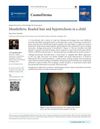 January 2026 in “Cosmoderma”
 In this clinical case study, a 9-year-old girl was diagnosed with monilethrix, a hereditary hair shaft disorder characterized by weak, beaded hair, with management focusing on minimizing hair trauma.
This study introduced ElixirSeeker2, a computational framework for designing anti-aging peptides, and found that some newly identified peptides significantly delayed cellular senescence and enhanced cellular and locomotor functions in aged Caenorhabditis elegans.
 9 citations
,
August 2013 in “Archives of Dermatological Research”
9 citations
,
August 2013 in “Archives of Dermatological Research” This study concluded that the expression of clock genes, specifically BMAL1, in hair follicles is linked to circadian rhythm, and BMAL1 regulates hair growth.
 February 2023 in “bioRxiv (Cold Spring Harbor Laboratory)”
 This study found that in adult mouse skin, somatosensory axon plasticity is highly dynamic and influenced by epithelial-neural crosstalk and intrinsic neural mechanisms.
54 citations
,
November 2014 in “JEADV. Journal of the European Academy of Dermatology and Venereology/Journal of the European Academy of Dermatology and Venereology” This study found that combining low-fluence Q-switched Nd: YAG laser and intense pulsed light led to faster and more effective melasma treatment compared to using the laser alone, though recurrence still occurred.
 52 citations
,
October 2004 in “Veterinary dermatology”
52 citations
,
October 2004 in “Veterinary dermatology” This study found that 62% of neutered dogs with hair cycle arrest experienced partial to complete hair re-growth after melatonin treatment, but hair re-growth was not consistently linked to normal sex hormone levels.
 1 citations
,
September 2024 in “Acta Scientiarum Polonorum Hortorum Cultus”
1 citations
,
September 2024 in “Acta Scientiarum Polonorum Hortorum Cultus” This study found that spraying melon plants with 0.1 mg·L–1 molybdenum significantly improved growth, photosynthetic characteristics, carbohydrate metabolism, and fruit quality under high-temperature stress, boosting fruit weight by 27.9% and yield per plant by 20.1% compared to untreated controls.
20 citations
,
January 2002 in “Laboratory Animals” This study identified a compound heterozygous mutation in a hairless rhesus macaque, which was associated with skin abnormalities similar to those in hairless mice and humans with APL.
 December 2023 in “International journal of high dilution research”
 The study reported that mice receiving dynamized Melatonin 6 cH and Lissotriton 6 cH for 14 days exhibited improved coat health and increased endurance in forced swimming tests, with Melatonin-treated mice swimming 2.5 times longer and Lissotriton-treated mice 4 times longer than controls.
2 citations
,
August 2004 This study found that early diagnosis using gas chromatography/mass spectrometry and appropriate long-term treatment are crucial for improving outcomes in patients with methylmalonic acidemia.
11 citations
,
December 2015 in “Indian journal of dermatology, venereology, and leprology” Dermoscopy quickly and accurately diagnosed a rare hair disorder in a 12-year-old girl.
 November 2022 in “CARDIOMETRY”
 This article discusses the potential benefits of GcMAF and oral MAF, developed by "Saisei Mirai", for cancer and other conditions, but reports no new clinical results.
This study identified 92 novel regulators of melanogenesis, highlighting Aldehyde dehydrogenase 1A1 as a potential target for developing new treatments for hyperpigmentation disorders like melasma.
5 citations
,
January 2000 This study observed a new skin disease in farmed mink in Canada, suggesting that an unidentified infectious agent, in association with secondary bacterial infection, may cause the condition.
January 1992 in “Proceedings of the New Zealand Society of Animal Production” This study observed that key signaling events controlling hair growth in ferret follicles occur between 0 and 4 days after melatonin implantation, highlighting distinct processes in follicular regeneration and fibre growth.
 6 citations
,
July 2021 in “The anatomical record”
6 citations
,
July 2021 in “The anatomical record” This study described the diverse vibrissal follicle anatomy in fetuses of three cetacean species and observed species-specific differences, supporting further investigation into vibrissal form and function across cetaceans.
 1 citations
,
September 2020 in “Prometheus”
1 citations
,
September 2020 in “Prometheus” This review examines the reliance on formalized and automated protocols in fields like aviation and medicine, suggesting that such approaches may hinder the human capability of mètis needed to handle emergencies and dynamic ambiguities; it reports no new results.
 3 citations
,
November 2022 in “Experimental dermatology”
3 citations
,
November 2022 in “Experimental dermatology” This article discusses melatonin's role in mammalian coat color and its potential in melanoma treatment when used with chemotherapy, but reports no new clinical results.
18 citations
,
November 1998 in “Comparative biochemistry and physiology. Part A, Molecular & integrative physiology” This study found that serum prolactin and dehydroepiandrosterone levels did not determine the onset of mink hair growth cycles, though their metabolites may influence other aspects of hair growth.
 11 citations
,
June 2021 in “Frontiers in Cell and Developmental Biology”
11 citations
,
June 2021 in “Frontiers in Cell and Developmental Biology” This study found that melatonin may enhance goat cashmere growth by activating Wnt signaling and regulating stem cell pluripotency through mechanisms involving NOGGIN and BMP4 pathways.
This study found that the NuMA protein's microtubule-binding domain is essential for proper spindle orientation and differentiation in keratinocytes, affecting skin and hair development in mice.
5 citations
,
October 2021 in “Journal of the American Academy of Dermatology” PRAME helps distinguish between benign and malignant skin cells in most cases.
29 citations
,
August 1999 in “Journal of Investigative Dermatology” New mutations in hair keratin genes cause the rare hair disorder monilethrix.
November 2025 in “Archaeometry” This study analyzed animal hairs from 18th-century burial sites in Mazamet, France, reporting distinct hair morphologies consistent with the use of common local animal furs such as goat, badger, cow, or horse, reflecting the modest socioeconomic status of the individuals interred.
26 citations
,
July 2007 in “Wound Repair and Regeneration” This study found that MRL/MpJ mice heal burn wounds with scar formation, experiencing delayed wound closure and impaired myofibroblast development, which contrasts with quicker contraction in BALB/c mice.