 52 citations
,
March 2007 in “Dermatologic Therapy”
52 citations
,
March 2007 in “Dermatologic Therapy” This article describes the development and validation of a standardized instrument for measuring skin involvement in cutaneous lupus erythematosus, aiming to aid future clinical research and trials.
September 2025 in “International Journal of Medical Informatics” A machine learning model can predict scarring in lichen planopilaris using factors like vitamin D levels and diagnostic delay.
 11 citations
,
February 2020 in “Dermatology and therapy”
11 citations
,
February 2020 in “Dermatology and therapy” This study reported that four patients with lichen planopilaris showed dramatic improvement, including symptom reduction and hair regrowth, after treatment with low-level light therapy.
 January 2019 in “Arabian Journal of Chemistry”
 This study developed and validated an HPLC method to quantify impurities in finasteride, demonstrating its suitability for quality assurance of the drug and its related substances.
20 citations
,
January 2010 in “Biological Trace Element Research” 2 citations
,
December 1994 in “International Journal of Cosmetic Science” In this study, the combination of biologically engineered hyaluronic acid and polyquaternium-10 improved hyaluronic acid's retention and moisturizing effects on hair by forming a stable complex that increased binding affinity to keratin.
 November 2016 in “Journal of The American Academy of Dermatology”
 Control symptoms and use safe treatments for skin conditions like lichen planopilaris and chronic cutaneous lupus erythematosus.
January 2025 in “International journal of research studies in biosciences” This abstract discusses the prevalence and forms of lichen planopilaris, a type of scarring hair loss, but reports no new clinical findings.
 1 citations
,
January 2010 in “Serbian Journal of Dermatology and Venereology”
1 citations
,
January 2010 in “Serbian Journal of Dermatology and Venereology” This article reviews the multifaceted approach required for acne vulgaris treatment, emphasizing individualized combination therapies tailored to clinical severity and patient psychological profiles, but no new results are included.
 August 2025 in “JEADV Clinical Practice”
 This case report describes the management of PRIDE complex, a skin and hair condition associated with EGFR inhibitor treatment like cetuximab, emphasizing that it does not require stopping the medication.
1 citations
,
January 2024 in “Clinical Cosmetic and Investigational Dermatology” This case report discusses a 58-year-old female diagnosed with oral lichen sclerosus, an extremely rare form of the disorder, which improved following treatment with topical and intralesional corticosteroids, highlighting the importance of recognizing this rare condition in the oral mucosa.
23 citations
,
January 1986 This review discusses the chemical stability of protein envelopes found in the epidermis and other stratified squamous epithelia, but reports no new clinical results.
This chapter provides dermatology trainees with insights on managing lichen planopilaris, emphasizing treating active disease to prevent further hair loss and recommending a tapered course of oral steroids for disease stabilization.
 January 2024 in “Molecules (Basel. Online)”
 In this study, researchers examined juglone's potential as a restoring agent for hair keratin damaged by permanent or bleaching treatments, finding that juglone formed Michael adducts with cysteine residues, leading to a more regular hair surface as observed via IR spectroscopy and SEM analysis.
23 citations
,
February 2010 in “European Journal of Medicinal Chemistry” 11 citations
,
January 2014 in “Mass spectrometry” In this study, silver oxide-based nanoparticles were used to ionize analytes and detect specific target molecules through adduct formation with silver isotopes, facilitating signal correlation with these molecules.
 April 2016 in “Journal of The American Academy of Dermatology”
 Lichen planus may be associated with a higher risk of metabolic syndrome.
 1 citations
,
July 2023 in “Biomimetics”
1 citations
,
July 2023 in “Biomimetics” This study found that a hair-coating polyphenol complex significantly enhanced the mechanical strength, UV protection, and antistatic properties of damaged hair, suggesting potential benefits for hair treatment.
 January 2018 in “Przegla̧d dermatologiczny”
 This article presents diagnostic and therapeutic recommendations for cutaneous lupus erythematosus from the Polish Dermatological Society, but reports no new clinical findings.
3 citations
,
October 2011 This article discusses revised SLE classification criteria by the SLICC and reports no new research results.
March 2005 in “European Urology Supplements” 4350 citations
,
May 2012 in “Arthritis & Rheumatism” This study found that the new SLICC classification criteria for systemic lupus erythematosus were more sensitive and resulted in fewer misclassifications than the current ACR criteria, although they had lower specificity.
 November 2023 in “The journal of investigative dermatology/Journal of investigative dermatology”
 In this study, treatment with oral JAK inhibitors was associated with improved disease outcomes in 80.6% of patients with refractory lichen planopilaris over a mean duration of 5 months.
 8 citations
,
November 2022 in “Cureus”
8 citations
,
November 2022 in “Cureus” In this study, patients with mild to moderate scalp seborrheic dermatitis experienced greater improvements in severity scores and quality of life with Lulican™ shampoo compared to Ketoconazole over four weeks, with similar safety profiles but better tolerability and cosmetic acceptability for LulicanTM.
 11 citations
,
August 2010 in “Pediatric dermatology”
11 citations
,
August 2010 in “Pediatric dermatology” This report details two cases of Lichen spinulosus in the submental area, treated effectively and safely with topical tacalcitol cream.
September 2023 in “Journal of the American Academy of Dermatology” In this study, a cleanser gel with salicylic acid, vitamin C, and Lens esculenta seed extract reduced facial oiliness by 44.9% after 2 hours and by 19.1% after 4 hours in subjects with oily skin, using a novel facial oiliness mapping method.
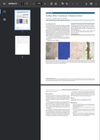
In this case study, a 15-year-old obese boy was diagnosed with acanthosis nigricans and hair casts in the axillae, with Wood's lamp and dermoscopic examination revealing specific features, yet fungal infection was ruled out through a negative KOH test.
113 citations
,
May 2007 in “Journal of the American Academy of Dermatology” This study suggests that tetracycline may be more effective for treating lichen planopilaris than previously thought, alongside topical high-potency and intralesional corticosteroids.
 January 2020 in “International Journal of PharmTech Research”
 This case report describes a patient with untreated lepromatous leprosy developing Lucio's phenomenon, highlighting difficulties in distinguishing it from erythema nodosum leprosum with vasculonecrotic lesions.
 1 citations
,
May 2024 in “Cureus”
1 citations
,
May 2024 in “Cureus” This case series describes five patients with rare facial lichen planopilaris, detailing the clinical presentation and treatment of their pigmentary changes and scarring alopecia.