 April 2015 in “Cambridge University Press eBooks”
 Many women experience sexual dysfunction, but few seek help, and better treatment and medical training are needed.
 1 citations
,
January 2022 in “European Journal of Pharmacology”
1 citations
,
January 2022 in “European Journal of Pharmacology” In this study, FMN was found to inhibit androgen receptor function and androgen-regulated gene expression in prostate cancer cells, suggesting potential as an antiandrogen therapy.
 6 citations
,
January 2017 in “British Journal of Dermatology”
6 citations
,
January 2017 in “British Journal of Dermatology” This article reviews frontal fibrosing alopecia, exploring its characteristics, demographics, and associated conditions, and calls for controlled trials due to an increase in worldwide cases; it reports no new findings.
 April 2023 in “Research Square (Research Square)”
 This study found that melatonin-mediated lncRNA018392 accelerated cell proliferation and inhibited apoptosis in cashmere goat skin fibroblasts by upregulating the expression of the nearby gene CSF1R.
 5 citations
,
November 2014 in “Hair transplant forum international”
5 citations
,
November 2014 in “Hair transplant forum international” This article introduces a series on low level laser light therapy, focusing on its science, regulatory aspects, and controlled trial methodologies, but reports no new clinical results.
March 2026 in “Anais Brasileiros de Dermatologia” Lichen planopilaris and frontal fibrosing alopecia are likely distinct diseases with different tissue involvement.
5 citations
,
January 2021 in “Indian Journal of Pathology and Microbiology” This case report describes a rare occurrence of a solitary fibrofolliculoma in the right lower eyelid of a 50-year-old man, confirmed through histopathological examination.
September 2024 in “Journal of the American Academy of Dermatology” This study found that MF patients with darker skin types show slower initial improvement with NB-UVB phototherapy, highlighting disparities in treatment efficacy that warrant further investigation.
November 2025 in “Contact Dermatitis” In this case study, a 34-year-old woman experienced facial allergic reactions to SPF-containing products, and patch tests identified sensitization to salicylates, which when avoided, stabilized her symptoms and her existing frontal fibrosing alopecia, highlighting a possible link to investigate further.
This study demonstrated that Reverse Protein Engineering can decrease the size of Firefly Luciferase from 550 to less than 80 amino acids, but further research is needed to ensure these smaller peptides retain bioluminescent activity.
 March 2022 in “Research Square (Research Square)”
 This study reported that pelage hair follicle mesenchymal stem cells isolated from mice using Ficoll Density Gradient Sedimentation can be obtained in large numbers and may promote hair growth via exosome secretion.
11 citations
,
June 2010 in “Dermatologic surgery” This article contains information about journal subscriptions and does not report any research findings.
 12 citations
,
January 2017 in “Skin appendage disorders”
12 citations
,
January 2017 in “Skin appendage disorders” This study reports cases of histopathologically proven cutaneous lupus erythematosus manifesting as frontal fibrosing alopecia, with improvement following treatment with oral hydroxychloroquine and/or intralesional triamcinolone acetonide.
 September 2000 in “Hair transplant forum international”
 This event summary describes a live-surgery workshop hosted by Matt Leavitt and his team with new co-sponsorship by the International Society of Hair Restoration but provides no research findings.
April 2019 in “Journal of Investigative Dermatology” This study found that frontal fibrosing alopecia involves distinct molecular changes, such as downregulation of steroid and cholesterol pathways and upregulation of fibrotic and immune response genes, which may help guide treatment strategies.
28 citations
,
November 2004 in “Endocrinology” This study by Gao et al. reports that two nonsteroidal selective androgen receptor modulators, S1 and S4, demonstrated tissue-selective actions in rats, suppressing prostate growth while maintaining muscle growth without altering hormone levels.
 1 citations
,
October 2008 in “Expert Review of Dermatology”
1 citations
,
October 2008 in “Expert Review of Dermatology” This review discusses frontal fibrosing alopecia, noting its frequent misdiagnosis and highlighting the need for larger studies to better understand its epidemiology, causes, and treatment options; it reports no new clinical findings.
15 citations
,
January 2018 in “Journal of Cutaneous Medicine and Surgery” This case report presents a 6-year-old boy with both folliculotropic mycosis fungoides and primary follicular mucinosis, providing insights on differentiating the two conditions in pediatric patients.
1 citations
,
January 2023 in “Drug Development and Industrial Pharmacy” This study observed that DMSO-modified liposomes enhanced the topical delivery of finasteride, improving hair follicle density and growth phase ratio in a rat model of testosterone-induced alopecia.
 1 citations
,
April 2021 in “Journal of The American Academy of Dermatology”
1 citations
,
April 2021 in “Journal of The American Academy of Dermatology” Some overweight or obese men with long-term frontal fibrosing alopecia may have abnormal sex hormone levels.
 4 citations
,
January 2013 in “Dissolution Technologies”
4 citations
,
January 2013 in “Dissolution Technologies” This study optimized and validated a dissolution test method for immediate-release finasteride capsules, highlighting the need for an official standard due to variability in commercial products.
February 2026 in “Zenodo (CERN European Organization for Nuclear Research)” This document promotes a 10% discount using the code SKV10 on Soulflower's natural skincare and haircare products, with no new research findings reported.
 16 citations
,
January 2017 in “Anais brasileiros de dermatologia/Anais Brasileiros de Dermatologia”
16 citations
,
January 2017 in “Anais brasileiros de dermatologia/Anais Brasileiros de Dermatologia” This case study discusses a postmenopausal woman's frontal fibrosing alopecia and lichen planus pigmentosus, controlled with corticosteroids and finasteride, highlighting diagnostic and therapeutic challenges in scarring alopecia.
January 2016 in “Indian dermatology online journal” This case report describes a 50-year-old woman with frontal fibrosing alopecia who showed no improvement despite multiple treatments, including intralesional triamcinolone and topical glucocorticoids.
36 citations
,
February 1998 in “Journal of Anatomy” This study used fibre optic confocal imaging to visualize subsurface structures in live mouse skin, revealing cellular details and blood vessel networks that dynamic events could be studied in vivo.
475 citations
,
October 2006 in “Proceedings of the National Academy of Sciences” This study suggests that folliculin, mutated in Birt–Hogg–Dubé syndrome, and its partner FNIP1 may play a role in energy and nutrient sensing through the AMPK and mTOR pathways.
 63 citations
,
October 2011 in “Archives of Dermatology”
63 citations
,
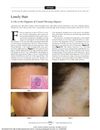
October 2011 in “Archives of Dermatology” Isolated long hairs at the original hairline can help diagnose Frontal Fibrosing Alopecia.
 September 2025 in “Dermatology Online Journal”
 In this case study, a 24-year-old woman with frontal alopecia resembling frontal fibrosing alopecia was ultimately diagnosed with primary cutaneous follicle center lymphoma, highlighting the critical role of biopsy in identifying atypical alopecia presentations.
 23 citations
,
February 2020 in “PLOS genetics”
23 citations
,
February 2020 in “PLOS genetics” This study found that biallelic LSS mutations lead to congenital hypotrichosis and cataracts, with each tissue-specific loss of function observed in mouse models.
 August 2019 in “Research Square (Research Square)”
 This study explored how long non-coding RNA mediates the effects of FGF5 on the hair follicle development and villus growth of Liaoning cashmere goats.