 4 citations
,
January 2019 in “Dermatology Online Journal”
4 citations
,
January 2019 in “Dermatology Online Journal” This article discusses the potential of low-dose naltrexone as an adjuvant therapy for trichodynia in alopecias, noting its anti-inflammatory properties and need for further research.
3 citations
,
March 2024 in “Journal of the American Academy of Dermatology” Low-dose naltrexone helps improve symptoms and stabilize frontal fibrosing alopecia and lichen planopilaris.
1 citations
,
May 2022 in “Journal of Drugs in Dermatology” This case report describes a patient with lichen planopilaris who experienced remarkable hair regrowth at a previously scarred area after treatment with low-dose naltrexone and platelet-rich plasma, following minimal response to other therapies.
14 citations
,
December 2017 in “Journal of Investigative Dermatology Symposium Proceedings” This review discusses unconventional therapies for managing alopecia areata, highlighting antihistamines, cryotherapy, and low-dose naltrexone, but reports no new clinical results and emphasizes the need for further research.
 2 citations
,
January 2023 in “Curēus”
2 citations
,
January 2023 in “Curēus” In this study, low-dose naltrexone significantly reduced erythema in patients with frontal fibrosing alopecia and lichen planopilaris after one year, but no significant improvements were seen in other symptoms.
3 citations
,
June 2023 in “Medicina” This study provides a detailed overview of 1,295 clinical trials related to alcohol dependence registered on ClinicalTrials.gov, highlighting that 59.15% of these trials have been completed, primarily as interventional studies, with most located in North America.
 25 citations
,
April 2019 in “Journal of The American Academy of Dermatology”
25 citations
,
April 2019 in “Journal of The American Academy of Dermatology” This study discusses the role of CD8+ T-cell and interferon γ signaling in vitiligo's pathogenesis and notes that JAK inhibitors, which are FDA-approved for other autoimmune diseases, may offer a potential treatment path by blocking this pathway.
 17 citations
,
September 2024 in “The Indian Journal of Medical Research”
17 citations
,
September 2024 in “The Indian Journal of Medical Research” This source explores long COVID syndrome and identifies risk factors like older age, female gender, and comorbidities such as diabetes. It mentions potential diagnostic biomarkers, highlights ongoing clinical trials, and emphasizes the importance of vaccines and rehabilitation in managing long COVID.
 3 citations
,
November 2020 in “Clinical, Cosmetic and Investigational Dermatology”
3 citations
,
November 2020 in “Clinical, Cosmetic and Investigational Dermatology” This review summarizes the current treatment modalities for frontal fibrosing alopecia and provides a practical guide for clinicians, but reports no new clinical results.
 June 2026 in “International Journal on Science and Technology”
 This source redefines anti-aging medicine as "precision healthspan pharmacology," suggesting that rather than just treating diseases or accepting aging, pharmacology should focus on expanding functional capacity across various health domains, while emphasizing the importance of fundamental physiological and psychosocial health factors.

This case series observed that patients with persistent post-COVID-19 symptoms reported considerable improvement after using icosapent ethyl, suggesting potential therapeutic success warranting further research.

In this narrative review, researchers evaluated existing literature on the treatment of frontal fibrosing alopecia, finding that while no curative treatment exists, clinical improvements can be achieved through personalized and combined therapy approaches.
9 citations
,
October 2024 in “Burns & Trauma” This study demonstrates that using transwell culture significantly influences hair follicle formation in skin models, potentially improving dermatology and skin research methodologies.
 1 citations
,
June 2021 in “Biomolecules & Therapeutics”
1 citations
,
June 2021 in “Biomolecules & Therapeutics” In this study, researchers found that activating the delta opioid receptor with a specific agonist significantly promoted hair growth in mice, suggesting potential for developing new hair-loss treatments.
4 citations
,
November 2024 in “International Journal of Molecular Sciences” This review explores whether SARS-CoV-2 could trigger or worsen α-synucleinopathies, like Parkinson's disease, by affecting α-synuclein misfolding and aggregation, potentially linking COVID-19 with the development of parkinsonism-like symptoms.
 August 2021 in “Annals of Agricultural and Environmental Medicine”
 This review provides a detailed analysis of frontal fibrosing alopecia, focusing on its prevalence in postmenopausal Caucasian women, associated comorbidities, and potential autoimmune, genetic, hormonal, and environmental factors; it emphasizes the need for improved understanding to enhance diagnosis and treatment.
39 citations
,
November 2017 in “PubMed” This case series reported that low-dose naltrexone may benefit patients with lichen planopilaris by reducing scalp symptoms and slowing disease progression, with no adverse effects observed in the patients.
7 citations
,
September 2021 in “Dermatologic Therapy” This review summarizes treatments for scalp involvement in dermatomyositis and suggests that therapies like low-dose naltrexone and platelet-rich plasma may warrant further investigation, although evidence remains limited.
September 2023 in “Journal of the American Academy of Dermatology” Low-dose oral naltrexone may help reduce inflammation in some scarring alopecia patients.
 January 2018 in “Hair transplant forum international”
 This study explores the use of low-dose naltrexone as a novel treatment for lichen planopilaris, but specific results or outcomes are not detailed in the abstract.
 August 2022 in “IntechOpen eBooks”
 This review discusses treatments for frontal fibrosing alopecia and lichen planopilaris, noting that systemic 5-alpha reductase inhibitors are most effective for stabilization and potential hair regrowth, but reports no new clinical results.
 January 2024 in “Wiadomości Lekarskie”
 This source describes the implementation of a province-wide lung cancer screening program in Ontario, emphasizing that organized, program-based low-dose CT screening for high-risk populations is seen as more effective in reducing cancer incidence and mortality, while being cost-effective compared to non-organized screenings.
 127 citations
,
June 2008 in “British Journal of Clinical Pharmacology”
127 citations
,
June 2008 in “British Journal of Clinical Pharmacology” This study supports the conclusion that the hormetic dose-response model is the most prevalent and fundamental model in biological and biomedical sciences, applicable to a wide range of clinical conditions.
 11 citations
,
February 2020 in “Dermatology and therapy”
11 citations
,
February 2020 in “Dermatology and therapy” This study reported that four patients with lichen planopilaris showed dramatic improvement, including symptom reduction and hair regrowth, after treatment with low-level light therapy.
 5 citations
,
January 2021 in “Veterinary dermatology”
5 citations
,
January 2021 in “Veterinary dermatology” This study found that adding low-level laser therapy to conventional treatment for canine acral lick dermatitis significantly increased hair growth compared to conventional therapy alone, but did not significantly reduce licking behavior.
 January 2024 in “Wiadomości Lekarskie”
 In this case-control study, researchers investigated the association between SIRT1 gene polymorphisms and colorectal cancer risk, finding no statistically significant differences in polymorphism frequencies between patients and controls, but noted trends that warrant further study in larger populations.
 61 citations
,
January 2019 in “American Journal of Clinical Dermatology”
61 citations
,
January 2019 in “American Journal of Clinical Dermatology” This review discusses the potential causes and treatments for frontal fibrosing alopecia but reports no new clinical findings, highlighting the need for further research to understand its pathogenesis and develop validated treatments.
 34 citations
,
April 2014 in “Psychopharmacology”
34 citations
,
April 2014 in “Psychopharmacology” This review discusses the pharmacological properties and physiological regulation of neuroactive steroids, focusing on their varied responses to stress and ethanol in rats, mice, and humans, but it reports no new findings.
1 citations
,
December 2025 in “Journal of the American Academy of Dermatology” 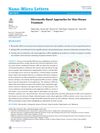 48 citations
,
February 2025 in “Nano-Micro Letters”
48 citations
,
February 2025 in “Nano-Micro Letters” This review summarizes the application of microneedles in treating various skin diseases and highlights challenges like low drug loading, noting no new clinical results are reported.