1 citations
,
October 2025 in “PLoS ONE” In this study, researchers found that overexpression of LncRNA RP11-818O24.3 in hair follicle stem cells promotes their proliferation, self-renewal, and differentiation while inhibiting apoptosis through the FGF2-mediated PI3K/AKT signaling pathway, suggesting potential therapeutic applications for hair loss treatment.
 31 citations
,
June 2018 in “Dermatologic Surgery”
31 citations
,
June 2018 in “Dermatologic Surgery” In this randomized, double-blind trial, researchers observed that low-level laser therapy led to significantly greater hair regrowth on treated areas compared to a sham treatment in patients with androgenetic alopecia over 24 weeks, suggesting it as a potentially effective and safe option.
March 2026 in “Anais Brasileiros de Dermatologia” Lichen planopilaris and frontal fibrosing alopecia are likely distinct diseases with different tissue involvement.
 13 citations
,
December 2017 in “Journal of Cosmetic and Laser Therapy”
13 citations
,
December 2017 in “Journal of Cosmetic and Laser Therapy” This study evaluated the use of low-level laser therapy for treating androgenic alopecia in adults, finding it a promising and safe at-home option for stimulating hair growth compared to sham devices, though further research is needed to confirm its clinical effectiveness.
 May 2025 in “The Journal of Rheumatology”
 This case report suggests that a proactive physical therapy model can be effective for improving physical function and meeting exercise guidelines in patients newly diagnosed with systemic lupus erythematosus.
 6 citations
,
August 2021 in “International Journal of Pharmaceutics”
6 citations
,
August 2021 in “International Journal of Pharmaceutics” This study demonstrated that finasteride-loaded PLGA microspheres created using a novel microfluidic device exhibit extended drug release in beagle dogs, with modifications allowing for release up to 3 months.
 4 citations
,
May 2021 in “Lasers in Surgery and Medicine”
4 citations
,
May 2021 in “Lasers in Surgery and Medicine” This study observed that adding low-level light therapy with the GentleWaves® device to Minoxidil significantly boosted hair regrowth in men with androgenetic alopecia by reducing scalp inflammation.

This study found that low-level laser therapy may enhance wound healing and reduce pain, swelling, and inflammation by increasing mitochondrial activity and oxidative stress, leading to greater protein synthesis and cell proliferation.
 May 2025 in “The Journal of Rheumatology”
 This report describes two cases where female patients with chronic granulomatous disease developed manifestations of systemic lupus erythematosus, highlighting a rare association that may influence clinical evaluation and treatment planning.
519 citations
,
February 2020 in “Inflammation and Regeneration” This review discusses the diverse roles of the RANKL/RANK/OPG system in bone metabolism, the immune system, and other biological processes, emphasizing its relevance in the field of osteoimmunology, but reports no new results.
 1 citations
,
April 2018 in “The journal of investigative dermatology/Journal of investigative dermatology”
1 citations
,
April 2018 in “The journal of investigative dermatology/Journal of investigative dermatology” This study found that oral tofacitinib improved disease activity in patients with lichen planopilaris, suggesting it may be a promising treatment option for this condition.
8 citations
,
October 2022 in “International Journal of Molecular Sciences” This study found that CLD-hFGF2 hydrogels improved healing in deep second-degree burn wounds more effectively than hydrogels alone or direct administration of CLD-hFGF2.
 March 2024 in “Journal of Cosmetic Dermatology”
 This study found that pretreating concentrated growth factor with a 640 nm laser increased CD34+ stem cell activation and improved hair growth outcomes in androgenetic alopecia patients compared to non-pretreated CGF.
23 citations
,
March 2019 in “Gene” In this study, researchers found that the evolutionary and structural features of the oFGF5 gene in sheep may influence hair follicle development and hair growth regulation.
 June 2001 in “Proceedings of SPIE”
 The authors concluded that low energy laser therapy may serve as a useful complementary treatment for skin diseases such as lichen planus, infectious finger pulpits, scalp alopecia, and crural ulcers.
 1 citations
,
October 2023 in “Journal of the Pakistan Medical Association”
1 citations
,
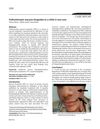
October 2023 in “Journal of the Pakistan Medical Association” This source describes a case of a 12-year-old male diagnosed with folliculotropic mycosis fungoides, presenting with an asymptomatic, erythematous plaque. Histology and immunohistochemistry confirmed FMF, which is typically rare in children and marked by follicular infiltration by CD4+ lymphocytes.
 165 citations
,
August 2013 in “Lasers in Surgery and Medicine”
165 citations
,
August 2013 in “Lasers in Surgery and Medicine” This review discusses the potential mechanisms and evidence supporting low-level laser therapy for stimulating hair growth in men and women, while noting its safety and effectiveness but needing further study on specific parameters.
August 2009 in “Mechanisms of Development” 29 citations
,
January 2020 in “Frontiers in endocrinology” This paper considers fibrodysplasia ossificans progressiva as a segmental progeroid syndrome, which may help uncover mechanisms of normal aging and suggest targets for new treatments.
4 citations
,
October 2018 in “JAMA Dermatology” Ruxolitinib may help treat hair loss and symptoms in patients with chronic graft-versus-host disease.
July 2025 in “Journal of Clinical Medicine” In this review, platelet concentrates were found to show comparable efficacy to steroids and immunosuppressive drugs in treating oral lichen planus, with some studies reporting more benefits and others noting more severe adverse reactions with platelet treatments.
 April 2024 in “African Journal of Biological Sciences”
 This case report describes a patient with systemic lupus erythematosus who developed Degos disease and non-scarring alopecia, highlighting dermoscopy's role in diagnosis and treatment prognosis.
July 2025 in “Journal of Investigative Dermatology” Laser treatment boosts hair growth by activating a key growth factor.
3 citations
,
December 2024 in “Stem Cell Reports” In this study, researchers observed that low levels of fucose-binding lectin staining characterize limbal epithelial progenitor cells, which maintain a high proliferative capacity and may be enhanced by inhibiting fucosylation, offering insights for regenerative therapy of the limbal stem cell niche.
 October 2023 in “Dermatology practical & conceptual”
 In this case report, folliculitis decalvans with frontal fibrosing alopecia was observed in a patient with a dark phototype, highlighting the phenotypic spectrum of folliculitis decalvans and lichen planopilaris.
 24 citations
,
October 1995 in “The Journal of clinical endocrinology and metabolism/Journal of clinical endocrinology & metabolism”
24 citations
,
October 1995 in “The Journal of clinical endocrinology and metabolism/Journal of clinical endocrinology & metabolism” This study found that the LH response to nafarelin effectively distinguished gonadotropin deficiency from constitutional delay of puberty, performing comparably to the sleep test and offering certain advantages.
 39 citations
,
May 2014 in “Frontiers in Pharmacology”
39 citations
,
May 2014 in “Frontiers in Pharmacology” In this study, CD4+CD25+FoxP3+ Regulatory T cells were found to reduce TGF-b1 induced lung fibrosis and fibrocyte accumulation in mice, partly by suppressing fibroblast growth factor 9.
 March 2024 in “Intisari Sains Medis”
 This study highlights that juvenile SLE patients, particularly with lupus nephritis and critical conditions, may have a higher risk of thyroid dysfunction and low FT4, potentially worsening their prognosis.
1 citations
,
December 2024 in “Archives of Iranian Medicine” This study found that tofacitinib significantly improved disease activity in most patients with LPP, though further research is needed to refine protocols, understand response predictors, and address gender-specific adverse effects.
 January 2026 in “BIO Web of Conferences”
 This study suggests that fibroblast growth factors exhibit significant expression differences in rodent and primate skin, potentially related to their evolutionary paths and environmental adaptations.