 34 citations
,
May 2017 in “Lasers in Surgery and Medicine”
34 citations
,
May 2017 in “Lasers in Surgery and Medicine” This study found that combining low-level light therapy with topical minoxidil 5% may lead to better hair regrowth and patient satisfaction in treating female pattern hair loss compared to using each treatment alone.
 June 2022 in “Authorea (Authorea)”
 This case report describes a 59-year-old Afro-American woman diagnosed with lipedematous alopecia, a rare scalp condition of unknown cause.
June 2026 in “British Journal of Dermatology” This case study documented the first known instance of biopsy-confirmed lichen planopilaris occurring after hairline-lowering surgery in a patient without prior history, highlighting a potential complication where surgical trauma may trigger immune-mediated hair loss.
 4 citations
,
September 2019 in “Journal of Cosmetic Dermatology”
4 citations
,
September 2019 in “Journal of Cosmetic Dermatology” This study found that follicular unit extraction megasession resulted in high patient satisfaction without infections for treating severe androgenetic alopecia, offering a promising one-stage option compared to multi-stage hair transplants.
July 2013 in “Indian Journal of Dentistry” This report describes a rare case of Graham-Little–Piccardi–Lassueur syndrome in a 46-year-old male, highlighting its typical features such as scarring alopecia and lichenoid follicular eruptions.
 5 citations
,
January 2017 in “Skin appendage disorders”
5 citations
,
January 2017 in “Skin appendage disorders” In this case report, the authors linked acute psoriasiform contact dermatitis of the forehead and scalp to a low-laser light cap, identifying DMDE in the fabric as a likely cause.
 19 citations
,
April 2018 in “International Journal of Dermatology”
19 citations
,
April 2018 in “International Journal of Dermatology” This study found that female patients with frontal fibrosing alopecia are significantly more likely to have systemic lupus erythematosus compared to controls.
1 citations
,
April 2025 in “Acta Dermato Venereologica” In this study, a retrospective analysis at Erasmus University Medical Center found that methotrexate and cyclosporine A may be most effective for lichen planopilaris and cyclosporine A and retinoids for frontal fibrosing alopecia, although side effects were a concern.

This study found that patients with lupus nephritis experience a greater overall burden than those with systemic lupus erythematosus without nephritis, particularly impacting areas such as family planning, professional life, disease features, medication usage, and quality of life.
 June 2024 in “British Journal of Dermatology”
 This case report highlights the diagnosis of folliculotropic mycosis fungoides in a 15-year-old boy with atypical skin and hair follicle changes, a rare occurrence in pediatric patients.
 August 1995 in “Journal of The European Academy of Dermatology and Venereology”
 New therapy helps treat hair loss.
 1 citations
,
October 2023 in “Skin research and technology”
1 citations
,
October 2023 in “Skin research and technology” This study found that line-field confocal optical coherence tomography effectively visualized key diagnostic features of classic lichen planopilaris in real time, suggesting its potential as a valuable diagnostic tool.
7 citations
,
August 2019 in “American Journal of Dermatopathology” This study found that limb hair loss in frontal fibrosing alopecia is inflammatory and permanent, but lacks the classic scarring features seen in scalp alopecia, prompting potential misdiagnosis as alopecia areata.
3 citations
,
August 2018 in “Medical Journal Armed Forces India/MJAFI” In this study, IPL treatment for six months significantly reduced hair growth in females with faun tail nevus linked to spinal abnormalities.
 1 citations
,
November 1992 in “Indian Dermatology Online Journal”
1 citations
,
November 1992 in “Indian Dermatology Online Journal” This review discusses the use of follicular unit extraction for hair restoration, particularly body hair transplantation, and highlights its potential as an alternative donor source in advanced baldness cases, but reports no new clinical findings.
9 citations
,
July 2019 in “Dermatologic therapy” In this case report, a patient with frontal fibrosing alopecia and lichen planus responded well to treatment with alitretinoin, suggesting a potential therapeutic role for alitretinoin in similar cases.
 12 citations
,
January 2015 in “Indian Journal of Dermatology, Venereology and Leprology”
12 citations
,
January 2015 in “Indian Journal of Dermatology, Venereology and Leprology” This case report describes a 67-year-old woman with frontal fibrosing alopecia and her daughter with lichen planopilaris, noting identical HLA D types which suggest a phenotypical link between these conditions.
27 citations
,
July 2013 in “Journal of dermatological treatment” This report describes a case where a recalcitrant folliculitis decalvans was successfully treated with a long-pulsed Nd:YAG laser.
 1 citations
,
June 2013 in “Science-business Exchange”
1 citations
,
June 2013 in “Science-business Exchange” In this study, researchers at the University of Pennsylvania found that increasing FGF9 levels in wounded mouse skin can lead to the growth of hair follicles.
 March 2025 in “OncoTargets and Therapy”
 This study found that in circulating tumor cells from non-invasive liquid biopsies, the GG genotype of the CYP3A5 A6986G affects longer disease-free survival in DLBCL patients, highlighting the significance of circulating biomarkers for prognostic evaluation.
April 2022 in “Zenodo (CERN European Organization for Nuclear Research)” This study concluded that combining platelet-rich plasma with low-level light therapy was more effective than combining it with minoxidil or using light therapy alone for treating androgenetic alopecia.
January 2024 in “Updates in clinical dermatology” Frontal fibrosing alopecia is a scarring hair loss condition mainly affecting postmenopausal women, with unclear causes.
4 citations
,
September 2010 in “Journal of Medical Case Reports” This case report documents a 57-year-old man with nephrotic syndrome linked to recurrent chronic graft-versus-host disease and lupus-like symptoms, with improvement after cyclosporin and steroids; however, he died later from leukemia relapse.
July 1999 in “Journal of the American Academy of Dermatology” This review discusses valproic acid as a common antiseizure medication associated with alopecia and highlights the need for its inclusion in relevant medical guides, without presenting new clinical findings.
 November 2024 in “Deleted Journal”
 In this case study, a woman with SLE and severe alopecia showed improved hair growth using intralesional triamcinolone, PRP injections, and tacrolimus ointment, highlighting PRP as a potential adjunct therapy for inflammatory alopecia.
This case report describes a young female with Rhupus syndrome, characterized by symptoms of both Systemic Lupus Erythematosus and Rheumatoid Arthritis, who achieved clinical remission with treatment.
 April 2026 in “International Journal of Clinical Case Reports and Reviews”
 In this preclinical study, researchers developed and evaluated a new non-invasive laser system designed for personalized medical use, showing its potential for chronic disease management and adjunctive fat reduction by offering enhanced treatment precision and adaptability over existing devices.
 September 2025 in “Journal of Cosmetic Dermatology”
 In this study, the use of rb‐bFGF in hair transplantation significantly increased follicle survival, reduced hair loss, improved patient satisfaction, and decreased complications compared to controls, in patients with androgenetic alopecia over a 12-month period.
 63 citations
,
October 2011 in “Archives of Dermatology”
63 citations
,
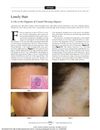
October 2011 in “Archives of Dermatology” Isolated long hairs at the original hairline can help diagnose Frontal Fibrosing Alopecia.
The researchers reported that PEG-FGF2 conjugates, particularly Compound 6, significantly enhanced stability, proliferation, migration, and wound healing activity compared to native FGF2, despite some reduction in bioactivity near crucial binding domains.