January 2011 in “Chinese Journal of General Practice” This study found that tailored treatments based on urodynamic testing improved urinary bladder dysfunction in Parkinson's disease patients, thereby enhancing their quality of life and protecting kidney function.
17 citations
,
May 2007 in “Forensic Science Medicine and Pathology” This study reported that clozapine and its metabolite showed a preference for binding to pigmented hair, but were also detectable in non-pigmented hair of patients with Parkinson's, with high correlations between dose and hair concentration.
2 citations
,
October 2016 in “European Neuropsychopharmacology” 39 citations
,
June 2019 in “Frontiers in Endocrinology” This study reported that while both sorafenib and lenvatinib may require dose modifications due to adverse events in treating advanced or metastatic thyroid cancers, key differences in side effect profiles were observed.
17 citations
,
December 2013 in “Dermatologic Surgery” This study found that autologous noncultured epidermal suspension transplantation improved leukotrichia in 88.1% of treated vitiligo lesions without significant adverse events.
1 citations
,
August 1983 in “PubMed” This study reported that VCP combination chemotherapy achieved a complete response in 53% of advanced non-Hodgkin's lymphoma patients, although more intensive treatment may be needed for improved outcomes.
1 citations
,
January 2012 in “InTech eBooks” In this study, higher doses of daunorubicin during induction therapy significantly improved complete remission rates in young adults with acute myeloid leukemia.
63 citations
,
February 2017 in “ACS biomaterials science & engineering” In this study, polydopamine emerged as a safe and effective alternative to traditional hair dyes like PPD for dyeing gray hair permanently, showing resistance to detergents and causing less toxicity and hair loss in mice.
 27 citations
,
May 2010 in “Dermatologic surgery”
27 citations
,
May 2010 in “Dermatologic surgery” This study found that photodynamic therapy with methyl 5-aminolevulinic acid was ineffective for treating alopecia totalis, even with microneedle rolling to enhance drug delivery.
 October 2009 in “Reactions Weekly”
 A woman developed lupus after taking hydroxyurea for two years.
July 2004 in “Journal of Clinical Oncology” This study found therapeutic isolated limb perfusion with melphalan to be effective for in-transit melanoma metastases on a limb, with a high response rate and transient systemic toxicity.
This review reports the first known case of hair repigmentation associated with lamivudine use and examines mechanisms related to drug-induced hair repigmentation, suggesting potential therapeutic strategies for reversing hair graying.
 5 citations
,
January 2004 in “Biochimie”
5 citations
,
January 2004 in “Biochimie” This review discusses arsenic trioxide therapy in acute promyelocytic leukemia and introduces a novel method using hair analysis to monitor arsenic exposure and correlate it with treatment timing, but reports no new clinical results.
1 citations
,
February 2002 in “Oncology Times” This research reports that arsenic trioxide achieved a complete remission rate of 87% in patients with relapsed acute promyelocytic leukemia, though its use involves manageable toxicities.
February 2023 in “Clinical Toxicology” This letter to the editor raises concerns about minoxidil, an arterial vasodilator also used for androgenic alopecia, noting that overdose can cause severe side effects such as distributive shock, pulmonary edema, and myocardial ischemia.
This study examined the effects of finasteride on human Leydig cells and found altered methylation in dopaminergic pathways, suggesting potential epigenetic contributions to post-finasteride syndrome, warranting further investigation.
 September 2023 in “Medicina Estética Revista Científica de la Sociedad Española de Medicina Estética (SEME)”
 This research reported that the FDA approved Litfulo® (ritlecitinib) as the first oral treatment for severe alopecia areata in adolescents over 12 years old, with 23% of treated patients showing significant hair regrowth in clinical trials compared to 1.6% with placebo.
19 citations
,
September 2013 in “Psychoneuroendocrinology” Blocking CYP17A1 enzyme may help improve certain brain function issues related to dopamine.
 6 citations
,
January 2015 in “Indian Dermatology Online Journal”
6 citations
,
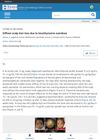
January 2015 in “Indian Dermatology Online Journal” This study observed that an overdose of levothyroxine in a hypothyroid infant led to rapid hair loss, which improved after reducing the medication dose.
3 citations
,
August 2023 in “The Journal of Pediatrics” Sodium valproate can rarely cause skin darkening, which may improve after stopping the drug.
 46 citations
,
November 1997 in “Journal of Neural Transmission”
46 citations
,
November 1997 in “Journal of Neural Transmission” Seborrhea in Parkinson's disease may be linked to hormones, not autonomic impairment.
 February 1961 in “The Lancet”
 Some new drugs show potential for treating blood cancers but have serious side effects and need more research.
May 2024 in “Reactions weekly” 5 citations
,
May 2018 in “European journal of pharmacology” This study reviewed the pharmacological properties of fesoterodine and found that its ability to effectively treat overactive bladder, especially in the elderly, is likely due to its specific properties, including its receptor affinity, blood-brain barrier penetration, metabolic conversion, and extended-release formulation.
 May 2023 in “Scientific Reports”
 This study found that Lepidium sativum seed extract showed potential in treating alopecia in rats by reducing 5(alpha)-dihydrotestosterone levels and improving hair length compared to minoxidil.
 December 2006 in “The Brown University Psychopharmacology Update”
 This review discusses various psychiatric treatments including antipsychotics, insomnia medication, and mood stabilizers, but reports no new clinical results; the authors comment on existing findings and approvals.
September 2019 in “The journal of investigative dermatology/Journal of investigative dermatology” This study found that the PPARγ modulator NAC-GED-0507-Levo may protect hair follicles from chemotherapy-induced damage, potentially offering a strategy to address irreversible hair loss in cancer patients.
January 2005 in “FJ. Fragrance journal” 5 citations
,
March 2020 in “Thoracic Cancer” In this phase I study, CT-707, a new ALK inhibitor, showed a 77% response rate among Chinese patients with advanced ALK-rearranged non-small cell lung cancer, suggesting clinical effectiveness despite some adverse events like diarrhea and liver enzyme elevation.
2 citations
,
January 2012 in “Australian and New Zealand journal of psychiatry” Haloperidol decanoate can cause alopecia areata.