 34 citations
,
April 2008 in “Journal of the European Academy of Dermatology and Venereology”
34 citations
,
April 2008 in “Journal of the European Academy of Dermatology and Venereology” This study reported that while lichen planus was not significantly linked to hepatitis C virus infection, pruritus, dry skin, and hair loss were more common in HCV patients post-interferon treatment.
6 citations
,
March 2005 in “The Journal of Dermatology” This letter to the editor discusses the potential exacerbation of discoid lupus erythematosus by radiation therapy and reports no new clinical findings.

This article reviews low-level light therapy for various types of hair loss and reports no new clinical results; the authors note its safety and advantages but lack data on individual treatment response.
 12 citations
,
March 2019 in “Lasers in Surgery and Medicine”
12 citations
,
March 2019 in “Lasers in Surgery and Medicine” This study found that low-level laser therapy increased the expression of proteins in dermal papilla tissues, suggesting it promotes hair growth in male androgenetic alopecia patients.
13 citations
,
March 2012 in “The American Journal of Surgery” This study found that modified laparoscopic sleeve gastrectomy in patients with type 2 diabetes and obesity reduced ghrelin levels, improved glycemic and insulin levels, and resulted in significant weight loss.
37 citations
,
June 2000 in “Experimental dermatology” This study investigated a spontaneous mutation in mice resulting in hair abnormalities and elevated IgE levels, which resembles human Netherton's syndrome and monilethrix.
7 citations
,
August 2017 in “Genetic testing and molecular biomarkers” This report suggests that patients with primary spontaneous pneumothorax should be evaluated for FLCN mutations, as they may indicate Birt-Hogg-Dube syndrome and associated cancer risks.
April 2026 in “Frontiers in Medicine” This study observed that 675-nm diode laser therapy may serve as a safe and possibly effective adjuvant treatment for telogen effluvium, showing improvements in hair pull test results, pruritus, and trichodynia among patients. However, controlled studies are needed to confirm its efficacy.
October 2024 in “Journal of Dental Sciences” This study analyzed research trends in discoid lupus erythematosus, revealing shifting focus areas and highlighted the importance of interdisciplinary collaboration between dermatology and other fields.
8 citations
,
January 1977 in “Acta Haematologica” This study found that the PVP protocol, combining Peptichemio, vincristine, and 6-methylprednisolone, resulted in remission for diffuse non-Hodgkin's lymphomas with moderate side effects.
3 citations
,
January 2025 in “SAGE Open Medical Case Reports” In this case report, a 48-year-old woman with refractory discoid lupus erythematosus showed significant improvement, including hair regrowth, after treatment with deucravacitinib, suggesting its potential as an effective therapy for this condition.
19 citations
,
September 2010 in “Journal of the European Academy of Dermatology and Venereology” This study found that while the CLASI is generally useful for assessing disease activity and damage in cutaneous lupus erythematosus, it may not accurately reflect all subtypes, indicating a need for revision.
 March 2026 in “SKIN The Journal of Cutaneous Medicine”
 This study demonstrated that litifilimab significantly reduced disease activity in cutaneous lupus erythematosus by Week 16, with improvements most notable in sunlight-exposed skin areas.
7 citations
,
April 2021 in “Journal of Lower Genital Tract Disease” This study concluded that erosive lichen sclerosus is a distinct subtype marked by red patches on hairless skin, while ulcerated lichen sclerosus typically results from trauma in uncontrolled dermatosis.
 May 2025 in “The Journal of Rheumatology”
 This case report describes a woman whose initial presentation of SLE was persistent watery diarrhea, diagnosed as lymphocytic enterocolitis, and shows that immunosuppressive therapy resulted in symptom relief.
2 citations
,
February 2018 in “Journal of bone oncology” This study found that low-dose chemotherapy for solitary bone lesions of Langerhans cell histiocytosis in children led to quicker recovery, higher quality of life at 3 months, and was more cost-effective compared to surgery.
2 citations
,
December 2013 in “Journal of dermatology” This letter reports a homozygous missense mutation in the LIPH gene causing autosomal recessive hypotrichosis simplex in a Chinese patient.
In this study, low-level light therapy increased the proliferation and activation of dermal papilla cells, which in turn may enhance the growth of outer root sheath keratinocytes, suggesting potential mechanisms for improving hair follicle interaction.
3 citations
,
September 2022 in “European Journal of Dermatology” This report identifies a novel splice-site variant in the LAMB3 gene linked to junctional epidermolysis bullosa, emphasizing the need for gene sequencing in diagnosing the disease.
 4 citations
,
November 2016 in “Journal of Cutaneous Pathology”
4 citations
,
November 2016 in “Journal of Cutaneous Pathology” This letter discusses three plasmacytoid dendritic cell-related parameters that may help differentiate lupus alopecia from lichen planopilaris, but it reports no new study results.
 June 2022 in “Journal of the Liaquat University of Medical and Health Sciences”
 This study investigated the relationship between lichen planus and dyslipidemia but did not report any clinical findings.
6 citations
,
January 2022 in “Lara D. Veeken” This narrative review discusses the role and importance of rheumatologists in managing autoimmune interstitial lung disease and emphasizes the need for enhanced collaboration with respiratory physicians to improve diagnosis, management, and outcomes; no new clinical results are reported.
 9 citations
,
May 2013 in “JAMA Dermatology”
9 citations
,
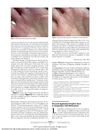
May 2013 in “JAMA Dermatology” This report documents two cases of eruptive nevi occurring in the skin folds of children with Langerhans cell histiocytosis.
 1 citations
,
January 2021 in “Journal of Dermatology and Dermatologic Surgery”
1 citations
,
January 2021 in “Journal of Dermatology and Dermatologic Surgery” This study found that taking Vitamin D supplements may be associated with a higher risk of hyperpigmentation after laser hair removal.
 21 citations
,
August 2013 in “Journal of Dermatological Treatment”
21 citations
,
August 2013 in “Journal of Dermatological Treatment” This review discusses the mixed evidence and high risk of bias in studies on low-level light therapy for treating androgenetic alopecia and calls for rigorous randomized controlled trials to assess its efficacy.
May 2025 in “Australasian Journal of Dermatology” In this observational study, researchers reported a significant association between COVID-19 infection or vaccination and the development of new-onset lichen planus, suggesting these events, particularly infection, may act as triggers for the condition.
 155 citations
,
June 2009 in “International Journal of Dermatology”
155 citations
,
June 2009 in “International Journal of Dermatology” This extensive review discusses the clinical manifestations, potential associations, and treatment approaches for lichen planus, but reports no new clinical results, highlighting gaps in evidence for therapeutic strategies.
 10 citations
,
February 2008 in “Photochemistry and photobiology”
10 citations
,
February 2008 in “Photochemistry and photobiology” This study suggests that the vitamin D receptor and hairless gene may directly regulate each other via a transcriptional mechanism, potentially explaining phenotypic similarities between atrichia and VDRRIIa rickets.
 2 citations
,
April 2018 in “International Journal of Research in Dermatology”
2 citations
,
April 2018 in “International Journal of Research in Dermatology” In this study, lichen striatus was the most common linear dermatosis observed, with most lesions occurring along Blaschko’s lines, and histopathological evaluation often revealed different underlying conditions.
3 citations
,
March 2024 in “Journal of the American Academy of Dermatology” Low-dose naltrexone helps improve symptoms and stabilize frontal fibrosing alopecia and lichen planopilaris.