
This study suggests that a portable OCT system may be useful for the clinical diagnosis and evaluation of skin diseases and laser treatment outcomes.
 1 citations
,
March 2019 in “Lasers in Surgery and Medicine”
1 citations
,
March 2019 in “Lasers in Surgery and Medicine” This article contains the late-breaking abstracts from the 39th Annual Conference of the American Society for Laser Medicine and Surgery and does not present new research results.
 1 citations
,
April 2018 in “Lasers in Surgery and Medicine”
1 citations
,
April 2018 in “Lasers in Surgery and Medicine” This review summarizes late-breaking abstracts from the American Society for Laser Medicine and Surgery, 2018, and reports no new clinical findings.
April 2018 in “Journal of Investigative Dermatology” African spiny mice can regenerate skin and hair after wounds due to specific tissue mechanics.
 December 2023 in “Farmateka”
 Minoxidil is an effective and safe treatment for common hair loss when applied to the skin, but more research is needed for optimal use.
 February 2023 in “Frontiers in Bioengineering and Biotechnology”
 This review discusses the potential of optical techniques for diagnosing and treating oxidative stress-related hepatic ischemia-reperfusion injury, highlighting the need for non-invasive diagnostic methods and the anti-oxidative potential of optical therapies; it reports no new clinical results.
 12 citations
,
October 2012 in “Dermatologic Clinics”
12 citations
,
October 2012 in “Dermatologic Clinics” This review discusses the use of electromagnetic radiation, including low-level laser therapy, for hair loss management, but it reports no new clinical results and suggests further research.
 22 citations
,
May 2021 in “Nature Communications”
22 citations
,
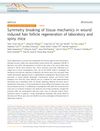
May 2021 in “Nature Communications” This study found that in wound-induced hair neogenesis, African spiny mice and laboratory mice exhibit different morphogenetic field formation patterns related to tissue stiffness, suggesting evolutionary developmental biology advantages.
 15 citations
,
May 1997 in “Annals of Internal Medicine”
15 citations
,
May 1997 in “Annals of Internal Medicine” This case report describes a patient with breast cancer who developed female androgenetic alopecia after starting tamoxifen therapy.
 January 2024 in “Wiadomości Lekarskie”
 This preclinical study found that exercise-induced extracellular vesicles delayed breast cancer tumor growth in mice, potentially by enhancing the immune response within the tumor microenvironment.
 16 citations
,
October 2012 in “British Journal of Dermatology”
16 citations
,
October 2012 in “British Journal of Dermatology” Chemotherapy can cause significant hair thinning and changes in hair texture, while tamoxifen has a smaller effect.
 November 2021 in “Austin therapeutics”
 This review discusses the impact of chemotherapy-induced alopecia on cancer patients, the current use of scalp cooling for prevention, and potential future treatments, but presents no new clinical results.
 37 citations
,
March 2012 in “International Journal of Radiation Biology”
37 citations
,
March 2012 in “International Journal of Radiation Biology” This study found that using a 900-MHz GSM mobile phone for 15 or 30 minutes significantly increased single-strand DNA breaks in human hair root cells near the phone.
 February 2026 in “American Journal of Clinical Dermatology”
 This source discusses how radiotherapy-induced skin fibrosis, a chronic side effect affecting cancer survivors' quality of life, is driven by ongoing inflammation and fibroblast activity, and emphasizes the need for comprehensive dermatologic management and better diagnostic tools.
 7 citations
,
December 2015 in “Journal of thermal biology”
7 citations
,
December 2015 in “Journal of thermal biology” This study used numerical models to explore the cooling power required by different scalp cooling devices to prevent chemotherapy-induced hair loss, finding that coolant temperature significantly influences scalp tissue temperatures.
 6 citations
,
July 2003 in “Journal of Womens Health”
6 citations
,
July 2003 in “Journal of Womens Health” This article discusses various concerns related to facial skin health in women and presents expert opinions, without reporting new research findings.
 3 citations
,
November 2020 in “Clinical, Cosmetic and Investigational Dermatology”
3 citations
,
November 2020 in “Clinical, Cosmetic and Investigational Dermatology” This review summarizes the current treatment modalities for frontal fibrosing alopecia and provides a practical guide for clinicians, but reports no new clinical results.
 39 citations
,
January 1994 in “European Journal of Cancer”
39 citations
,
January 1994 in “European Journal of Cancer” In this study, scalp hypothermia with the Theracool™ cooling machine was largely ineffective for preventing alopecia in breast cancer patients undergoing a chemotherapeutic regimen including cyclophosphamide and anthracyclines.
 52 citations
,
January 2001 in “Eye”
52 citations
,
January 2001 in “Eye” This review discusses challenges in treating CMO associated with uveitis and highlights the need for prospective studies to guide therapy, as current treatments are largely empirical and potentially harmful.
5 citations
,
September 2024 in “Journal of Clinical Medicine” This article reviews the pathophysiology of chemotherapy-induced alopecia and reports that scalp cooling can reduce hair loss by 50% in patients with early breast cancer receiving chemotherapy, without compromising survival or increasing scalp metastasis risk.
 April 2026 in “Antioxidants”
 In this study, broccoli sprout extract and sulforaphane were found to reduce cell viability, suppress growth, and induce apoptosis in breast cancer cells, and oral broccoli sprout extract inhibited tumor growth in animal models, suggesting it may be effective in managing breast cancer.
 March 2025 in “Journal of Cutaneous and Aesthetic Surgery”
 This study highlights promising advancements in non-invasive techniques for treating hair-related conditions, emphasizing the importance of customizing treatments based on individual needs.
 August 2023 in “Dermatologic Surgery”
 This study reviewed evidence suggesting that certain types of wounds might stimulate localized hair growth in humans, noting anecdotal reports and mixed efficacy of treatments like microneedling and lasers for androgenetic alopecia, but emphasized that further research is needed.
 20 citations
,
December 2016 in “American Journal of Clinical Dermatology”
20 citations
,
December 2016 in “American Journal of Clinical Dermatology” This review discusses the most popular non-surgical cosmetic procedures for men and highlights the importance of considering sex-specific factors for optimal treatment, but reports no new clinical results.
 18 citations
,
August 2018 in “Facial Plastic Surgery Clinics of North America”
18 citations
,
August 2018 in “Facial Plastic Surgery Clinics of North America” This review summarizes the positive clinical response of using platelet-rich plasma as an adjuvant in skin rejuvenation treatments, with no identifiable complications, suggesting a promising outlook for its future use.
 January 2024 in “International Journal of Health Science”
 This study evaluated emerging techniques for managing chemotherapy-induced alopecia and found that scalp cooling significantly reduced hair loss, while photobiomodulation was well-tolerated without major adverse effects; however, further research is needed to refine treatment protocols and ensure long-term safety.
 2 citations
,
April 2025 in “Lasers in Medical Science”
2 citations
,
April 2025 in “Lasers in Medical Science” This study found that combining fractional CO₂ laser with halometasone cream improved chronic eczema more effectively than halometasone alone, with efficacy varying by laser parameters and showing better results at 4 weeks compared to 1 week. Pain was noted with higher energy treatments.
 47 citations
,
April 2016 in “Lasers in Surgery and Medicine”
47 citations
,
April 2016 in “Lasers in Surgery and Medicine” This review found that low-level laser therapy appears promising in improving hair regrowth and patient satisfaction in androgenetic alopecia, though results should be interpreted cautiously.

This article reviews applications of optical coherence tomography techniques in medicine, including for diagnosing androgenic alopecia and monitoring blood coagulation, but provides no new clinical results.
 23 citations
,
January 2016 in “Theranostics”
23 citations
,
January 2016 in “Theranostics” In this animal study, ultrasound combined with a new microbubble formulation of minoxidil increased hair growth rates and improved follicle characteristics more effectively than minoxidil alone.