 February 2025 in “PubMed”
 This case series found that trichoscopy and biopsy of the scalp in individuals with skin of color identified concurrent lichen planopilaris and female androgenic alopecia, highlighting the importance of comprehensive scalp evaluation to ensure accurate diagnosis and effective treatment.
 October 2025 in “Zenodo (CERN European Organization for Nuclear Research)”
 Focus on general hair care and lifestyle changes.
10 citations
,
October 1981 in “Archives of Dermatology” This case report describes a 36-year-old man with tinea incognito manifesting as asymptomatic, flat patches of alopecia, which did not improve with standard treatments.
 20 citations
,
November 2009 in “European Journal of Dermatology”
20 citations
,
November 2009 in “European Journal of Dermatology” This study found that topical latanoprost was not effective in treating alopecia areata in eyebrows and eyelashes.
 July 2026 in “Journal of Drug Delivery and Therapeutics”
 This study evaluated Finasteride-loaded nanostructured lipid carriers for topical use in treating androgenetic alopecia and found that these carriers offer sustained drug release and may reduce systemic side effects compared to oral administration.
1 citations
,
July 2024 in “Clinical Case Reports” This case report documents an 8-year-old with tinea capitis, successfully treated with Terbinafine over 8 weeks, highlighting the importance of accurate diagnosis and timely intervention to prevent complications and recurrence.
114 citations
,
October 2006 in “Journal of the European Academy of Dermatology and Venereology” In this study, clobetasol propionate foam demonstrated effectiveness and good patient compliance as a safe topical treatment for moderate to severe alopecia areata, with significant hair regrowth compared to placebo.
 October 2023 in “Journal of the American Academy of Dermatology”
 This source reports that clascoterone cream has been approved in the U.S. for treating acne vulgaris in patients aged 12 and older, suggesting it works by competing with dihydrotestosterone at androgen receptors to mitigate acne's effects.
 October 2025 in “Nepal Journal of Dermatology Venereology & Leprology”
 In this case study, a 55-year-old male farmer from Nepal with a kerion barbae in the beard region showed complete resolution after initiating oral itraconazole, highlighting the potential for misdiagnosis when bacterial superinfection complicates dermatophyte infections.
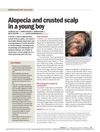 March 2026 in “Open MIND”
 Early treatment of scalp infections can prevent permanent hair loss.
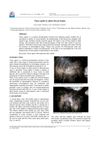
This report presents the first known case of tinea capitis caused by Microsporum canis in an adult female in the authors' locality, responsive to oral fluconazole treatment.
1 citations
,
April 2025 in “Acta Dermato Venereologica” In this study, a retrospective analysis at Erasmus University Medical Center found that methotrexate and cyclosporine A may be most effective for lichen planopilaris and cyclosporine A and retinoids for frontal fibrosing alopecia, although side effects were a concern.
 33 citations
,
January 2002
33 citations
,
January 2002 This study found that daily topical application of 500 microg/ml latanoprost led to moderate to marked hair regrowth in a macaque model of androgenetic alopecia.
 April 2023 in “Dermatology practical & conceptual”
 This study observed that a tacrolimus solution (0.1%) applied to the scalp was effective and well-tolerated for treating inflammatory scalp conditions, with 72.7% of patients showing an excellent response after 2 months of treatment, which persisted after 6 months.
 36 citations
,
May 2004 in “The journal of small animal practice/Journal of small animal practice”
36 citations
,
May 2004 in “The journal of small animal practice/Journal of small animal practice” In this study, a combined therapy of Cyclosporine A and ketoconazole resolved anal furunculosis in dogs within 10 weeks, but recurrences were noted in about 37% of cases.
 6 citations
,
November 1999 in “Mycoses”
6 citations
,
November 1999 in “Mycoses” This case study of a 75-year-old Japanese man with kerion Celsi found that terbinafine treatment was effective and safe, achieving a cure with minimal side effects.
March 2022 in “JAAD case reports” This case report highlights the importance of maintaining clinical suspicion for tinea incognito in patients with central centrifugal cicatricial alopecia who do not respond to typical corticosteroid treatments, as misdiagnosis can complicate treatment.
July 2024 in “Indian Dermatology Online Journal” In this case study, a 45-year-old immunocompetent woman with tinea capitis exhibited an unusual presentation of the infection with a scaly plaque and hair loss, which responded well to treatment with itraconazole.
46 citations
,
January 2002 in “Paediatric drugs” This review discusses treatment options for tinea capitis in children and reports no new clinical results; the authors recommend newer antifungal agents in cases of griseofulvin treatment failure.
 22 citations
,
March 2019 in “European Journal of Ophthalmology”
22 citations
,
March 2019 in “European Journal of Ophthalmology” This study found that switching patients with glaucoma or ocular hypertension from benzalkonium chloride-latanoprost to preservative-free latanoprost maintained intraocular pressure control and improved tolerability, potentially enhancing treatment adherence and quality of life.
 9 citations
,
November 2017 in “Journal of Glaucoma”
9 citations
,
November 2017 in “Journal of Glaucoma” This case report documents a patient experiencing paradoxical depigmentation of the periocular skin after one year of using latanoprost, a finding not previously associated with this medication.
 January 2026 in “Physical Education Health and Social Sciences”
 This study found that integrating Lactobacillus-rich probiotic nutrition and fractional CO₂ laser therapy with clotrimazole in mucoadhesive hydrogels significantly improved clinical and structural outcomes for women with recurrent vulvovaginal candidiasis, suggesting a promising advanced therapy, though further validation in larger trials is needed.
13 citations
,
March 2008 in “Journal of the European Academy of Dermatology and Venereology” This article reports a case of linear lichen planus developing along the lines of Blaschko during intramuscular triamcinolone acetonide therapy for alopecia areata multiplex.
 November 2021 in “Research Square (Research Square)”
 This study optimized caffeine-loaded nanostructured lipid carriers for alopecia treatment, achieving enhanced skin permeation and promoting hair growth compared to a marketed formula, as shown through physiochemical evaluations and histological examination.
 38 citations
,
July 2010 in “Clinical, cosmetic and investigational dermatology”
38 citations
,
July 2010 in “Clinical, cosmetic and investigational dermatology” This review discusses systemic antifungal treatments for tinea capitis in children, noting that newer agents like terbinafine and itraconazole require shorter courses than the traditional griseofulvin, but may be more costly.
3 citations
,
June 2020 in “Journal of Dermatological Treatment” In this study, researchers found that triamcinolone acetonide provided earlier visual improvement in alopecia areata treatment, but by 12 weeks, both triamcinolone acetonide and betamethasone 1.75 mg/ml showed similar effectiveness compared to lower-dose betamethasone and placebo.
 6 citations
,
March 2014 in “Annals of Pharmacotherapy”
6 citations
,
March 2014 in “Annals of Pharmacotherapy” This case report suggests that anidulafungin may be associated with hair loss, highlighting the need for physicians to monitor this potential adverse effect.
1 citations
,
September 2024 in “Life” This study reports three cases of alopecia areata resistant to corticosteroids that improved after 16 weeks of treatment with a combination of fractional carbon dioxide laser and topical tacrolimus, suggesting a potential new therapeutic option that requires further confirmation.
39 citations
,
November 2017 in “PubMed” This case series reported that low-dose naltrexone may benefit patients with lichen planopilaris by reducing scalp symptoms and slowing disease progression, with no adverse effects observed in the patients.