10 citations
,
May 2024 in “BioEssays” This review examined the role of the ion channel TRPV3 in warmth sensation and skin physiology, discussing controversies around its direct contribution to temperature perception, its involvement in skin health, and its potential as a therapeutic target for skin diseases.
November 2025 in “The Journal of Immunology” This study observed that in human scalp hair follicles, BTNL2 expression is lower in stressed conditions, which correlates with increased cytotoxic activity by gamma/delta and CD8+ T cells, suggesting a possible role for BTNL2 in controlling immune responses relevant to alopecia areata.
 8 citations
,
February 2015 in “Cellular immunology”
8 citations
,
February 2015 in “Cellular immunology” This study found that deleting Snai2 and Snai3 genes in mice disrupts immune cell development, resulting in severe autoimmunity and early death due to the loss of immune tolerance.
 1 citations
,
November 2002 in “Journal of dermatology”
1 citations
,
November 2002 in “Journal of dermatology” This study investigated the histogenetic relationship between basal cell carcinoma and hair follicles, revealing specific staining patterns of a monoclonal antibody in different skin tissues.
August 2026 in “Cancer Science” In this study, researchers observed that nestin-expressing cells in mice can differentiate into blood-vessel-like and nerve-like structures within human melanoma tumors, while bevacizumab treatment altered the origin of these structures to trans-differentiated melanoma cells without significantly impacting tumor growth.
 November 2011 in “APMIS. Acta pathologica, microbiologica et immunologica Scandinavica./APMIS”
 This study found that Polyomavirus A2 infection in mice led to the development of pilomatricomas in hair follicles, with the virus replicating initially in the skin and later infecting matrix cells.
 April 2017 in “The journal of investigative dermatology/Journal of investigative dermatology”
 This study investigates whether lymphocytes from mice with secondary alopecia areata can effectively induce the disease in a C3H/HeH mouse model, similar to lymphocytes from mice with spontaneous disease.
Ritlecitinib significantly regrows scalp hair in people with alopecia areata.
31 citations
,
February 2007 in “Molecular Carcinogenesis” This study found that transgenic mice overexpressing human ATF3 showed hyperplastic and dysplastic changes in epithelial tissues, with a high incidence of oral cancer, suggesting potential oncogenic properties of ATF3.
 August 2016 in “Journal of Investigative Dermatology”
 This study reported improvement in hair loss lesions in C3H/HeJ mice with alopecia areata following treatment with the CCR5 inhibitor maraviroc, alongside reduced infiltration of specific T cells in the lesions.
 110 citations
,
July 2017 in “Immunology”
110 citations
,
July 2017 in “Immunology” This review discusses the role of regulatory T cells in skin, including their impact on hair follicle regeneration, wound healing, and immune tolerance, without presenting new clinical findings.
July 2026 in “The Journal of Immunology” This study found that C3H mice with prior microbial exposure developed alopecia areata at a reduced rate and had fewer associated T cells compared to controls, suggesting that prior infections might attenuate autoimmune responses related to the disease.
 3 citations
,
January 2003 in “Cell Structure and Function”
3 citations
,
January 2003 in “Cell Structure and Function” This study found that Meth-A cells induced alopecia in mice, but this effect was blocked by a protein kinase inhibitor, suggesting immunological mechanisms involving lymphokine-activated killer cells.
1 citations
,
January 2024 in “ACS Medicinal Chemistry Letters” This Patent Highlight discusses recent progress in developing TYK2 inhibitors, which show potential for treating conditions like cancer, alopecia areata, and psoriatic arthritis.
2 citations
,
September 2004 in “Experimental Dermatology” This study found that VR1 activation in human hair follicles inhibited hair growth by suppressing proliferation and promoting apoptosis, suggesting VR1 plays an important role in hair growth regulation.
15 citations
,
June 2011 in “Journal of Investigative Dermatology” This study found that overexpressing the 14-3-3σ protein in transgenic mice reduced keratinocyte proliferation and migration, leading to thinner epidermis and fewer hair follicles due to IGF-1 pathway inhibition.
 November 2023 in “The journal of investigative dermatology/Journal of investigative dermatology”
 In this study, researchers found that ex vivo and in vivo administration of the TYK2 inhibitor BMS-986202 prevented immune privilege collapse and promoted hair regrowth in models of alopecia areata, suggesting this approach may offer a new therapeutic avenue deserving of clinical investigation.
 128 citations
,
August 2015 in “Cell Stem Cell”
128 citations
,
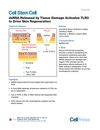
August 2015 in “Cell Stem Cell” The researchers reported that dsRNA from damaged skin activates TLR3, promoting hair follicle regeneration, while TLR3-deficient animals fail to initiate this process, suggesting potential therapeutic approaches for hair neogenesis.
 November 2025 in “Frontiers in Immunology”
 This study introduces stem cell activity as a key factor influencing the effects of IFN-γ and TGF-β1 on autoimmune disease dynamics, showing that varying cytokine levels can modulate stem cell activity and immune privilege, impacting tissue regeneration and disease flares.
This study examined molecular predictors of ritlecitinib efficacy in treating alopecia areata, highlighting the role of JAK3-dependent inflammation and follicular integrity as important factors in understanding disease mechanisms and potential therapeutic effectiveness.

This study found that γδ T cells play a role in regulating stromal behavior, influencing the composition and vascularity of fibrotic tissues during the foreign body response.
25 citations
,
June 2017 in “Journal of Investigative Dermatology” This study found that in a transgenic mouse model, β-HPV infection led to increased skin thickness and proliferation of specific keratinocyte stem cells, which may contribute to squamous cell carcinoma development.
53 citations
,
July 2009 in “Cancer Research” In this mouse study, the researchers found that the monoclonal antibody ME1 causes hair follicle inflammation by up-regulating TNFα, which can be reduced by TNFα and interleukin-1 inhibitors.
3 citations
,
September 2016 in “The Journal of Dermatology” This letter to the editor discusses the occurrence of alopecia areata, thyroiditis, and vitiligo in a Japanese patient with smoldering type adult T-cell leukemia/lymphoma, but it reports no new research findings.
August 2020 in “bioRxiv (Cold Spring Harbor Laboratory)” This study found that KrasG12D mutant cells are typically cleared from adult pancreas tissues through mechanisms involving the EphA2 receptor, suggesting its role as a tumor suppressor in pancreatic cancer.
 9 citations
,
March 2022 in “Frontiers in Immunology”
9 citations
,
March 2022 in “Frontiers in Immunology” This review discusses the roles and mechanisms of tissue-resident regulatory T cells in immune regulation and tissue homeostasis, but reports no new experimental results.
 42 citations
,
August 1999 in “The American journal of pathology”
42 citations
,
August 1999 in “The American journal of pathology” This study found that basal cell carcinomas show strong expression of vitamin D receptors at both mRNA and protein levels, suggesting a potential role in tumor growth regulation.
July 1997 in “JEADV. Journal of the European Academy of Dermatology and Venereology/Journal of the European Academy of Dermatology and Venereology” 2 citations
,
August 1987 in “Archives of Dermatology” In this study, researchers concluded that Langerhans' cells are likely uninvolved in depigmentation during vitiligo in C57Bl/Ler-vit vit mice, as their numbers were normal during depigmentation and increased afterward.
114 citations
,
July 2003 in “PubMed” This study found that KSR1 is necessary for v-Ha-ras-mediated skin tumor formation but not for MT-driven mammary cancer, indicating its potential as a therapeutic target in Ras/MAPK signaling-related tumors.