1 citations
,
January 2019 in “Studia Biologica” This review discusses the properties and extraction methods of keratins from natural fibers and highlights their promising applications in fields such as biomedicine, bioengineering, and forensic science, but reports no new experimental results.
 36 citations
,
July 2019 in “Journal of Materials Science Materials in Medicine”
36 citations
,
July 2019 in “Journal of Materials Science Materials in Medicine” This study demonstrated that keratin derived from human hair can improve axon extension and alleviate motor deficits from sciatic nerve injuries, highlighting its potential as a promising biomaterial for peripheral nerve regeneration.
 89 citations
,
September 2010 in “Annual Review of Genomics and Human Genetics”
89 citations
,
September 2010 in “Annual Review of Genomics and Human Genetics” This review discusses the genetic factors involved in hair follicle morphogenesis and cycling and reports no new clinical results; it emphasizes the role of genes in hereditary hair diseases.
29 citations
,
February 1989 in “Journal of Cutaneous Pathology” This case report identifies a new type of hair matrix tumor called "rippled pattern trichomatricoma," distinguished by its unique cell arrangement and differentiation features.
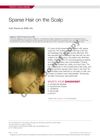
This case study describes a young girl with sparse, brittle scalp hair and multiple keratotic papules, but no systemic or familial abnormalities were found.
13 citations
,
March 1997 in “Research in Veterinary Science/Research in veterinary science” This study found that epithelial keratin K 6 is associated with hyperkeratotic and ulcerated changes in the gastric pars oesophagea of pigs, suggesting epithelial proliferation plays a role in ulcer development.
January 2022 in “Clinical dermatology review” This case report documents a 10-year-old girl with keratosis follicularis spinulosa decalvans, highlighting its rarity, particularly in females, and noting limited treatment success.
1 citations
,
June 2009 in “WakeSpace (Wake Forest University)” This study found that keratin biomaterials derived from human hair promoted significant motor function recovery and neuromuscular regeneration in animal models of peripheral nerve injuries.
 June 2024 in “Annals of Medicine and Surgery”
 This case report highlights the rare co-occurrence of Pili Annulati and Trichorrhexis Nodosa in a Syrian woman, underlining the need for further research into their relationship and treatment.
69 citations
,
May 2002 in “Journal of Investigative Dermatology” This study suggests that congenital atrichia with papular lesions may be more common than previously thought and proposes diagnostic criteria including the observation of hypopigmented whitish streaks on the scalp.
119 citations
,
August 2008 in “BMC Evolutionary Biology” This study found that while the KRTAP gene family is unique to mammals, humans have a similar number of these hair gene types as other primates despite having less body hair.
September 2025 in “British Journal of Dermatology” 13 citations
,
January 2002 in “Biological chemistry” This study found that hair follicle-specific keratins can form different structural assemblies depending on ionic conditions, with hair cortex keratins requiring physiological salt conditions to form intermediate filaments.
41 citations
,
December 2008 in “Pediatric Dermatology” This case report indicates that trichoscopy may significantly improve the diagnosis of Netherton syndrome by noninvasively identifying typical hair abnormalities without the need to pull hair.
 December 2022 in “Curēus”
 This case report describes a 5-year-old girl with atrichia with papular lesions, whose diagnosis was confirmed through genetic testing identifying mutations in the hairless gene.
28 citations
,
August 1992 in “Differentiation” This study identified a new 65 kD and 48 kD keratin pair expressed in specific mouse epithelial sites, suggesting a unique evolutionary branch of hair-related keratins.
May 2010 in “Faculty Opinions – Post-Publication Peer Review of the Biomedical Literature” A mutation in the KRT74 gene causes woolly hair by affecting hair texture.
97 citations
,
March 2010 in “The American Journal of Human Genetics” A mutation in the KRT74 gene causes tightly curled hair.
June 2025 in “Dermatologic Surgery” This article reviews multiple noncutaneous manifestations of pityriasis rubra pilaris, such as subungual hyperkeratosis and hair loss, but reports no new clinical results.
 December 2018 in “IntechOpen eBooks”
 This review discusses recent advancements in understanding neuroendocrine regulation of keratin biology and highlights the potential of neurohormones to treat skin disorders, but it reports no new clinical results.
 96 citations
,
June 2017 in “Nature Communications”
96 citations
,
June 2017 in “Nature Communications” This study identified WNT10A as crucial for adult epithelial cell proliferation and differentiation, suggesting β-catenin pathway activation may help address regenerative defects in WNT10A mutation patients.
10 citations
,
November 2013 in “Biochemistry and Molecular Biology Education” This review discusses the history, structure, and biological significance of keratins, including the crystal structure of a keratin helical segment, without reporting new experimental results.
26 citations
,
August 2014 in “Veterinary Dermatology” This study found that sphynx cats exhibit hair follicle dysplasia with abnormal hair shaft production, but without a reduction in the number of follicles, similar to murine KRT 71 mutants.
 150 citations
,
October 2010 in “The American Journal of Pathology”
150 citations
,
October 2010 in “The American Journal of Pathology” This review discusses the pathogenesis and challenges in treating primary cicatricial alopecia, highlighting the need to understand immune protection collapse in hair follicle stem cells; it reports no new clinical results.
August 2025 in “American Journal of Dermatopathology” In this study, researchers presented cases of cellular neurothekeoma in three male family members with early-onset in infancy, suggesting a potential genetic component and inheritance pattern, which deviates from the typical presentation seen mostly in women between 20–30 years.
46 citations
,
June 2013 in “Journal of structural biology” This study suggests that the mechanical robustness of hair may be enhanced by the binding interactions of keratin-associated proteins, particularly KAP8.1, with intermediate filament proteins.
1 citations
,
May 2003 in “The journal of investigative dermatology/Journal of investigative dermatology” This paper reviews several dermatological studies, including findings on hair growth, skin damage, bullous pemphigoid, and psoriasis treatments, and reports no new clinical results.
5 citations
,
January 2021 in “Frontiers in cell and developmental biology” This paper discusses the multipotency of cyst cells and proposes that understanding molecular circuits in cyst formation could enable engineering of desired stem cell culture phenotypes, but reports no new experimental outcomes.
17 citations
,
November 1967 in “American Journal of Anatomy” This study observed that the catagen phase in hairless mice displayed a slower shortening of the mutant epithelial column, resulting in longer total follicle length and abnormalities in the connective tissue sheath and glassy membrane.
1 citations
,
January 1989 in “Springer eBooks”