2 citations
,
March 2025 in “International Journal of Dermatology” In this case report, the authors described a 46-year-old woman with severe atopic dermatitis and alopecia areata, who experienced significant improvements in both conditions after treatment with the interleukin-13 blocker tralokinumab, suggesting a potential therapeutic role for targeting type 2 cytokine IL-13 in such cases.
 January 2025 in “Skin Health and Disease”
 In this report, oral baricitinib improved both alopecia areata and immune thrombocytopenia in a 56-year-old patient, suggesting a potential dual benefit for these conditions, although regular platelet monitoring and hematology consultation are recommended.
1 citations
,
July 2026 in “Dermatology and Therapy” In this study, JAK inhibitors for treating alopecia areata and atopic dermatitis were generally well tolerated in a real-world setting, with most adverse events being mild or moderate and rare serious cases resembling the general population incidence.
 2 citations
,
November 2021 in “ACG Case Reports Journal”
2 citations
,
November 2021 in “ACG Case Reports Journal” This case study reports that tofacitinib effectively treated alopecia areata in a patient with Crohn's disease and maintained her Crohn's disease management.
 9 citations
,
July 2022 in “EMBO molecular medicine”
9 citations
,
July 2022 in “EMBO molecular medicine” This study found that targeting IL-6, IL-1, and CCR6 signaling pathways may effectively reduce irradiation-induced alopecia and dermatitis in radiotherapy patients.
April 2026 in “UNC Libraries” This case report describes a 49-year-old woman with metastatic adrenocortical carcinoma in the liver who experienced an abscopal effect after pulse electric field ablation, with PET/CT imaging showing complete resolution of three untreated lesions two months post-treatment.
 15 citations
,
March 2021 in “Journal of clinical medicine”
15 citations
,
March 2021 in “Journal of clinical medicine” This review discusses common skin eruptions caused by biologics in treating inflammatory bowel disease and proposes tailored therapeutic approaches for managing these adverse reactions.
 May 2011 in “Value in Health”
 This study found that the oral Janus kinase inhibitor CP-690,550 has a direct effect on reducing pruritus in patients with psoriasis, independent of clinician-assessed improvements in psoriasis severity.
April 2025 in “Anais Brasileiros de Dermatologia” Abrocitinib effectively treats severe alopecia areata with significant improvement and no side effects.
2 citations
,
January 2020 in “Skin Appendage Disorders” This report presents a case where multiple steatocystomas appeared in a psoriatic patient during ustekinumab treatment, suggesting the drug may unmask a genetic predisposition to steatocystoma multiplex.
 September 2024 in “Skin Appendage Disorders”
 This case report describes a 21-year-old woman with circumscribed alopecia areata incognita, who experienced a sustained positive response to treatment with oral tofacitinib after conventional treatments frequently failed to provide lasting effects.
 July 2019 in “Reactions Weekly”
 Two women experienced temporary hair loss and other side effects from imiquimod treatment for cervical issues, which stopped after ending the treatment.
290 citations
,
August 2021 in “Clinical Reviews in Allergy & Immunology” JAK inhibitors show promise for treating alopecia areata, but more research is needed.
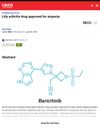 June 2022 in “C&EN global enterprise”
 This source notes that Olumiant (baricitinib), a rheumatoid arthritis drug by Eli Lilly and Company, has been approved as the first systemic treatment for severe alopecia areata.
42 citations
,
January 2008 in “Clinical colorectal cancer” In this study, a combination of irinotecan and cetuximab showed varied response rates in metastatic colorectal cancer patients, with manageable skin toxicity that improved quality of life when treated collaboratively by oncology and dermatology teams.
July 2024 in “Journal of Investigative Dermatology” Brepocitinib improves cicatricial alopecia and reduces key immune markers.
4 citations
,
December 2024 in “International Journal of Dermatology” This study reports that Mohs micrographic surgery resulted in no recurrences of pilomatrix carcinoma, compared to a 34.5% recurrence rate with traditional surgical excision.
 12 citations
,
August 2019 in “Dermatitis”
12 citations
,
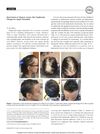
August 2019 in “Dermatitis” This case report describes a 42-year-old woman with atopic dermatitis, whose alopecia areata reactivated rapidly after starting dupilumab, possibly indicating an unrecognized adverse effect in AD patients.
1 citations
,
May 2026 in “Journal of Dermatological Treatment” This case report suggests that starting selective Janus kinase 1 inhibition may improve alopecia in a patient with rheumatoid arthritis who was not responding to TNF-α inhibitor therapy and corticosteroids.
 15 citations
,
October 2022 in “Allergy”
15 citations
,
October 2022 in “Allergy” This study found that dupilumab treatment in alopecia areata significantly suppressed Th2-related markers and increased hair keratin levels, suggesting a potential role of Th2 cytokines in the disease's pathogenesis.
December 2015 in “OPAL (Open@LaTrobe) (La Trobe University)” In human hair follicle keratinocytes, this study found that treatment with the pharmacological inhibitor QLT0267 led to a strong inhibition of proliferation and migration and induced nearly 100% apoptosis.
This case report describes how anifrolumab, used beyond trial-eligible populations, led to significant clinical and serological recovery in a 45-year-old woman with organ-threatening systemic lupus erythematosus complicated by infection and resistant to conventional treatments like cyclophosphamide and rituximab.
9 citations
,
January 2024 in “International Journal of Dermatology” Tralokinumab may help improve symptoms of atopic dermatitis and alopecia areata.
10 citations
,
January 2021 in “Annals of dermatology/Annals of Dermatology” This case report describes a rare instance of alopecia areata linked to nivolumab treatment in a patient with hepatocellular carcinoma.
1 citations
,
July 2021 in “Acta dermatovenerologica Croatica” This case report describes regression of hidradenitis suppurativa lesions in two patients after 16 weeks of adalimumab treatment.
14 citations
,
July 2021 in “Anais brasileiros de dermatologia/Anais Brasileiros de Dermatologia” This study found that alopecia areata patients had higher baseline interleukin levels, which significantly decreased with tofacitinib treatment, though this change did not correspond to disease severity improvement.
September 2023 in “Journal of the American Academy of Dermatology” This study found that the incidence of major adverse cardiovascular events in patients with psoriasis, psoriatic arthritis, and axial spondyloarthritis who received Ixekizumab was low and stable over 3 to 5 years across 25 clinical trials.
July 2024 in “Journal of Investigative Dermatology” This study examined the market trends for biologics that have lost patent exclusivity and predicted that drugs like adalimumab, once facing competition, could see price reductions and decreased market share, although the impact on accessibility and total patient use remains unclear.
28 citations
,
December 2001 in “European Journal of Pharmacology” This study found that the compound M50054 inhibits apoptosis by blocking caspase-3 activation and may improve chemotherapy-induced alopecia and hepatitis symptoms.
20 citations
,
August 2019 in “Frontiers in immunology” This review discusses the potential of biologics for treating various skin disorders, highlighting positive outcomes in conditions like pityriasis rubra pilaris and lupus, while noting mixed efficacy in others like alopecia areata; it reports no new clinical results.